Extraction Forceps for Children (Pediatric), English Pattern, without Spring, #52 | Helmut Zepf No. 10.681.52
Pediatric extraction forceps for children represent a critical category of dental instrumentation, and the Helmut Zepf #52 (10.681.52) delivers the precision and reliability that clinical practice demands. Designed following the English Pattern and built without a spring mechanism, these forceps offer the practitioner full tactile control during deciduous tooth extraction procedures.
Lifetime Warranty
Every Helmut Zepf dental extraction forcep is backed by a Lifetime Warranty. If this forcep ever fails due to a defect in materials or workmanship, we will repair or replace it — for life. This coverage is exclusive to our dental extraction forcep category.
60-Day Returns — Any Reason, Even If Used
Put this instrument to work in your practice. If it is not right for you, return it within 60 days of delivery for a full refund — for any reason, even if it has been used.
Instrument Design and Clinical Application
The English Pattern configuration of these pediatric extraction forceps for children provides a well-established grip geometry that dental professionals trust for consistent performance. The absence of a spring simplifies the instrument's mechanics, reducing potential points of failure and making sterilization and maintenance more straightforward. This design is particularly suited for use in paediatric dental settings where instrument reliability and patient comfort are paramount.
Quality Manufacturing
Manufactured by Helmut Zepf GmbH in Germany, these forceps reflect the rigorous standards associated with German dental instrument production. The #52 pattern is a recognised designation within paediatric extraction instrumentation, intended to address the anatomical requirements specific to primary dentition. As with all Zepf instruments, quality of finish and material integrity are central to the product's design intent.
Key Features
- English Pattern design for familiar, ergonomic handling
- No spring mechanism for simplified use and maintenance
- Designed specifically for primary (deciduous) dentition
- Pattern #52 — a standard paediatric extraction designation
- Manufactured in Germany by Helmut Zepf GmbH

FAQ
What makes pediatric extraction forceps for children different from adult forceps? Paediatric forceps are scaled and shaped to accommodate the smaller anatomy and root morphology of primary teeth, allowing for more controlled and atraumatic extractions in young patients.
Why is the English Pattern commonly used in paediatric dentistry? The English Pattern grip orientation is widely taught and used, offering predictable handling characteristics that many clinicians prefer for precision extraction work.
Is the absence of a spring a disadvantage? Not necessarily. A spring-free design gives the clinician direct, unmediated control and can simplify the instrument's cleaning and sterilization routine.
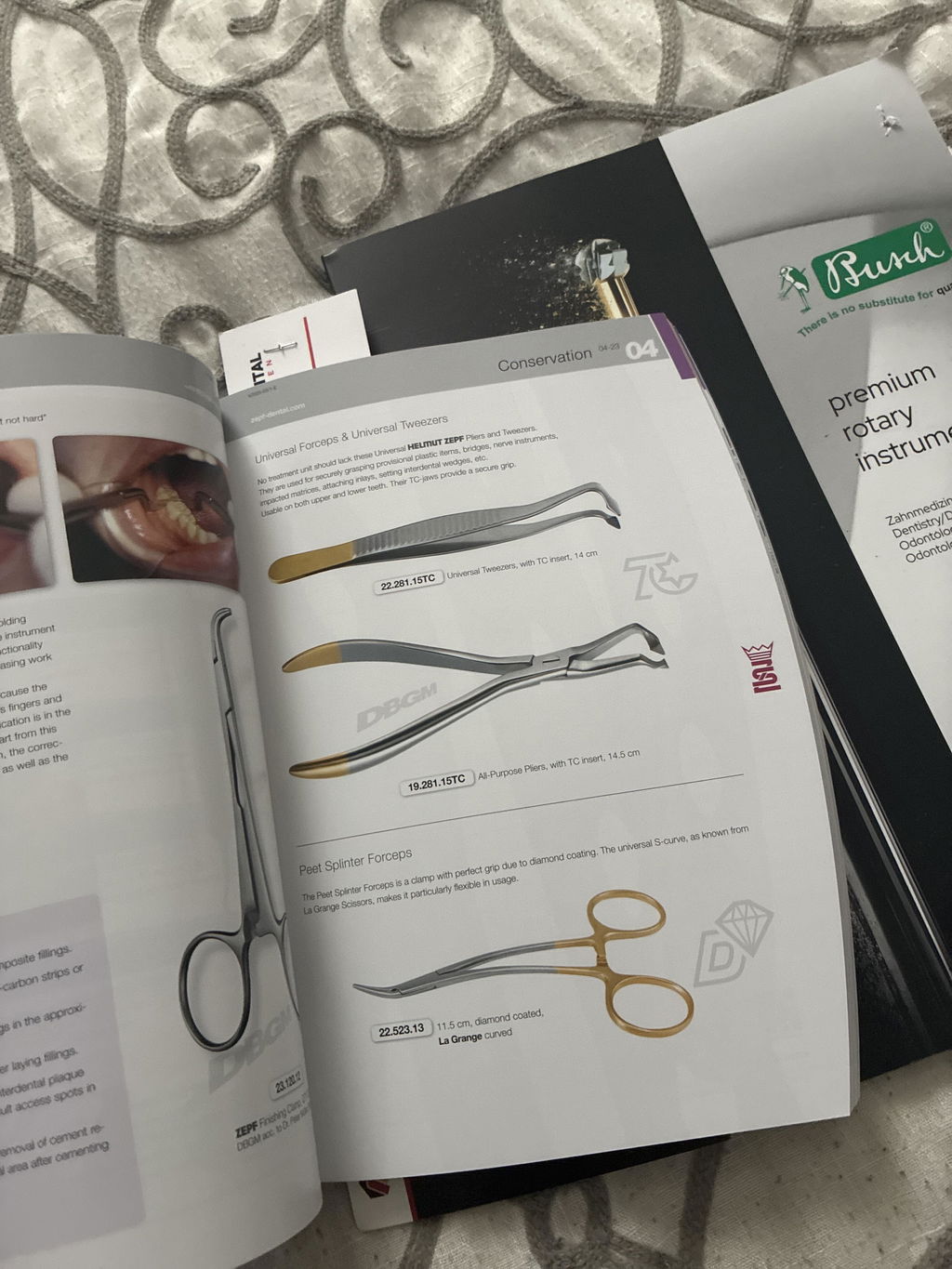
Manufacturer literature: ZEPF Dental Catalog (PDF) — more in our Surgical Instrument Library.
Backed by our Helmut Zepf Warranty — lifetime on extraction and explantation forceps, one year on every other Zepf instrument. Full terms and how to make a claim are on the Warranty page.

Extraction Forceps for Children (Pediatric), English Pattern, witho...