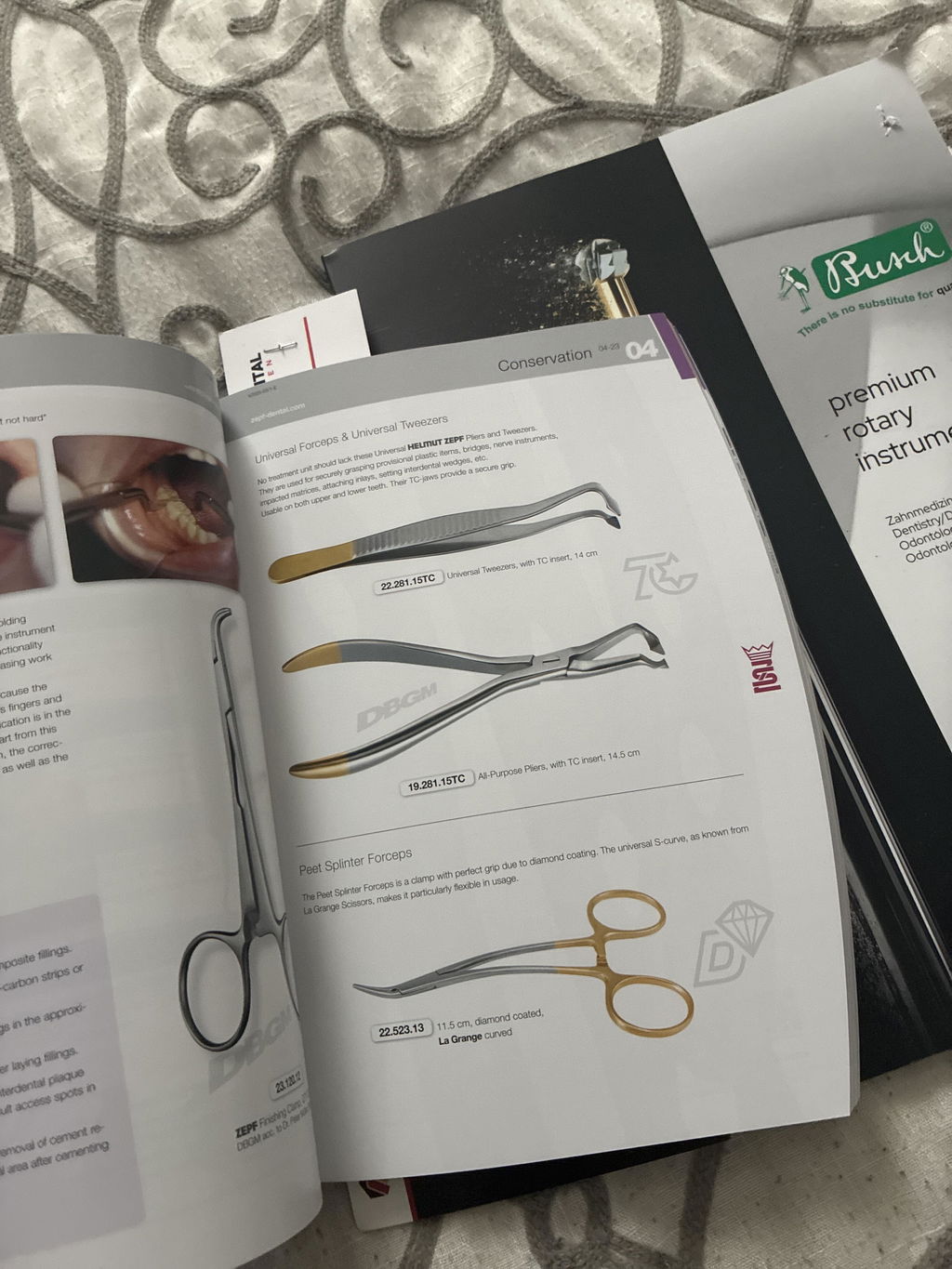
Back Action Chisel Dental Instrument by Helmut Zepf
The back action chisel dental instrument is an essential tool in precision oral surgery and restorative dentistry, designed to access and refine cavity preparations from angles that conventional chisels cannot reach. Helmut Zepf, a trusted name in German dental instrument manufacturing, offers a range of back action chisel dental tools engineered to meet the exacting standards of modern dental practice.
What Is a Back Action Chisel?
A back action chisel dental instrument features a blade that curves back toward the handle, allowing clinicians to apply controlled force in areas with restricted access — particularly in Class II, III, and V cavity preparations. The angled design enables precise enamel and dentin removal while maintaining operator control and minimizing trauma to surrounding tooth structure.
Key Features of Helmut Zepf Back Action Chisels
- High-grade stainless steel construction for durability and corrosion resistance
- Ergonomic handle design for enhanced grip and reduced hand fatigue during extended procedures
- Precisely ground cutting edges to ensure clean, efficient cuts in enamel and dentin
- Autoclavable to meet standard sterilization protocols in clinical environments
- Manufactured to ISO standards for consistent quality and dimensional accuracy
Clinical Applications
The back action chisel dental instrument is used across a range of restorative and preparatory procedures. It is particularly valuable for refining cavity walls, removing unsupported enamel, and shaping preparation margins to achieve ideal geometry for restorations. Its design makes it indispensable in areas where direct instrument angulation is restricted.

FAQ
What differentiates a back action chisel from a straight chisel? The blade of a back action chisel curves back toward the handle, enabling access to proximal and posterior surfaces where a straight chisel cannot be effectively used.
Are these instruments compatible with standard sterilization protocols? Yes, Helmut Zepf instruments are autoclavable and designed to withstand repeated sterilization cycles without degradation of the cutting edge or handle integrity.
Who are these instruments suitable for? These instruments are designed for dental professionals including general dentists, prosthodontists, and oral surgeons requiring reliable, high-precision hand instruments.
Technical references: Surgical Instrument Glossary · Helmut Zepf Surgical Instrument Library

Helmut Zepf GmbH
Regular price $99.99Unit price-
Helmut Zepf GmbH
Regular price $249.99Unit price -
Helmut Zepf GmbH
Regular price $149.99Unit price -
Helmut Zepf GmbH
Regular price $149.99Unit price -
Helmut Zepf GmbH
Regular price $169.99Unit price -
Helmut Zepf GmbH
Regular price $139.99Unit price -
Helmut Zepf GmbH
Regular price $139.99Unit price -
-
Helmut Zepf GmbH
Back Action Chisels, Curette Bone Scraper by Buser 4 mm/5 mm | Helmut Zepf No. 24.495.02
Regular price $149.99Unit price -
Helmut Zepf GmbH
Back Action Chisels, Curette Bone Scraper by Buser 3 mm/4 mm | Helmut Zepf No. 24.495.01
Regular price $149.99Unit price -
Helmut Zepf GmbH
Back Action Chisels, Curette Bone Scraper by Buser 3 mm/5 mm | Helmut Zepf No. 24.495.03
Regular price $149.99Unit price