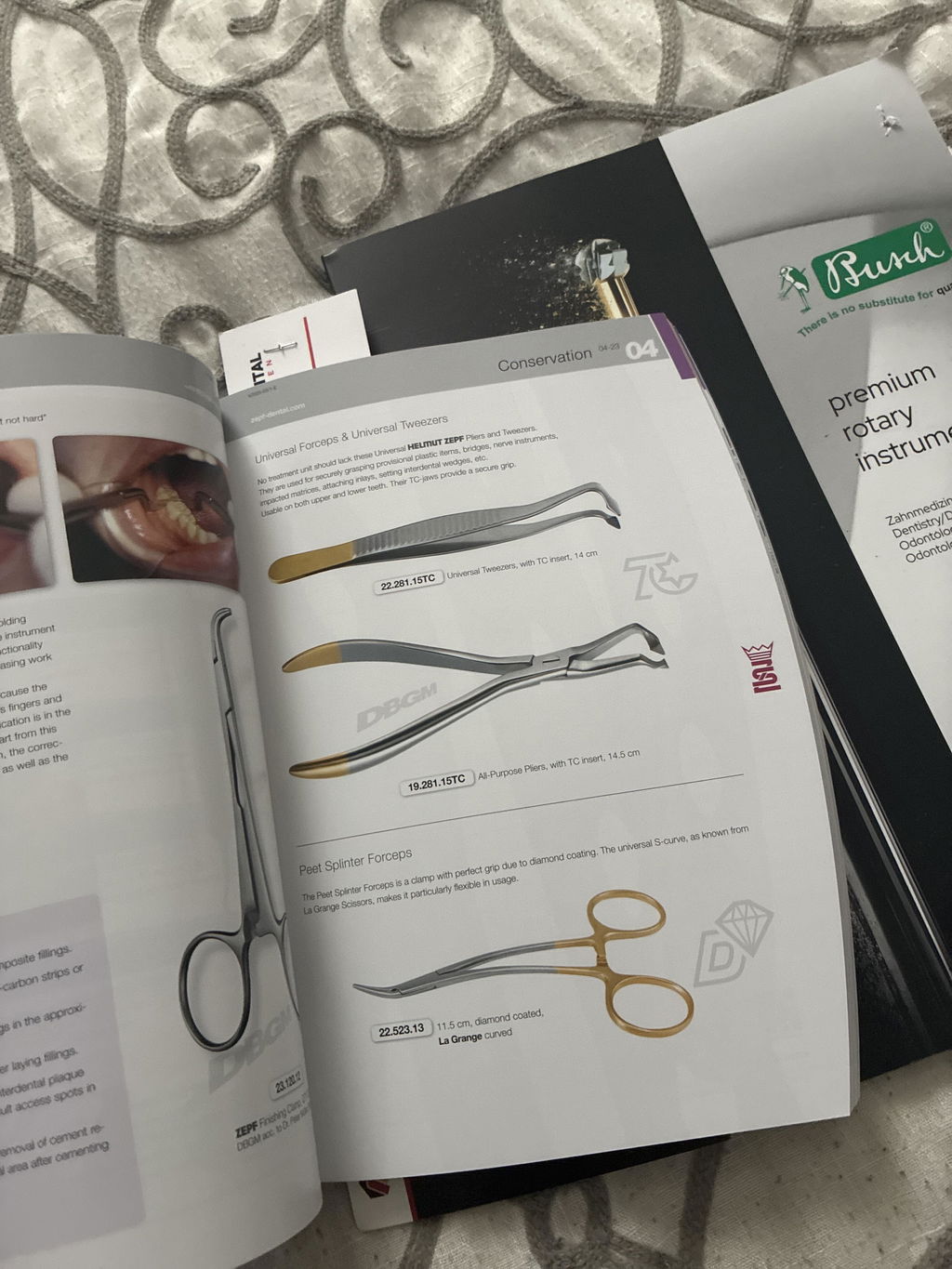
Choosing the right dental instruments is one of the most important decisions for any dental practice. The tools you use directly impact precision, efficiency, patient comfort, and long-term clinical outcomes.
Revised on September 30, 2026
With premium German manufacturers like Helmut Zepf (hand instruments) and Busch & Co. (rotary instruments), clinicians have access to some of the highest-quality tools available. But how do you actually choose the right ones?
Shop Deutsche Best Seller Collection
View all-
 20% off
Helmut Zepf GmbH
Universal Implant Tool Prosthetic Set | Helmut Zepf No. 47.830.00
Sale price $1,199.99 Regular price $1,499.99Unit price -
20% off
Helmut Zepf GmbH
Augmentation Set | Helmut Zepf No. 47.966.00
Sale price $1,199.99 Regular price $1,499.99Unit price -
20% off
Helmut Zepf GmbH
IDR Kit - Osteotome Set for Immediate Dentoalveolar Restoration | Helmut Zepf No. 41.550.00
Sale price $1,439.99 Regular price $1,799.99Unit price


This guide breaks down the key factors to consider when selecting dental tools and how trusted German brands fit into that decision.
Why Choosing the Right Dental Tools Matters
Dental instruments are not just tools—they are an extension of the clinician's hand.
High-quality instruments improve:
- Cutting efficiency and precision
- Procedure time and workflow
- Patient comfort and safety
Poor-quality instruments can lead to inefficiency, vibration, and compromised clinical results.
Start with the Procedure
The first step in choosing any dental tool is understanding what procedure you are performing.
Ask yourself:
- Is this restorative, surgical, implant, or cosmetic work?
- What material am I working on (enamel, zirconia, composite)?
- Do I need cutting, shaping, finishing, or polishing?
For example:
- Busch & Co. burs are ideal for cutting and shaping materials
- Helmut Zepf instruments are essential for surgical, implant, and microsurgical procedures
Choose the Right Instrument Type (Hand vs Rotary)
A key distinction in dentistry is between hand instruments and rotary instruments.
Helmut Zepf specializes in hand instruments such as explorers, curettes, forceps, elevators, and implantology tools. These are designed for control, ergonomics, and precision during surgical and diagnostic procedures.
Busch & Co. focuses on rotary instruments such as diamond burs, carbide burs, and polishers. These are essential for cutting, shaping, and finishing dental materials.
Most procedures require a combination of both—Zepf for tissue management and Busch for material removal.
Evaluate Material Quality
The material of your instrument determines durability and performance.
Look for:
- High-grade stainless steel for hand instruments
- Fine carbide or diamond for rotary instruments
- Corrosion resistance
- Ability to withstand repeated sterilization
Helmut Zepf instruments are manufactured to strict quality standards, ensuring durability and consistent performance. Busch burs are engineered for long-lasting sharpness and efficient cutting.
Focus on Precision and Performance
Precision is critical in dentistry.
For hand instruments:
- Fine working tips
- Balanced weight
- Reliable grip
For rotary instruments:
- Smooth, vibration-free rotation
- Sharp, consistent cutting edges
- Predictable performance
Higher precision leads to better clinical outcomes and improved patient care.
Consider Ergonomics and Comfort
Dental procedures often involve repetitive movements over long periods. Poorly designed instruments can lead to fatigue and reduced control.
Choose instruments that:
- Feel balanced in your hand
- Reduce strain during use
- Provide good tactile feedback
Helmut Zepf instruments are specifically designed with ergonomics in mind to improve comfort and efficiency.
Match the Tool to the Material
Different materials require different instruments.
Examples include:
- Zirconia and ceramics require diamond burs (Busch)
- Metal and amalgam require carbide burs (Busch)
- Soft tissue procedures require scalpels and forceps (Zepf)
- Bone and implant procedures require surgical instruments (Zepf)
Using the correct tool prevents damage and improves efficiency.
Choose Trusted, Proven Brands
Experience and reputation matter in dental manufacturing.
Busch & Co. has been producing rotary instruments for over a century. Helmut Zepf has a long-standing history of manufacturing high-quality dental instruments.
Both brands are known for:
- Precision engineering
- Consistent quality
- Reliable performance
Choosing trusted manufacturers ensures long-term reliability.
Think Long-Term Value
Lower-cost instruments may seem appealing but often lead to higher costs over time due to frequent replacement and reduced performance.
High-quality instruments:
- Last longer
- Perform better
- Improve efficiency
Investing in premium tools like Helmut Zepf and Busch & Co. provides better long-term value.
A Busch Rotary Starter List
If you are building a basic rotary setup to pair with your Helmut Zepf hand instruments, these Busch & Co. shapes are a practical starting point:
| Busch shape | Example | Typical role |
|---|---|---|
| 801 round diamond | 801 014 FG | Cavity access and shaping |
| 805 inverted cone diamond | 805 014 FG | Cavity shaping |
| 850 taper round diamond | 850 014 FG | Margin preparation |
| US #242 flame carbide finishing bur | 48 010 FG | Finishing |
| COOL DIAMANT low-heat diamonds | COOL DIAMANT collection | Crown preparation with less heat |
Pair a Helmut Zepf surgical or microsurgery kit with a small Busch diamond and carbide set like this, then add shapes as your procedures demand. See the full Busch rotary instrument collection.
Maintain and Care for Your Instruments
Proper maintenance is essential to maximize instrument lifespan.
Best practices include:
- Cleaning instruments immediately after use
- Using ultrasonic cleaning when appropriate
- Following proper sterilization protocols
- Replacing worn burs regularly
Good maintenance preserves performance and ensures patient safety.
Final Thoughts
Choosing dental tools is about building a system that supports precision, efficiency, and high-quality care.
A well-equipped practice typically includes:
- Helmut Zepf hand instruments for surgical and diagnostic control
- Busch & Co. rotary instruments for cutting and finishing
Together, they provide a complete solution rooted in quality, durability, and clinical excellence.
Related resources: Product Library · Helmut Zepf Literature · Busch Catalogs Shop: Helmut Zepf Instruments.