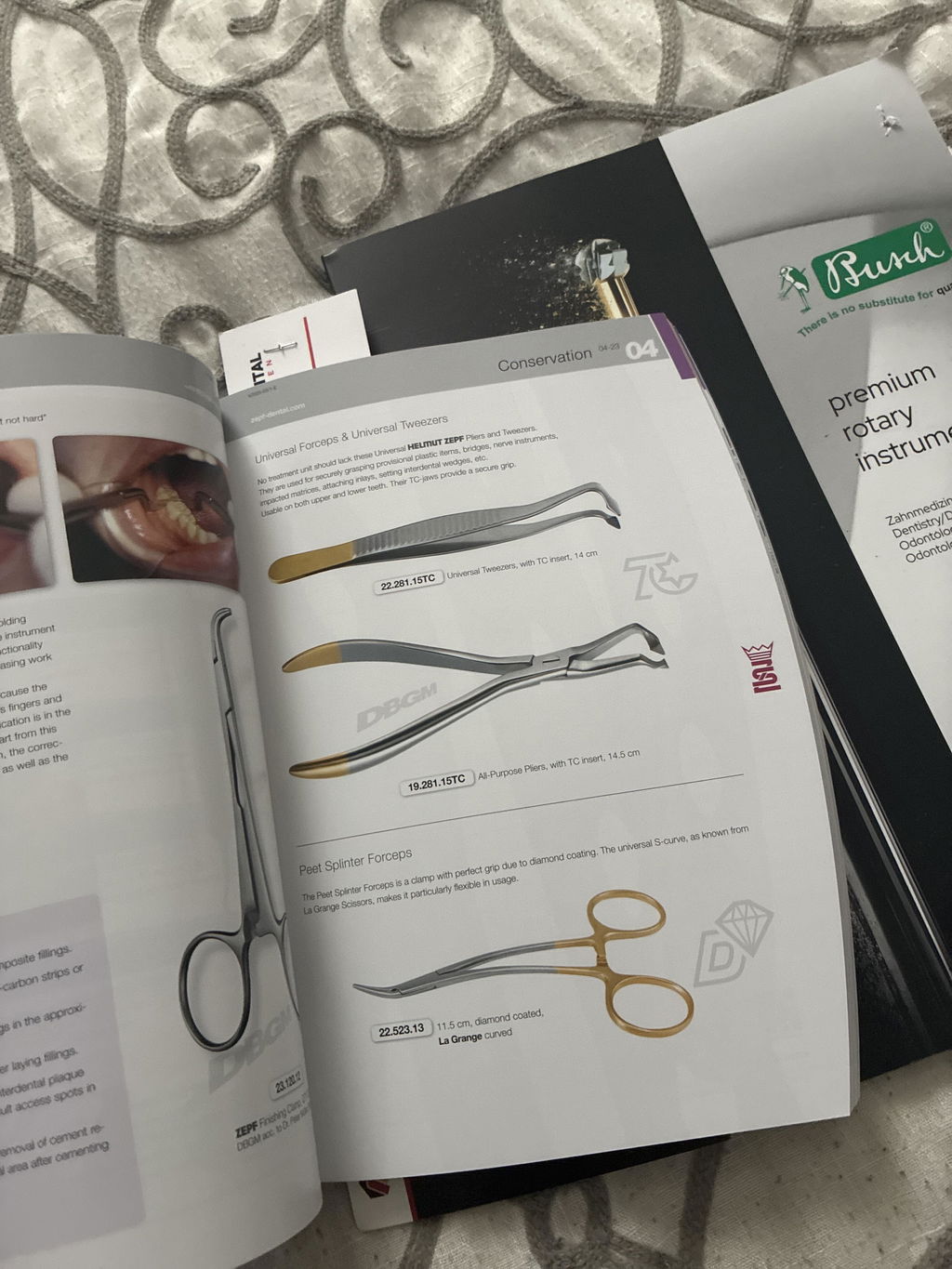
Removing a crown or bridge without damaging the underlying preparation is one of the more delicate steps in restorative dentistry, and the right crown remover dental instrument makes the difference between a clean removal and a chairside repair. Deutsche Dental Technologien stocks Helmut Zepf's full range of crown removal instruments, from manual pliers to automatic and pneumatic systems, so clinicians can match the tool to the case.
Revised on September 30, 2026
Choosing among a crown-tractor, a Crown-Butler automatic remover, or a traditional crown lever depends on the crown type and how much force the abutment can tolerate.
Shop Crown Removal Instrument Collection
View all-
 20% off
Helmut Zepf GmbH
Universal Implant Tool Prosthetic Set | Helmut Zepf No. 47.830.00
Sale price $1,199.99 Regular price $1,499.99Unit price -
Helmut Zepf GmbH
Regular price $269.99Unit price -
Helmut Zepf GmbH
Wrench with Torque SD-50 40 N cm | Helmut Zepf No. 47.803.02
Regular price $389.99Unit price


Browse the full Crown Removal Instrument Collection for the complete lineup, or read on for guidance on matching an instrument to your case.
Crown-Tractor Removers
The Crown-Tractor is a spring-assisted crown-removing plier that grips the crown between soft, replaceable polymer tips; nothing is bonded to the restoration. A light coat of DIATRAC adhesive diamond powder on the tips increases grip and prevents slippage, while the adjusting screw and double spring let you set the jaw opening and apply gentle, controlled pressure until the crown releases. Because the polymer tips cushion the crown surface and avoid the metal-on-ceramic point loading that cracks ceramic, it is a low-trauma choice for provisionals, try-ins and crowns you plan to reuse, and it works on temporary, PFM, zirconia and e.max restorations. The tips are autoclavable and replaceable: inspect them before each use and swap them at the first sign of wear, which is why most practices keep a re-order pack of tips and DIATRAC powder on hand. For a step-by-step technique, see Crown Remover: The Crown-Tractor.
Best for: any crown that should come off intact, whether a provisional, a try-in or a definitive crown you plan to recement. See the Crown-Tractor with locking screw and return spring (Helmut Zepf No. 19.274.00, with 20 polymer tips and 10 g DIATRAC), the Crown-Tractor "Exclusive" Crown Remover Pliers (Helmut Zepf No. 19.274.15, adjusting screw and double spring) or the Crown-Tractor Starter Set. Consumables: 40 polymer tips (19.274.12), 40 tips plus 10 g DIATRAC (19.274.13) and DIATRAC powder, 10 g (19.274.10).
Crown-Butler Pattern
The Crown-Butler is an automatic, spring-actuated remover that grips the crown margin and delivers a sudden vertical impact to break the cement seal, similar in principle to an automatic mallet. It ships with interchangeable inserts sized for different crown geometries, and the impact force is adjustable so it can be dialed back for weaker preparations or older cement lines. Because the impact is delivered in a single, repeatable motion, it tends to be faster than manual levering on cases where the crown is being discarded rather than recemented.
Best for: permanent crowns cemented with strong resin or glass-ionomer cement — see the Crown-Butler Automatic Crown Remover.
When to Use an Automatic Crown Remover
Automatic and spring-loaded removers like the Crown-Butler save time on multi-unit cases and reduce operator fatigue compared with manual levering, but they deliver more force in a shorter window, so they are best reserved for crowns you intend to discard or replace. For provisionals, temporaries, or crowns you plan to re-cement, a manual crown lever or a tungsten-carbide-faced plier gives finer control over how much force reaches the margin, letting the operator stop the moment resistance changes.
Best for: full-arch or multi-unit removal where speed matters, since the Miller Crown Remover's three interchangeable attachments and weight adapt to varying crown sizes across a quadrant — see the Miller Crown Remover.
Universal and Manual Options
Not every removal calls for an automatic device. The Universal Crown Remover uses a tungsten-carbide-faced jaw to grip the crown margin directly, giving the operator direct tactile feedback during removal — a good fit for temporary bridges, single crowns, or cases where the lab wants the crown returned intact for re-cementation. Because the jaw contacts the crown itself rather than driving an impact through the cement line, it is generally the gentler choice when the abutment or the restoration needs to be preserved. See the Universal Crown Remover (Helmut Zepf No. 19.281.15TC) for the current stocked configuration. Its tungsten carbide inserts resist slippage on metal and PFM crowns during controlled twisting or pulling. For single temporaries and tight posterior access, the Wynman removing pliers (Helmut Zepf No. 19.281.16) use tungsten carbide inserts on small jaws.
Miller Crown Ring Removers and Crown Levers
The Miller pattern comes in two stocked configurations, and the numbers are easy to mix up. The Miller Crown Remover (Helmut Zepf No. 19.272.00) includes three attachments (#1–3) and a weight; the Miller Crown Ring Remover (Helmut Zepf No. 19.273.00) includes the three attachments, the weight and a spring. Both deliver a controlled percussive or pulling action for crowns and bands, including around teeth slated for extraction. Replacement points #1 to #3 (19.272.01 to 19.272.03) are stocked separately.
For manual loosening, the All-Purpose Crown Lever (Helmut Zepf No. 19.279.00) engages occlusal, buccal, palatal or labial surfaces in the maxilla. It is especially useful for final dislodgement once a gripping instrument has created purchase. The double-ended Crown Remover (Helmut Zepf No. 19.265.16) combines a straight and a curved end on one bIONIK handle for anterior and posterior crowns.
Crown Spreading Pliers: The Section-Then-Spread Technique
When a permanent crown is being sacrificed, sectioning it and then spreading the cut is usually faster and kinder to the abutment than levering an intact crown. The ZEPF Crown-Spreading Pliers, 14.5 cm (19.277.01) and the Xcision-Line version (19.277.01Z) open a pre-cut slot without loading the roots or adjacent teeth, and the Xcision-Line handle reduces hand fatigue on longer cases.
- Section: cut a slot through the crown with a crown-cutting bur. The Busch crown cutter collection and our Which Bur Cuts Which Crown guide match the bur to the crown material.
- Position: seat the plier beaks securely in the pre-cut slot.
- Spread: apply controlled leverage to open the slot and break the cement seal.
- Deliver: lift the loosened crown with a crown lever or the Crown-Tractor while protecting the abutment.
- Reprocess: clean the beaks thoroughly and follow Helmut Zepf reprocessing guidelines.
Telescopic Crowns and Inlays: Telecrown-Grip, Tele-Grip and Inlay Forceps
Telescopic and conus crowns need grip without deformation. The Telecrown-Grip pliers hold them between diamond tips and come bilaterally adjustable (31.185.00), unilaterally adjustable (31.185.01) or with two rigid tips (31.185.04). Where access and angulation defeat straight-line instruments, the curved ZEPF Tele-Grip telescope crown forceps (31.182.01) with interchangeable diamond tips reach the crown from a better angle. Friction-retained double crowns cannot be levered; grip them and withdraw along the path of insertion. The Telescope Crown Pliers (31.185.02) use finer 1.65 mm diamond tips, and the 2.35 mm tips for the Telecrown-Grip pliers are replaceable wear parts: movable (31.185.10) or rigid (31.185.12).
For inlays, onlays and other delicate indirect restorations where a crown remover is too much instrument, use fine-beaked inlay forceps: the 15 cm model with 10 pairs of interchangeable jaws (19.274.50) or the 16 cm self-retaining model with 10 pairs of interchangeable plastic jaws (19.274.60).
Crown Removal in Implant and Restorative Workflows
Crown removal is usually the first step of a larger restorative or implant sequence. For a failed crown on a restorable tooth:
- Assess with radiographs.
- Engage the crown with the Crown-Tractor.
- Finish dislodgement with the All-Purpose Crown Lever.
- Proceed to caries removal, core build-up and the impression for the new crown.
Before implant placement, when a tooth is non-restorable or a bridge has failed, the goal is to keep the bone walls and gingival architecture intact:
- Loosen the crown or bridge with the Crown-Butler or Crown-Tractor.
- Section if needed and open the cut with the crown-spreading pliers.
- Remove remaining fragments with the Miller remover or the Universal Crown Remover.
- Extract the tooth and evaluate the socket for immediate or early implant placement.
Dentures and Screw-Retained Implant Crowns
Two situations call for something other than a crown remover. Full dentures and removable prostheses come out with the Easy Lifter by Dr. Wietzorke (Helmut Zepf Nos. 19.265.01 to 19.265.10 in bIONIK handle colours, or the 19.265.00 display of 20). Screw-retained implant crowns are unscrewed, never pulled: use the Universal Implant Tool Prosthetic Set (47.830.00) and leave traction and impact removers out of it.
How to Choose by Scenario
Three questions narrow the choice: is the restoration temporary or definitive, does it need to survive removal or is it being sacrificed, and is it retained by cement, telescopic friction or a screw?
- Provisionals, try-ins and definitive crowns that must come off intact: Crown-Tractor.
- Single temporaries and tight posterior access: Wynman pliers.
- Permanent crowns being replaced: Crown-Butler, or section and spread with the crown-spreading pliers.
- Metal or PFM crowns the lab wants back intact: Universal Crown Remover with tungsten carbide inserts.
- Crowns and bands, including teeth slated for extraction: Miller remover.
- Telescopic and conus crowns: Telecrown-Grip pliers or the Tele-Grip.
- Inlays and onlays: inlay forceps.
- Full dentures and removable prostheses: Easy Lifter by Dr. Wietzorke.
- Screw-retained implant crowns: Universal Implant Tool Prosthetic Set.
Pro Tips for Safe Crown Removal
- Section heavily cemented restorations and use crown-spreading pliers rather than forcing an intact crown.
- Inspect the Crown-Tractor polymer tips before each use and replace them at the first sign of wear.
- Apply DIATRAC powder lightly for traction without marking the crown surface.
- Combine instruments: many clinicians loosen with the Crown-Tractor and switch to spreading pliers or a lever for stubborn cases.
- Favor grip-based instruments on zirconia and e.max to reduce fracture risk.
FAQs
What is a dental crown tractor? A crown-tractor is a spring-assisted crown-removing plier that grips the crown between replaceable polymer tips, dusted with DIATRAC diamond powder for traction, so the crown can be eased off with controlled pressure and without damaging its surface.
How does an automatic crown remover work? An automatic crown remover, such as the Crown-Butler, grips the crown and releases a calibrated spring-driven impact that shears the cement bond in a single motion.
Can crown removal instruments damage the abutment? Any crown remover can damage a weak abutment if force is applied incorrectly; matching adjustable-force tools like the Crown-Butler to the case, and using manual levers for fragile preparations, reduces that risk.
What is the difference between a crown remover and a crown-removing plier? A crown remover generally refers to spring-loaded or automatic devices, while a crown-removing plier grips and levers the crown mechanically with hand pressure.
Are Crown-Tractor tips reusable? The polymer tips are replaceable and autoclavable. Inspect them before each use and replace them at the first sign of wear; re-order packs of 40 tips, with or without DIATRAC powder, are stocked alongside the pliers.
Which crown remover is best for provisional crowns? A manual crown lever or the Universal Crown Remover generally offers better control for provisionals than an automatic device.
What removes a zirconia crown that is being replaced? Section it and spread: cut a slot with a crown cutter matched to the material (see Which Bur Cuts Which Crown), then open it with the crown-spreading pliers.
Which remover for a bridge? Temporary bridges respond to gripping pliers such as the Wynman applied at each retainer alternately. Definitive bridges that must survive need the Crown-Tractor at each retainer, or sectioning if they are being remade. Call (917) 480-2682 ext 101 to talk through a specific case.
See also our Restorative Instrument Library, the Crown Preparation Margin & Bur Guide and the Restorative, Prosthetic & Diagnostic Instruments hub.
Shop the full Crown Removal Instrument Collection.