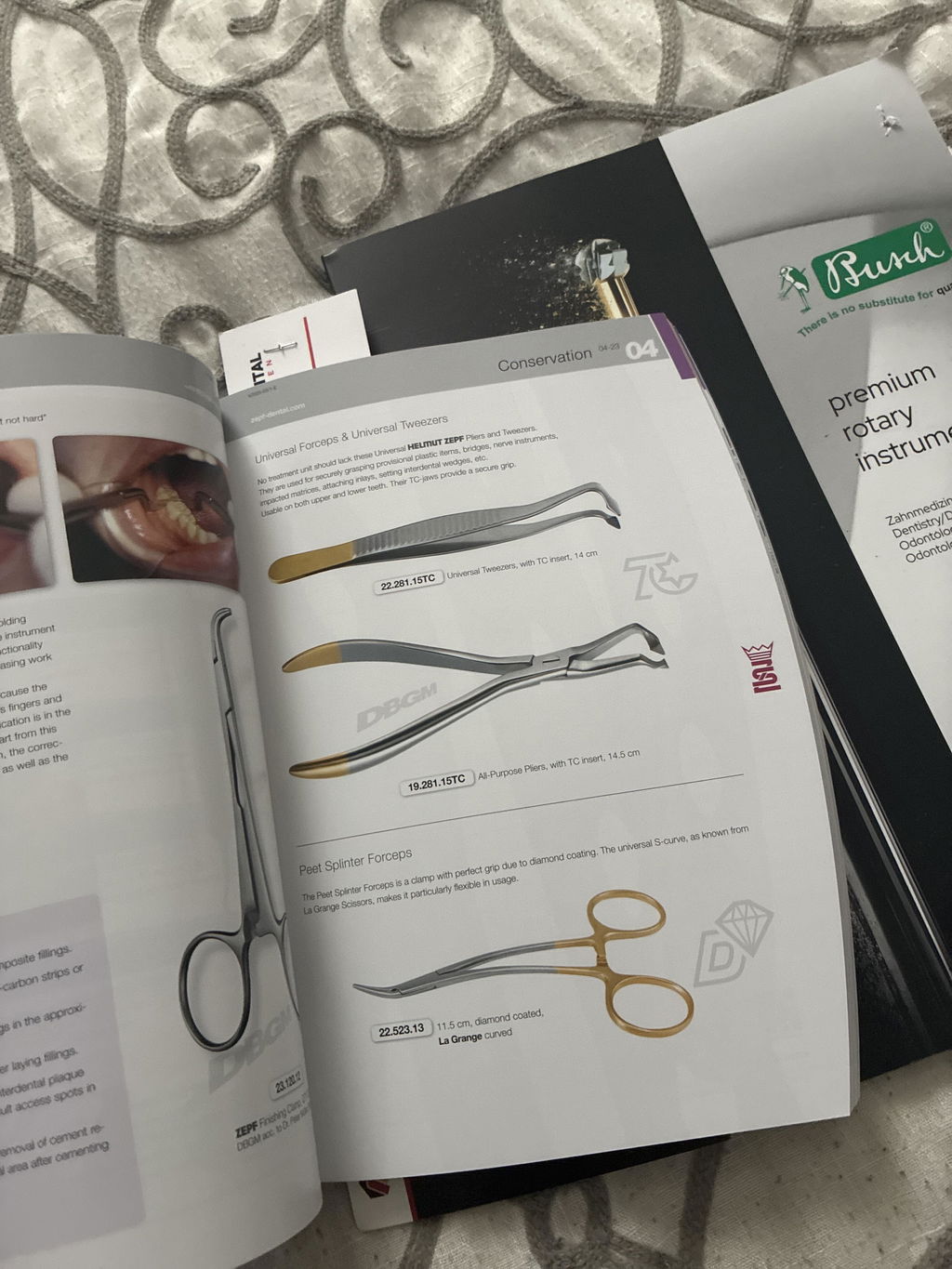
Allis Tissue Forcep Collection
The Allis Tissue Forceps is one of the most commonly reached-for grasping instruments on the oral surgery tray. Its interlocking teeth and ratcheted lock let a surgeon retract tissue, hold an extraction flap open, or stabilize a specimen for excision — hands-free — without continuous finger pressure. Deutsche Dental Technologien supplies the full range of Helmut Zepf Allis Tissue Forceps directly to dental practices, sourced straight from the German manufacturer.
Why Dental Practices Choose the Allis Forceps
- Interlocking serrated teeth for a firm, controlled grasp on soft tissue — flap margins, mucosa, granulation tissue
- Ratcheted locking mechanism frees the surgeon's hand during suturing or curettage
- Four lengths (15 cm to 25 cm) to match confined intraoral fields or deeper surgical access
- Forged from German surgical-grade stainless steel, rated for repeated autoclave cycles
- Ergonomic ring handles reduce hand fatigue across a full surgical day
Use in Oral and Maxillofacial Surgery
In dental and oral-maxillofacial practice, Allis forceps are used to retract soft tissue during flap procedures, hold tissue destined for excision or biopsy, and stabilize structures during extraction and implant site preparation — freeing the operator to work with both hands elsewhere in the field. Because the teeth grip firmly, Allis forceps are reserved for tissue robust enough to tolerate the hold; gentler alternatives (Adson, Semken) are preferred for delicate mucosa. See our Surgical & Tissue Forceps Identification Guide for how Allis compares to Adson and Kelly patterns.
Choosing a Length
The 15 cm models suit standard intraoral access and are the most commonly stocked length for general oral surgery. The 19 cm and 25 cm Tissue Seizing Forceps give added reach for deeper surgical sites or when working alongside a retractor. Curved and straight jaw options are available at 15 cm for angled versus direct-line access.
History: Who Invented the Allis Forceps?
The Allis forceps was designed in 1883 by Oscar Huntington Allis (1836–1921), an American surgeon based in Philadelphia known for his work in orthopedic and general surgery — he is also remembered for describing the "Allis sign" used to diagnose hip fracture. Allis built the instrument's interlocking, ratcheted jaws to grasp fascia and other tough tissue securely during abdominal surgery, freeing the surgeon's hand for other work — the same hands-free hold that makes it useful for retracting flaps and stabilizing tissue in oral and maxillofacial procedures well over a century later.

FAQ
What makes the Allis Tissue Forcep different from other tissue forceps? Its ratcheted locking mechanism and interlocking teeth distinguish it from spring-type forceps like Adson, providing sustained grip without continuous manual pressure — useful anywhere in the mouth where hands-free tissue retraction is needed.
Is the Allis Tissue Forcep reusable? Yes. All Helmut Zepf models are forged from surgical-grade German stainless steel and are designed for standard autoclave sterilization and repeated clinical use.
Which dental procedures most commonly use the Allis Tissue Forcep? Flap surgery, extraction, biopsy, and implant site preparation — wherever soft tissue needs to be held securely without continuous hand pressure.

Helmut Zepf GmbH
Allis Tissue Seizing Forceps - 5 x 6 Teeth, 25 cm | Helmut Zepf No. 53.034.25
Regular price $119.99Unit price-
Helmut Zepf GmbH
Allis Tissue Seizing Forceps - 5 x 6 Teeth, 19 cm | Helmut Zepf No. 53.034.19
Regular price $89.99Unit price -
Helmut Zepf GmbH
Allis Tissue Forceps - 15 cm, 5 x 6 Teeth | Helmut Zepf No. 23.782.15
Regular price $84.99Unit price -
Helmut Zepf GmbH
Allis Tissue Forceps - 15 cm, 5 x 6 Teeth, Curved | Helmut Zepf No. 23.781.15
Regular price $89.99Unit price