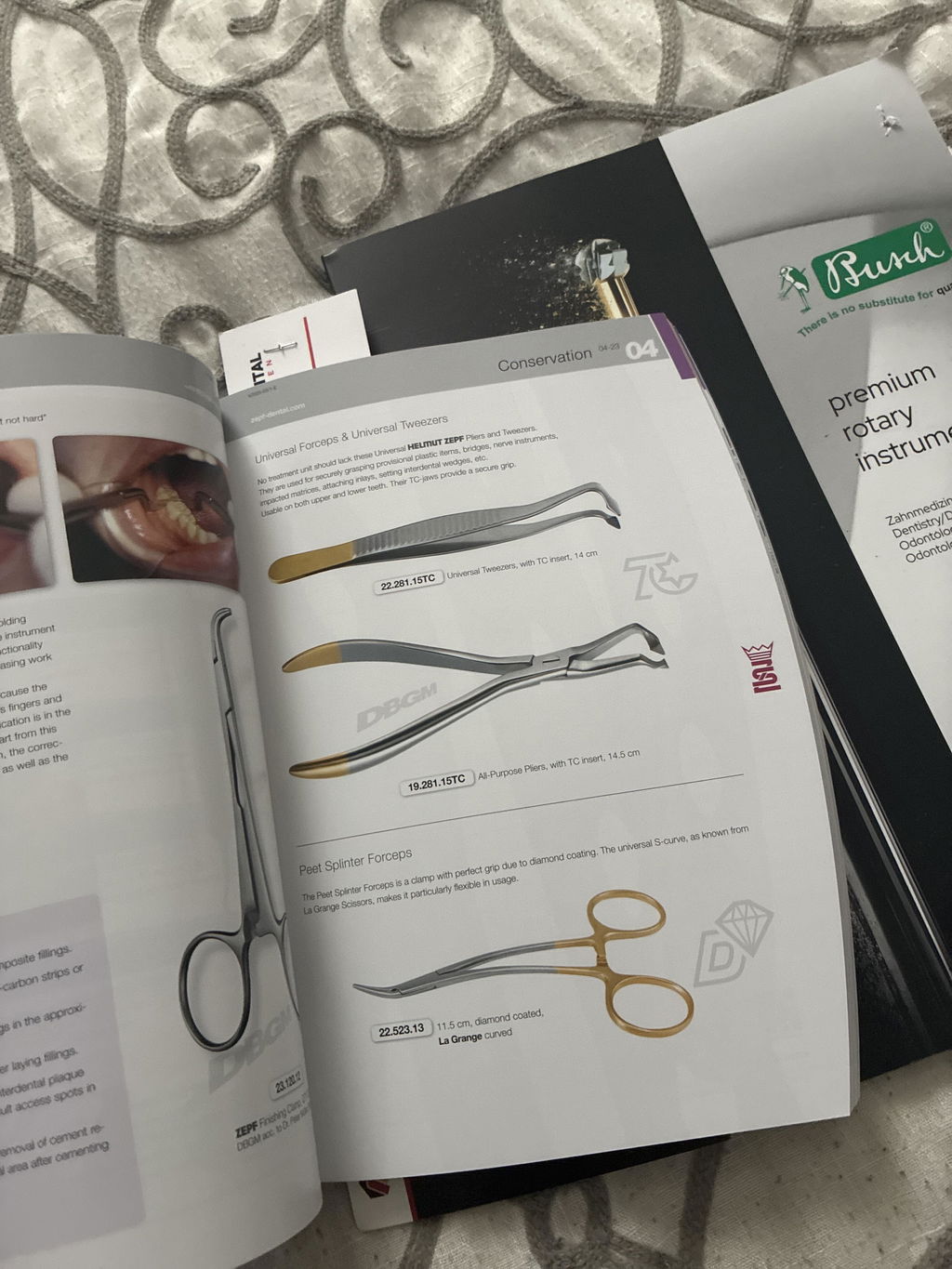
A bone file and a bone curette solve the same clinical problem — smoothing and debriding alveolar bone after extraction, apicoectomy, or implant site prep — but they work differently, and the wrong pattern slows healing. Miller bone files remove sharp bone spicules with a filing stroke; bone curettes scoop granulation tissue and debris from the socket wall.
This guide compares the three patterns clinicians ask for most: the Miller bone file, the Hemingway curette, and the Lucas curette, so you can match the right instrument to each step. Browse the full range in our Bone Curette by Helmut Zepf collection.
Below: cutting geometry and shape for each pattern, a comparison table, and FAQs from oral surgery and periodontal teams.
Bone file or bone curette: which one do I need?
Use a bone curette first and a bone file second. The curette (Lucas or Hemingway) scoops granulation tissue and loose debris out of the socket; the Miller bone file then smooths the sharp bone margins the curette cannot safely shape. Most extraction and alveoloplasty trays carry one of each.
Miller Bone Files: Controlled Filing for Sharp Bone Margins
The Miller bone file uses a rigid, textured working surface to smooth sharp alveolar bone margins after extraction or alveoloplasty, working with a push-pull filing motion rather than a scooping stroke. Parallel-cut patterns remove material more aggressively, while cross-cut patterns give a finer, more controlled finish on delicate ridges.
Best for: Rounding sharp interseptal bone after multiple extractions — the Miller Bone & Alveolotomy File #1, Parallel Cut handles the initial pass efficiently.
Best for: A finishing pass on a prosthetic-bearing ridge — the Miller Bone File #2, Cross Cut leaves a smoother surface with less tear-out.
Hemingway Curette: Sharp Spoon Precision
The Hemingway curette pairs a sharp spoon on one end with a curette on the other, giving clinicians two working geometries on a single instrument. It is favored for socket debridement where both granulation-tissue removal and bone-wall smoothing are needed in the same field, without switching instruments mid-procedure.
Best for: Combined debridement and light bone contouring in a single pass — the Hemingway Sharp Spoon/Curette, ZEPF-Line Handle keeps chair time down on routine extraction sites.
Lucas Curette: The Double-Ended Workhorse
The Lucas curette is the most widely stocked bone curette pattern for general oral surgery, offered in tip widths from 1.5 mm to 5.0 mm in smooth and serrated finishes. Sizes, handle options and cyst-removal technique are covered in our Lucas curette guide; this article covers only how the Lucas fits next to a file.
Best for: Tight, narrow sockets where tip access matters more than surface area — the Lucas Curette / Scraper, 2.5 mm reaches interproximal areas other curettes miss.
Best for: Fibrous granulation tissue that resists a smooth edge — the Lucas Curette / Scraper, Serrated, 1.5 mm grips debris a plain edge would slide past.
Pattern Comparison at a Glance
| Pattern | Working Action | Key Trait | Best For |
|---|---|---|---|
| Miller Bone File | Filing / push-pull | Rigid textured surface; parallel or cross cut | Smoothing sharp bone margins |
| Hemingway Curette | Scooping / scraping | Double-ended sharp spoon and curette | Combined debridement and contouring |
| Lucas Curette | Scraping / curettage | Range of tip widths; smooth or serrated | General socket debridement, tight access |
Choosing the Right Instrument by Procedure Step
Most extraction and alveoloplasty cases move through the same sequence: first clear granulation tissue and debris with a curette, then smooth any remaining sharp bone with a file. Start with a Lucas curette or Hemingway curette to remove soft tissue and loose fragments from the socket, then finish sharp interseptal bone or ridge irregularities with a Miller bone file. For implant site prep, a serrated Lucas tip is often preferred for fibrous tissue before a Miller file refines the crestal bone surface. Bulk bone removal before filing is rongeur or chisel work: see our bone rongeur guide and periodontal chisel guide. For related extraction and surgical instruments, browse the broader Helmut Zepf Dental Instrument Collection.
Shop Bone Curette by Helmut Zepf
View all-

Helmut Zepf GmbH
Lucas Curette / Scraper, Serrated - Double-Ended, 2.5 mm | Helmut Zepf No. 41.855.01ZS
Regular price $105.99Unit price -
Helmut Zepf GmbH
Lucas Curette / Scraper, Serrated - Double-Ended, 3.0 mm | Helmut Zepf No. 41.855.02ZS
Regular price $105.99Unit price -
Helmut Zepf GmbH
Lucas Curette / Scraper - Double-Ended, 2.5 mm | Helmut Zepf No. 41.855.01Z
Regular price $114.99Unit price


FAQs
What is the difference between a bone file and a bone curette?
A bone file uses a rigid, textured surface and a filing stroke to smooth hard, sharp bone margins. A bone curette uses a spoon- or loop-shaped working end to scoop and scrape softer granulation tissue and debris.
When should I use a Miller bone file instead of a curette?
Use a Miller bone file after debridement, once sharp or irregular bone margins remain that a curette's edge cannot safely smooth without excess pressure.
What is the advantage of a serrated Lucas curette over a smooth one?
The serrated edge grips fibrous or calcified granulation tissue that tends to slide past a smooth edge, reducing the number of passes needed.
Is the Hemingway curette interchangeable with a Lucas curette?
They overlap in general debridement use, but the Hemingway's sharp spoon end suits combined scooping and light contouring, while the Lucas pattern offers finer tip-width options for narrow access.
Are these instruments autoclavable?
Yes. Helmut Zepf bone files and curettes are manufactured from high-grade stainless steel and are fully autoclavable for standard sterilization protocols.
Does cutting direction matter for a Miller bone file?
Yes. Parallel-cut files remove bone more aggressively for initial shaping, while cross-cut files give a finer, more controlled finishing pass.
Shop the full Bone Curette by Helmut Zepf.
Related resources: Product Library · Helmut Zepf Literature · Busch Catalogs