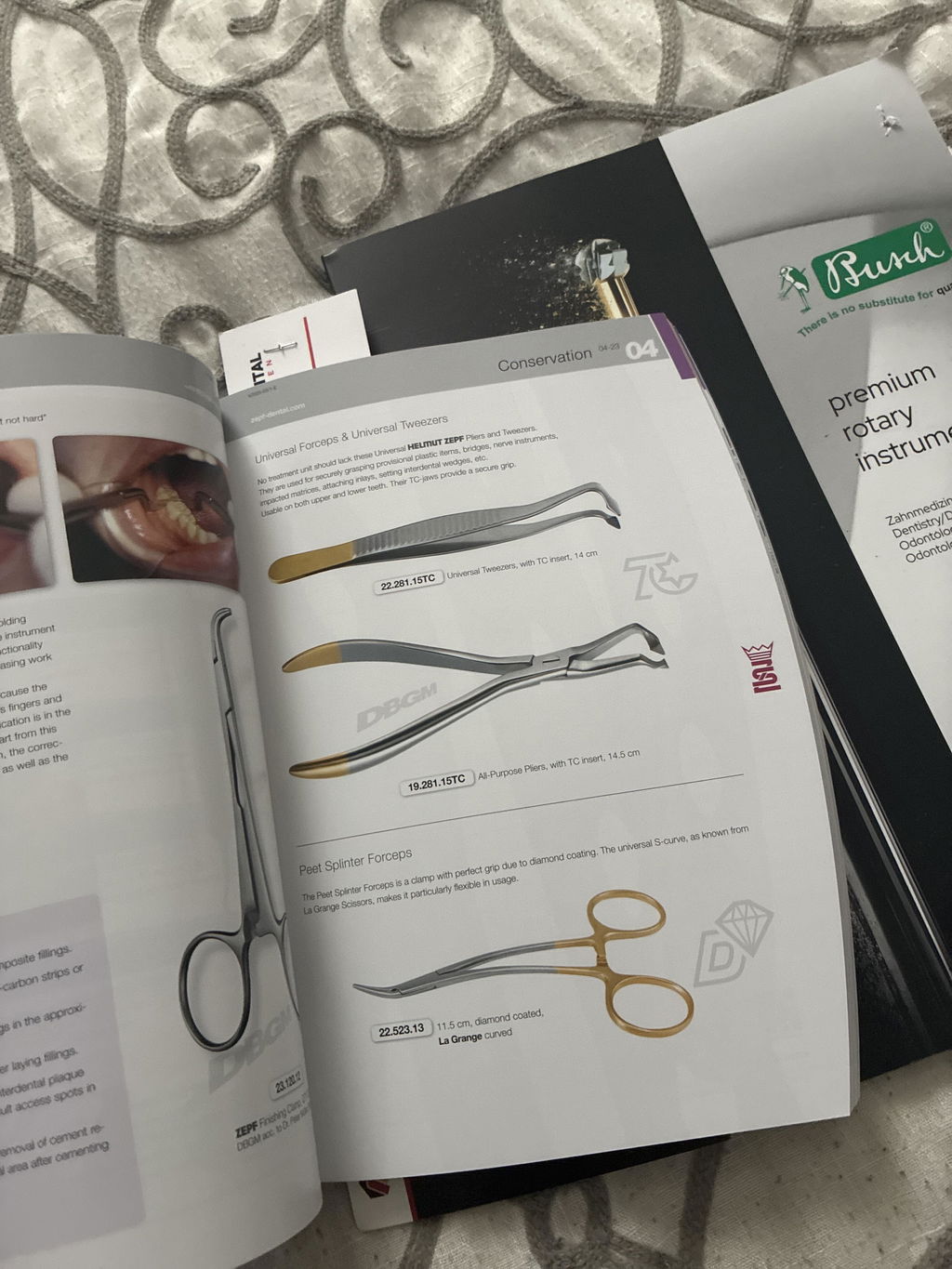
A dental burnisher is the finishing tool that turns freshly packed composite into a smooth, anatomically contoured surface before you cure it. Ball, acorn, and beavertail tips each polish differently, and picking the right pattern saves chairtime at the post-op polish appointment.
Most clinicians keep at least one burnisher pattern within reach for every direct restoration, whether they're closing a Class II marginal ridge, feathering a Class III incisal edge, or refining occlusal anatomy before the final light cure.
Helmut Zepf builds burnisher tips directly into its ZEPF-bIONIK composite instruments, pairing a plugger or spatula end with a matched burnisher geometry. Browse the full Composite & Direct Restoration collection to see every pattern side by side.
Shop Dental Composite Instrument Collection
View all-

Helmut Zepf GmbH
Regular price $169.99Unit price -
Helmut Zepf GmbH
Universal Matrix Retainer, Tofflemire | Helmut Zepf No. 19.060.00
Regular price $89.99Unit price -
Helmut Zepf GmbH
Regular price $59.99Unit price


Ball Burnishers: Contouring and Margination
The ball burnisher is the shape most clinicians picture first: a small, polished sphere on the working end, sized anywhere from roughly 0.5 mm up to 2-3 mm. Rolled lightly against uncured composite, a ball tip smooths marginal ridges, adapts material tightly against a matrix band, and burnishes proximal margins flush to the tooth before the light cure — reducing the flash and overhangs that otherwise require diamond finishing afterward. It's the pattern most often reached for on Class II and Class V restorations, where a tight, void-free margin matters more than broad anatomical detail.
Acorn Burnishers: Anatomy and Contact Adaptation
The acorn burnisher trades the sphere for a tapered, cone-like tip that flares slightly at the working end. That geometry gives it more surface area to work broad, curved anatomy — marginal ridges, cuspal inclines, and interproximal contact areas — without gouging the composite the way a smaller ball tip can on a wide surface. Many clinicians pair an acorn tip with a ball burnisher on the same tray: acorn for shaping the bulk of the anatomy, ball for fine-tuning margins and line angles afterward.
Beavertail and Pear-Shaped Tips: Zepf's Dual-Ended Composite Instruments
Helmut Zepf builds its burnisher tips directly into double-ended ZEPF-bIONIK composite instruments, pairing a spatula or plugger on one end with a burnisher pattern on the other — so you're not switching instruments mid-restoration. Each instrument carries a NANOPAL-coated working surface that resists composite sticking, which keeps the burnished surface clean instead of dragging and tearing partially cured resin.
Best for: The No. 26.120.12TI Beavertail Burnisher excels at broad occlusal and buccal contouring, where its flat, paddle-shaped 2.6 mm tip burnishes composite flush across a wide surface in fewer strokes.
Best for: The No. 26.120.20TI pear-shaped burnisher is best for refining proximal box margins and line angles on Class II and Class III restorations, where its smaller Ø 1.5 mm tip fits tight interproximal spaces.
Best for: The No. 26.120.25TI plugger/burnisher combination is best for bulk-fill increments — the 1.5 mm plugger end packs and adapts material, and the Ø 1.9 mm pear-shaped burnisher immediately smooths the increment before curing.
| Pattern | Tip shape | Best for |
|---|---|---|
| Ball | Small sphere | Margins, line angles, matrix adaptation |
| Acorn | Tapered, flared cone | Broad anatomy, cuspal inclines, contacts |
| Beavertail | Flat paddle | Occlusal and buccal surface contouring |
| Pear-shaped | Rounded, bulbous | Proximal boxes and bulk-fill increments |
FAQs
What is a dental burnisher used for?
A dental burnisher smooths and contours composite (or adapts amalgam and gold foil in some practices) before or immediately after placement, closing marginal gaps and refining anatomy so less finishing is needed after the material sets.
What's the difference between a ball burnisher and an acorn burnisher?
A ball burnisher has a small spherical tip suited to margins and tight line angles, while an acorn burnisher has a tapered, flared tip that covers broader anatomical surfaces like cuspal inclines and contact areas in fewer passes.
Can I use the same burnisher on composite and amalgam?
Ball and acorn burnishers are traditionally amalgam-era shapes and still work on amalgam, but for composite most clinicians prefer a NANOPAL- or Teflon-coated tip like Zepf's beavertail and pear-shaped patterns, which resist resin sticking far better than uncoated stainless steel.
Why does Zepf combine a burnisher tip with a spatula or plugger on the same instrument?
Pairing a placement end (spatula or plugger) with a burnisher end on one double-ended instrument means you place, adapt, and burnish composite without swapping instruments mid-restoration, which keeps the field drier and the procedure faster.
How do I know what size ball burnisher to choose?
Match the tip diameter to the margin or surface you're refining — smaller tips (under 1 mm) for tight proximal margins and line angles, larger tips (2 mm and up) for broader occlusal or buccal contouring.
Do burnishers need special sterilization?
No. Zepf's stainless steel burnisher instruments are autoclavable using standard steam sterilization cycles like any other hand instrument; the NANOPAL coating is designed to withstand repeated sterilization without degrading.
Shop the full Dental Composite Instrument Collection.