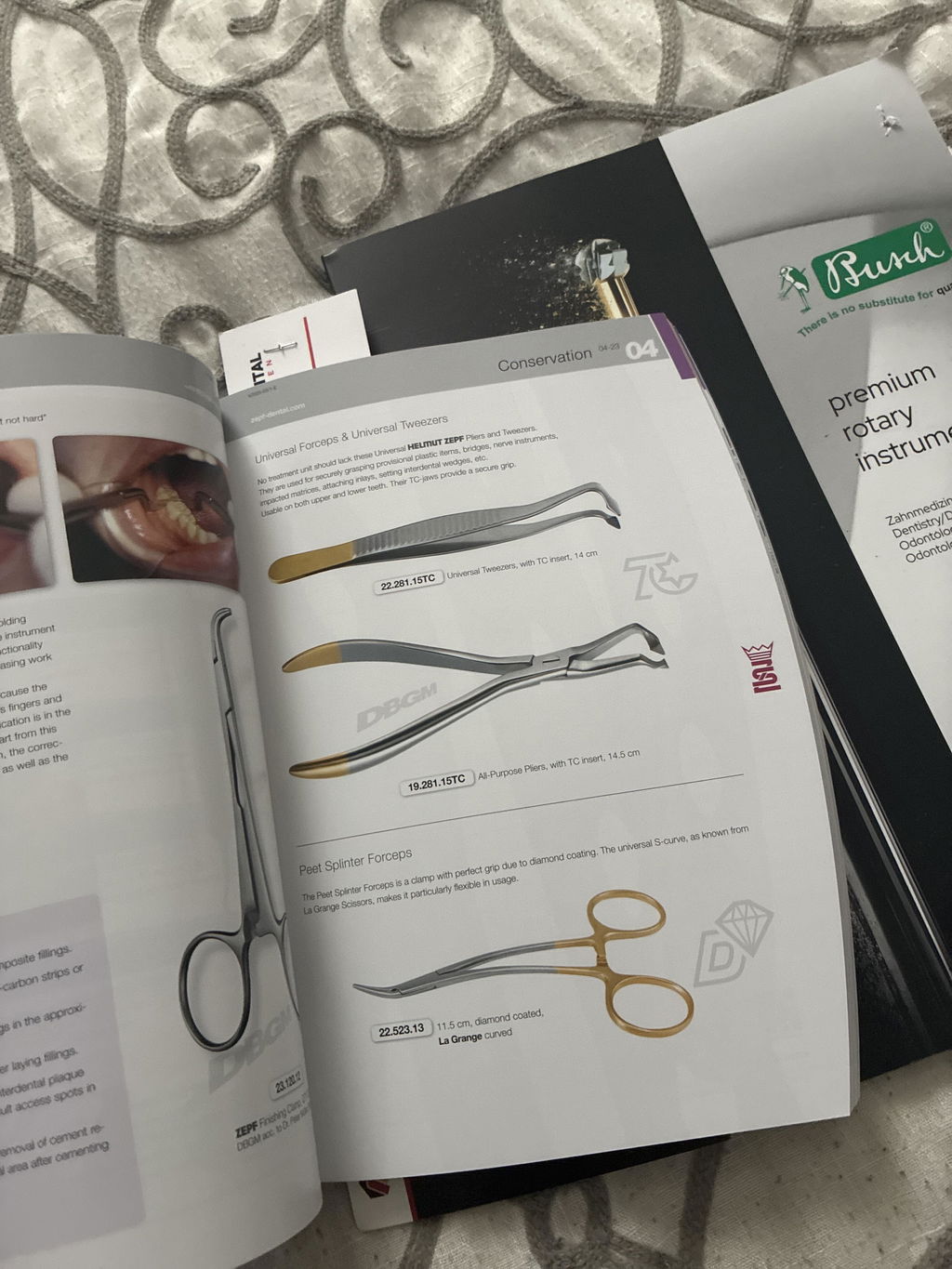
Crown lengthening exposes more tooth structure, either to restore a tooth whose margin sits at or below the gingiva or to correct a gummy smile, and a gingivectomy is its simplest form: excision of excess gingiva without a flap. Both are resective procedures, and both depend on sharp, well-matched knives to remove tissue cleanly and predictably.
Three knife patterns dominate resective perio trays: the angled Kirkland knife for facial and lingual bevels, the narrow Orban knife for interdental access, and general-purpose periodontal knives such as the Goldman-Fox pattern for broader recontouring. This guide matches each knife to its role, outlines the crown lengthening tray, and links to the full Gingivectomy Knife collection.
What Instruments Are Used for Crown Lengthening?
It depends on whether bone is involved. Soft-tissue crown lengthening (a gingivectomy) needs only the knives below plus a periodontal probe to mark the new margin and a curette to clear tags of tissue. Osseous crown lengthening adds a scalpel for the flap incision, a periosteal elevator to reflect it, periodontal chisels or a rongeur to recontour the crestal bone to a new biologic width, a bone file to smooth it, and a needle holder and sutures to close. The Wedelstaedt, Ochsenbein and Fedi chisel patterns used for that osseous step are compared in our periodontal chisels guide; this article covers the knives.
Kirkland Knives: Facial and Lingual Bevel Incisions
The Kirkland knife carries a kidney-shaped, double-beveled blade designed to follow the curvature of the gingival margin on facial and lingual surfaces. Its continuous cutting edge lets the clinician establish the initial bevel incision in a single stroke, which is why it remains the reference instrument for classic gingivectomy technique.
Best for: Full-arch bevel incisions and initial tissue reduction with the Kirkland Gingivectomy Knife #K 15/16.
Orban Knives: Interdental and Papilla Access
Where the Kirkland pattern handles broad facial and lingual bevels, the Orban knife's narrow, spear-pointed double-ended blade is built for the tight interdental col that a wider blade cannot safely reach. It is standard for completing the interproximal portion of a gingivectomy incision and for refining papilla contour during crown lengthening.
Best for: Interdental and papilla-level incisions with the Periodontal Knife #3 – Orban 1/2, Double-Ended.
Goldman-Fox and General Periodontal Knives
The Goldman-Fox #GF11 is a second gingivectomy knife pattern, used alongside or instead of the Kirkland for broader recontouring and flap-margin trimming once osseous crown lengthening exposes the alveolar crest. A general double-ended periodontal knife — straight on one end, bent on the other — rounds out the tray for clinicians who prefer a single versatile instrument over multiple single-purpose knives.
Best for: Flap-margin recontouring with the Goldman-Fox Gingivectomy Knife #GF11, or general-purpose incisions with the Periodontal Knife #1, Double-Ended.
Shop Gingivectomy Knife
View all-
 20% off
Helmut Zepf GmbH
GIN-Knife Set | Helmut Zepf No. 26.182.45
Sale price $359.99 Regular price $449.99Unit price -
Helmut Zepf GmbH
Regular price $169.99Unit price -
Helmut Zepf GmbH
Regular price $169.99Unit price


| Pattern | Blade Shape | Best For |
|---|---|---|
| Kirkland | Kidney-shaped, double-beveled | Facial/lingual bevel incisions |
| Orban | Narrow, spear-pointed, double-ended | Interdental/papilla access |
| Goldman-Fox #GF11 | Gingivectomy knife pattern | Flap-margin recontouring |
| General periodontal knife | Double-ended, straight/bent | Versatile single-tray option |
Building the Crown Lengthening Tray
A resective crown lengthening tray typically pairs one or two gingivectomy knives with a periosteal elevator for flap reflection, a curette for granulation tissue removal and, for the osseous step, periodontal chisels (see the periodontal chisels guide and the Periodontal Chisels collection), alongside standard periodontal instrumentation. For clinicians who prefer an interchangeable-tip system rather than several fixed knives, the Kirkland Gingivectomy Knife / Curette #15/16 with interchangeable tips consolidates several blade options onto a single ZEPF-Line handle, reducing tray footprint without sacrificing pattern selection chairside. For the complete range of German-made periodontal hand instruments, browse the Helmut Zepf Dental Instrument Collection.
FAQs
What is the difference between a Kirkland and an Orban knife?
The Kirkland knife has a broad, kidney-shaped double bevel for facial and lingual incisions, while the Orban knife has a narrower, spear-pointed double-ended blade built to access the interdental col.
Are gingivectomy knives used for crown lengthening?
Yes. In surgical crown lengthening, gingivectomy knives establish the initial soft-tissue incision before flap reflection and, where indicated, osseous recontouring.
How many gingivectomy knife patterns does a typical tray need?
Most clinicians stock a Kirkland knife for bevel incisions and an Orban knife for interdental access; a Goldman-Fox or general periodontal knife adds flexibility for broader recontouring.
Can one interchangeable-tip handle replace multiple fixed knives?
Yes. Interchangeable-tip systems let a single ZEPF-Line handle accept different blade patterns, reducing the number of dedicated instruments needed on the tray.
What material are these knives made from?
Helmut Zepf gingivectomy and periodontal knives are manufactured from high-grade German stainless steel and are autoclave-sterilizable.
Do these knives require sharpening between uses?
Yes. Like all periodontal knives, cutting edges should be inspected regularly and sharpened or replaced to maintain clean, low-trauma incisions.
Shop the full Gingivectomy Knife collection.
Related resources: Product Library · Helmut Zepf Literature · Busch Catalogs