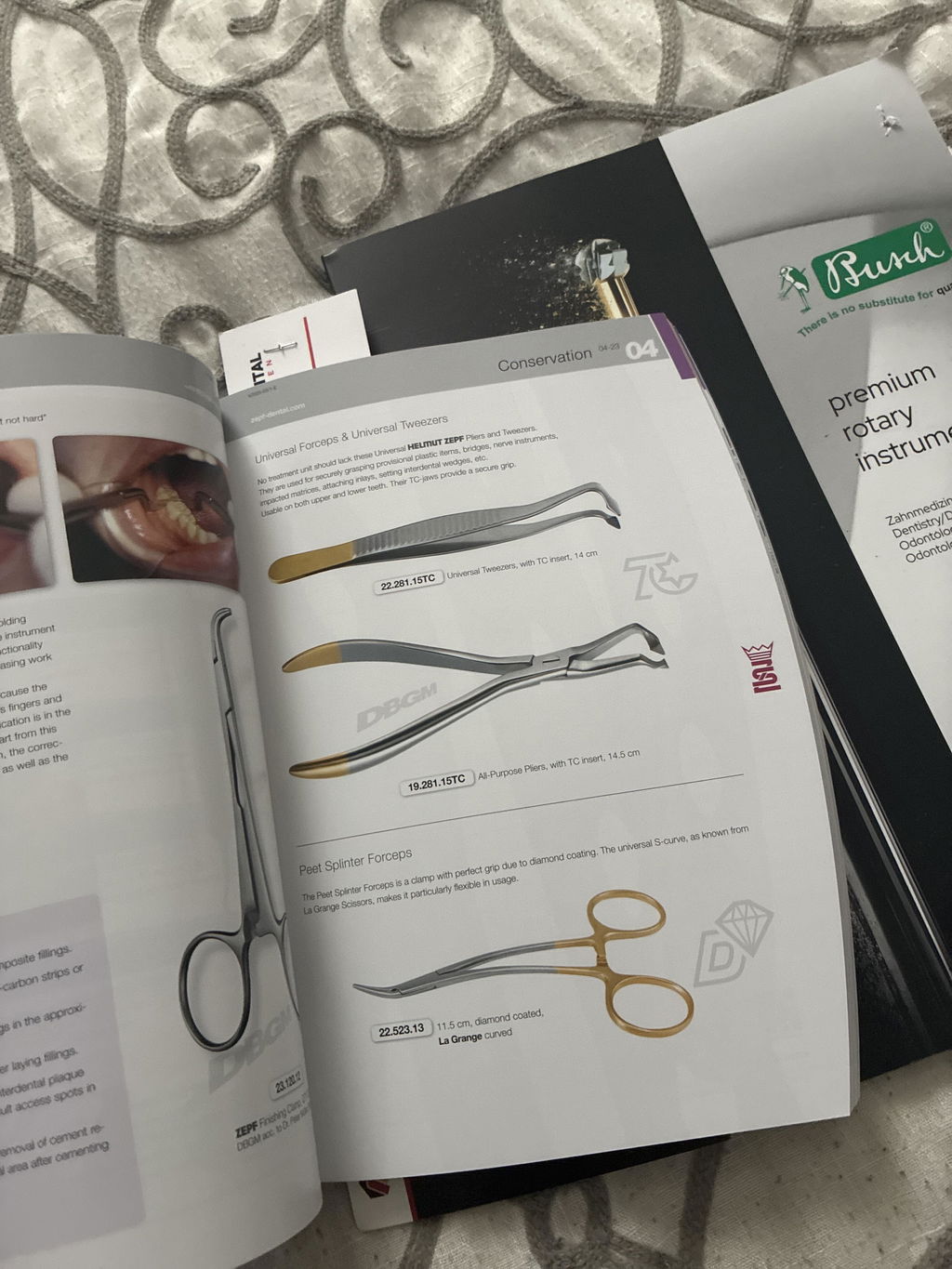
Ask a general dentist which forceps sees the most use on a routine extraction day and the answer is usually the #151 extraction forceps. Known as the lower universal, the #151 is the mandibular counterpart to the #150: one instrument that adapts to lower incisors, canines, premolars, and retained roots. Because the lower arch is where access is tightest and where wrist position matters most, the #151's geometry is not an afterthought — it is the whole reason the pattern exists.
This guide covers the #151 in depth: which teeth it is for, how its beaks and handle differ from the #150, the technique that keeps lower anterior roots intact, the #151-A, #151-S, #151-AS and diamond-coated variants, and how to choose a German-made #151 from Helmut Zepf that will hold its alignment for decades.
Is the 151 forceps upper or lower?
The #151 is a lower (mandibular) forceps. It is the universal pattern for lower incisors, canines, premolars, and roots. Its upper-arch partner is the #150, which handles the same tooth groups in the maxilla. If you remember one rule: 150 up, 151 down.

What the #151 is designed for
The #151 belongs to the American-pattern family, in which each number encodes a specific anatomical fit. The #151 is indicated for:
- Lower incisors — narrow, flattened single roots that fracture easily under rotation, which is why the #151's beaks are built to grip rather than twist.
- Lower canines — the longest root in the mandible, best delivered with slow buccal-lingual luxation once elevated.
- Lower premolars — single, conical roots that tolerate gentle rotation; the premolar-specific #151-A adds a more secure purchase here.
- Retained roots in those positions, provided enough root structure remains above bone for the beaks to seat.
Where it yields to specialist patterns: lower molars, whose bifurcated roots call for the furcation-engaging beaks of the #23 cowhorn or a #17; fractured root tips below the bone crest, better retrieved with Rescue-Line root tip forceps or the X-Tool root tip elevator; and primary dentition, which is exactly why the scaled-down #151-S and #151-AS exist in the pediatric forceps collection.
How the #151 differs from the #150
The two universals share the same beak concept — broad, gently concave, non-pointed jaws that close on a single root — but they reach the tooth from opposite directions. The #150's beaks run in a shallow S-curve nearly in line with the handle, so that a palm-up grip approaches upper teeth from below. The #151's beaks are bent downward at a sharper angle to the handle, so that a palm-down grip drops into the lower arch with the beaks parallel to the long axis of the tooth and the wrist in a neutral position. Put them side by side and the bend at the hinge is the tell.
That angle is why the #151 cannot simply be substituted for a #150. Used on the upper arch, its beaks would meet the tooth off-axis and the handle would sit into the patient's lower lip. Our full comparison, #150 vs #151 Extraction Forceps: What's the Difference?, covers the side-by-side in more detail.
Step-by-step technique with the #151
1. Elevate first. Confirm profound anesthesia, release the gingival attachment, and luxate with a straight elevator until you feel mobility. On implant-destined sites, a periotome pass first preserves the thin labial plate of the lower anterior region. A #151 delivers a tooth that elevation has already loosened; it does not do the loosening.
2. Position and grip. Seat the patient so the mandibular occlusal plane is roughly parallel to the floor. Hold the #151 palm down, with the beaks pointing down into the arch. Support the mandible with your non-dominant hand — the lower jaw is not braced by the skull the way the maxilla is, and unsupported force transfers to the temporomandibular joint.
3. Seat the beaks apically. Place the beaks parallel to the long axis of the tooth and push them under the gingival margin onto root structure, never onto enamel. On lower incisors the root is thin labiolingually, so the beaks must be fully seated on both sides before any force is applied.
4. Luxate with the anatomy. Start with firm apical pressure, then slow, deliberate labial-lingual movements, pausing at each end to let the socket expand. Rotate only on the conical premolar roots and only after mobility is established. Rotating a lower incisor or a slender premolar root is the most common cause of a fractured apex.
5. Deliver and inspect. Deliver along the path of least resistance, usually labial, with traction and a controlled lift. Inspect the root for a complete apex, compress the expanded plates, and proceed with grafting or closure as planned.
Pro tips: if the beaks ride up onto the crown, stop and re-seat rather than squeezing harder; if a root fractures, switch to root tip instruments immediately instead of re-gripping with the #151; and on brittle or heavily restored teeth, a diamond-coated #151 holds with far less pinch force than plain serrated beaks.
The #151 family: which variant do you need?
Helmut Zepf manufactures the #151 in several configurations. The table below maps each one to its Zepf article number and clinical role.
| Pattern | Zepf No. | Beaks / role | Indicated for |
|---|---|---|---|
| #151 Cryer | 14.151.00 | Standard lower universal | Lower incisors, canines, premolars, roots |
| #151 Diamond Coated | 14.151.00D | Diamond-grit beak surface for low-pressure grip | Same as #151; brittle, restored or endodontically treated teeth |
| #151-A Cryer | 14.151.01 | More parallel beaks for a secure premolar purchase | Lower premolars, incisors, roots |
| #151-AB | 14.151.10 | Parallel-beak lower variant | Lower anterior and premolar roots |
| #151-SB | 14.151.90 | Alternative beak geometry for the lower arch | Lower anterior and premolar regions |
| #151-S Cryer (pediatric) | 14.151.05 | Scaled-down beaks and handle | Primary lower anteriors and premolar-region teeth |
| #151-AS (pediatric) | 14.151.11 | Pediatric with parallel beaks | Primary lower teeth |
| #151-AS Diamond Coated (pediatric) | 14.151.11D | Pediatric, diamond-grit beaks | Primary lower teeth, fragile crowns |
For most general practices the standard #151 (14.151.00) is the first purchase, with the #151-A added when premolar extractions are frequent and a pediatric #151-S or #151-AS when the practice treats children. The diamond-coated versions earn their premium in practices that extract many endodontically treated or heavily restored teeth, where crown fracture is the recurring problem.
Cross-reference: the #151 by other manufacturers' numbers
The #151 pattern number is shared across American-pattern manufacturers, so an order written for another brand's lower universal maps directly to the Zepf instrument. Hu-Friedy lists the pattern as F151 (and F151A for the premolar version), Miltex as DEF151 / DEF151A, and Nordent as FE151 / FE151A. Same clinical pattern, not identical manufacture — beak finish, hinge tolerance, and steel differ by maker, which is what our Surgical Instrument Comparison Chart is for. The full number-to-tooth map for every pattern is in the Dental Extraction Forceps Numbers Guide.
Shop #151 Dental Extraction Forceps
View all-

Helmut Zepf GmbH
Extraction Forceps, American Pattern, #151-SB, for Lower Teeth | Helmut Zepf No. 14.151.90
Regular price $229.99Unit price -
Helmut Zepf GmbH
Regular price $229.99Unit price -
Helmut Zepf GmbH
Regular price $299.99Unit price


Maintenance, sterilization, and care
Clean promptly after use — dried blood at the hinge is the fastest route to a stiff joint and corrosion pitting. Ultrasonic cleaning, thorough rinsing and drying, a hinge inspection, and steam autoclaving per the manufacturer's instructions keep a #151 serving reliably; the discipline in our Surgical Instrument Reprocessing & Sterilization Guide applies directly. A cassette workflow with ZEPFcare sterilization cassettes protects beak alignment through the wash-sterilize-store cycle, and a forceps that eventually loses alignment can often be restored through our repair and reconditioning service rather than replaced.
Choosing a #151 you can rely on
A lower universal is used on nearly every extraction day, and beak alignment and hinge tolerance are exactly where economy instruments fail first. Every Helmut Zepf #151 is forged from German surgical stainless steel in Seitingen-Oberflacht, ships fast from Germany and our US warehouse, and is backed by a lifetime warranty against defects in materials and workmanship. Browse the #151 Dental Extraction Forceps collection for every configuration above, pair it with the #150 upper universal to cover both arches, and see the complete Dental Extraction Forceps & Tools range for molar, root tip, and atraumatic patterns.
Frequently asked questions
Is the #151 forceps upper or lower? Lower. The #151 is the mandibular universal forceps for lower incisors, canines, premolars, and roots. The #150 is the upper universal.
Can I use the #151 on lower molars? It is not designed for them. Lower molars have two roots joined at a furcation, which the pointed beaks of a #23 cowhorn or a #17 are built to engage. A universal on a molar is the most common cause of a fractured crown.
What is the difference between the #151 and the #151-A? The standard #151 is the general lower universal. The #151-A has more parallel beaks that seat more securely on lower premolar roots, at the cost of a little of the standard pattern's range.
What is the #151-S? The pediatric version: the same lower-universal geometry scaled down for primary teeth and smaller mouths. The #151-AS is the pediatric pattern with parallel beaks.
Why choose a diamond-coated #151? The diamond-grit beak surface grips enamel and root with far less squeezing force, which lowers the risk of crown fracture on brittle, restored, or endodontically treated teeth.
Do I need both a #150 and a #151? For general practice, yes. Together they cover routine single-rooted extractions in both arches; most clinicians build the extraction kit around this pair and add molar and root tip patterns as case mix requires.
This article is intended as an educational reference for dental professionals and does not replace clinical judgment or manufacturer instructions for use.
Related resources: Product Library · Helmut Zepf Literature · Busch Catalogs