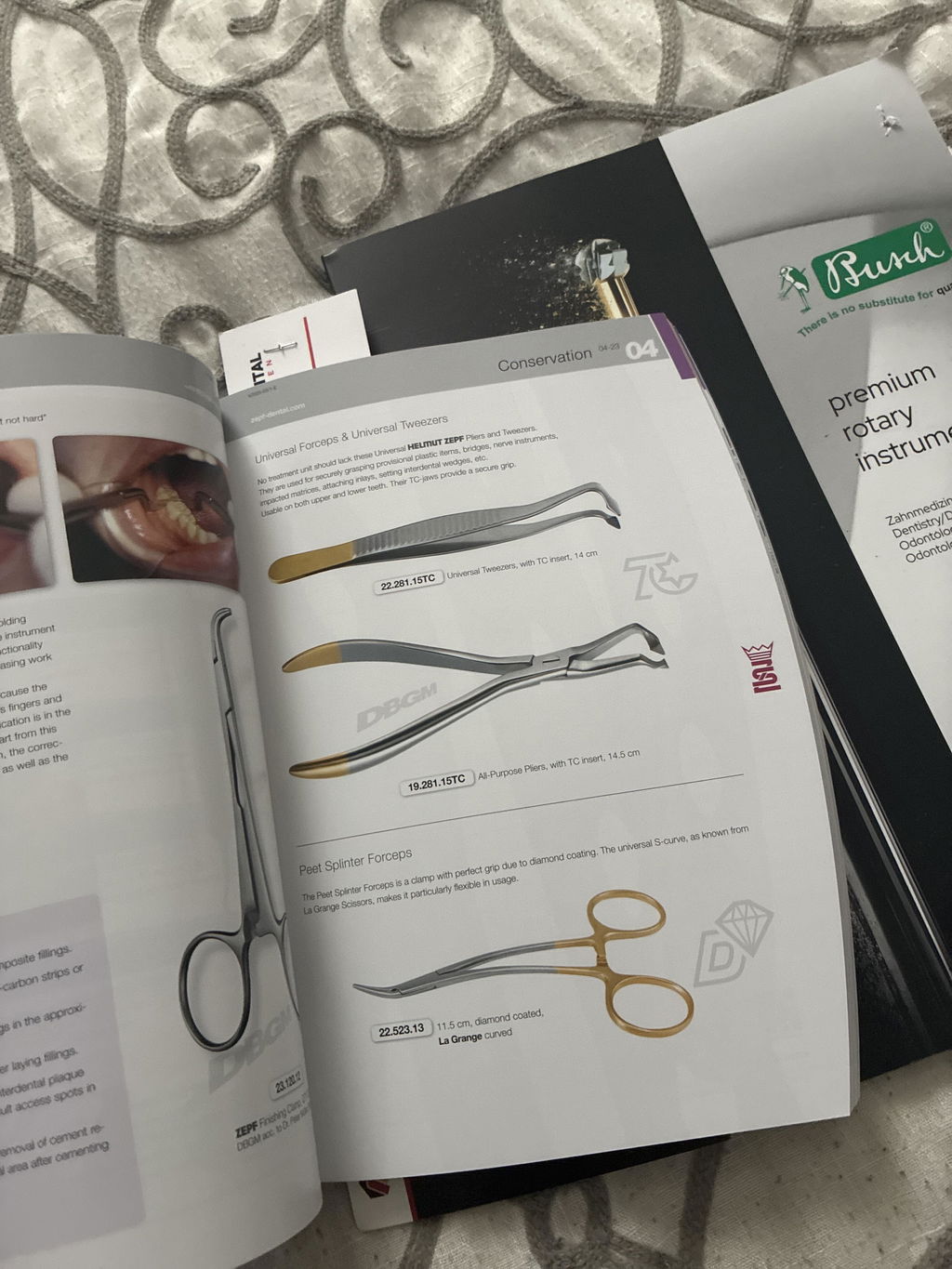
Alveoloplasty (also spelled alveoplasty) is the surgical recontouring of the alveolar ridge — reducing sharp buccal plate, bony spicules, or a prominent interseptal septum after extraction so the ridge heals to a smooth form ready for a denture flange or a future implant. It is usually done in the same visit as the extraction, with a small set of hand instruments.
Three instrument families do the work: rongeurs remove bulk bone quickly, bone files refine the surface by hand, and chisels shape stubborn ridges or interseptal bone with controlled hand pressure. This guide walks the alveoloplasty sequence and names the Helmut Zepf pattern for each step, drawn from the Dental Bone Rongeurs & Rongeur Forceps collection and related bone-management instruments.
What Instruments Are Used for Alveoloplasty?
After the flap is reflected, a rongeur takes down gross irregularities and sharp plate in controlled bites, a chisel shears any defined ridge of bone the rongeur cannot seat on, and a bone file smooths the crest before the flap is repositioned; a surgical bur under irrigation is reserved for dense cortical bone or larger reductions. A practical tray carries one fine and one stout rongeur, a parallel-cut and a cross-cut bone file, and one chisel.
Rongeurs for Bulk Bone Reduction
Rongeurs are the first instrument reached for once a sharp buccal plate, bony spicule, or prominent septum needs to come down before filing begins. Their spring-loaded jaws let the surgeon take controlled bites of cortical bone without the torque a rotary bur can transmit to a fresh socket. The patterns themselves — Kerrison, Friedman, Blumenthal, Ruskin, Cleveland and Luer — are compared in our bone rongeur patterns guide; for alveoloplasty the choice comes down to bite size and access.
Best for: Broad ridge trimming and posterior sockets that need a stouter jaw — the Cleveland Rongeur Forceps #4 (14 cm) for heavier cortical bone, or the Luer Bone Rongeur Forceps #2 (Broad) (15 cm) where a wide bite speeds bulk removal of interseptal bone.
Best for: Anterior sites or a thin buccal plate where a finer bite lowers the risk of overreduction — the Micro Friedman Rongeur Forceps, slightly curved, 15.5 cm.
Bone Files for Final Smoothing
Once bulk reduction is complete, a bone file removes the fine irregularities a rongeur beak cannot reach — micro-spicules, residual septal peaks, and transition zones between socket walls. Filing by hand keeps the surgeon in direct tactile contact with the ridge, which is hard to replicate with a rotary bur close to soft tissue.
Best for: Routine post-extraction smoothing where a controlled, parallel-cut stroke is preferred, the Miller Bone & Alveolotomy File #1 (Parallel Cut) is a standard choice for finishing the ridge before flap closure; the same pattern is also made as the Miller Bone & Alveolotomy File #1 (Cross Cut), and many trays stock both.
How parallel-cut and cross-cut Miller files differ, and when a Hemingway or Lucas bone curette is the better finishing instrument, is covered in Bone Files and Bone Curettes: Miller, Hemingway and Lucas Patterns Explained.
Chisels for Precise Ridge Shaping
Chisels bridge the gap between rongeur and file: hand pressure, with or without a mallet, shears a controlled flake of bone. That makes them useful for defining a ridge angle, opening interseptal bone ahead of the rongeur, or contouring around a fixed anatomical landmark. Ochsenbein, Fedi and back-action patterns are compared in our periodontal chisels guide.
Best for: Straight-line bone removal and ridge contouring in a single stroke, the Rhodes Back Action Chisel #36/37 is built specifically for bone material removal and contouring.
Choosing Patterns by Step
| Pattern | Key Trait | Best For |
|---|---|---|
| Cleveland Rongeur #4 | Robust, heavy-duty jaw | Bulk cortical bone reduction |
| Luer Rongeur (Broad) | Wide bite, gross contouring | Interseptal & posterior bone |
| Micro Friedman Rongeur | Fine, slightly curved jaw | Anterior / limited-access sites |
| Miller Bone File (Parallel Cut) | Controlled hand-filing stroke | Final ridge smoothing |
| Rhodes Back Action Chisel | Straight, back-action edge | Ridge shaping & interseptal bone |
Building an Alveoloplasty Set
A practical set covers all three steps: one or two rongeurs for gross reduction, a parallel-cut and cross-cut bone file for smoothing, and a chisel for shaping stubborn areas. Stocking both a fine and a stouter rongeur means the same tray serves anterior single-tooth sites and posterior multi-tooth ridges. When a rotary instrument is needed for dense cortical bone, the Surgical Bur Guide covers bone cutter shapes and shank lengths. For related bone-management tools, browse the full Helmut Zepf Dental Instrument Collection.
Alveoloplasty CDT Codes
Alveoloplasty is reported per quadrant, and the code depends on two things: whether it was done at the same visit as extractions, and how many teeth or tooth spaces in that quadrant were recontoured.
| CDT code | Done with extractions? | Teeth or tooth spaces in the quadrant |
|---|---|---|
| D7310 | Yes | 4 or more |
| D7311 | Yes | 1 to 3 |
| D7320 | No | 4 or more |
| D7321 | No | 1 to 3 |
Routine smoothing of the socket walls is part of the extraction itself and is not reported separately. The alveoloplasty codes apply when the ridge is truly recontoured, and the clinical notes should show that extra work. Some payers bundle D7310 or D7311 with an extraction at the same site, so check the patient's plan before billing. CDT codes are maintained by the American Dental Association and reviewed each year; for coding guidance, see the AAOMS article on alveoloplasty with extractions.
Shop Dental Bone Rongeurs & Rongeur Forceps
View all-

Helmut Zepf GmbH
Micro Friedman Rongeur Forceps - Slightly Curved, 15.5 cm | Helmut Zepf No. 42.315.16
Regular price $269.99Unit price -
Helmut Zepf GmbH
Blumenthal Rongeur Forceps - 30° Curved, 15.5 cm | Helmut Zepf No. 42.358.15
Regular price $314.99Unit price -
Helmut Zepf GmbH
Mini Friedman Gracile Bone Rongeur Forceps - 15 cm, 30° | Helmut Zepf No. 42.320.15
Regular price $279.99Unit price


FAQs
What is the difference between a rongeur and a bone file in alveoloplasty?
A rongeur removes bulk bone in controlled bites using spring-loaded jaws, while a bone file smooths fine irregularities and micro-spicules with a hand-filing stroke after the rongeur work is done.
When is a chisel preferred over a rongeur?
A chisel is preferred for shearing a defined line of bone, such as opening interseptal bone or shaping a specific ridge angle, where a rongeur's rounded bite would remove more bone than intended.
Can alveoloplasty be performed without a rotary bur?
Yes. Many surgeons complete routine ridge contouring entirely with rongeurs, files, and chisels, reserving a surgical bur under irrigation for denser cortical bone or larger reductions.
How many instruments does a basic alveoloplasty tray need?
A functional tray typically includes one or two rongeur patterns, a bone file (often both parallel- and cross-cut), and one chisel, covering gross reduction, smoothing, and precise shaping.
Are these instruments reusable after sterilization?
Yes. Manufactured from surgical-grade German stainless steel and reprocessed according to the manufacturer's validated instructions, rongeurs, files, and chisels are designed for repeated autoclave cycles.
What is the CDT code for alveoloplasty?
D7310 and D7311 cover alveoloplasty done with extractions (four or more, or one to three, teeth or tooth spaces per quadrant). D7320 and D7321 cover the same split when no extractions are done at that visit.
Is alveoplasty the same as alveoloplasty?
Yes. Alveoplasty is a common shortened spelling of alveoloplasty; both refer to surgically recontouring the alveolar ridge.
Shop the full Dental Bone Rongeurs & Rongeur Forceps.
Related resources: Product Library · Helmut Zepf Literature · Busch Catalogs