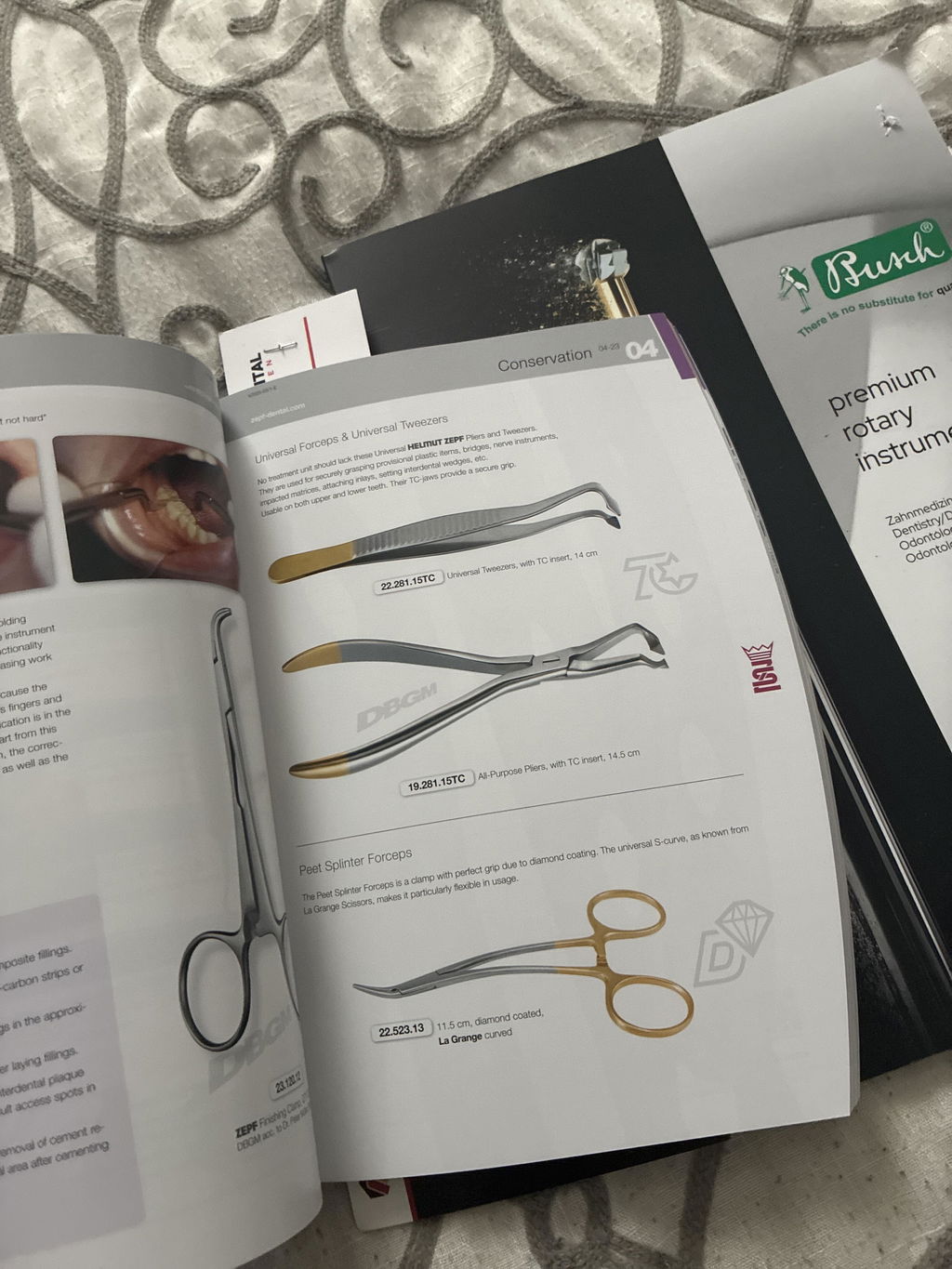
Periodontal surgery — flap access, osseous recontouring, root debridement under direct vision, and closure — uses a different tray from the hygiene operatory. Grouping periodontal surgery instruments by clinical step turns a flap and osseous procedure into a controlled, predictable sequence instead of a scramble for the right instrument mid-surgery.
Deutsche Dental Technologien stocks the Helmut Zepf instruments and pre-configured sets used to assemble one, organized in our Oral Surgery Instrument Kits collection.
This guide covers what belongs in a flap and osseous set-up, step by step, plus how the named patterns compare so you can build or restock a tray with confidence. For the wider question of which instruments are used across periodontal care, from scaling and root planing to maintenance, see What Instruments Are Used in Periodontal Procedures?.
What Instruments Are Used in Periodontal Surgery?
A flap and osseous set-up needs, at minimum: a periosteal elevator to reflect a full-thickness flap, a cheek retractor to hold the field open, one or two periodontal chisel patterns for osseous recontouring, site-specific curettes to debride exposed root surfaces, tissue scissors to trim flap margins, and a needle holder with fine suture for closure. Pre-configured Helmut Zepf sets cover the core instruments; individual patterns are added to match the practice's resective caseload.
Flap Reflection and Retraction
Every resective procedure opens the same way: a full-thickness mucoperiosteal flap is reflected to expose the alveolar bone, then held clear of the surgical field. A sharp, appropriately curved periosteal elevator lets the surgeon separate periosteum from bone cleanly, without tearing tissue or gouging the cortical plate; the patterns are compared in our periosteal elevator guide. Once the flap is up, a rigid retractor keeps cheek, tongue, and flap margins out of the working area so vision and access stay unobstructed through the osseous phase.
Best for: Controlled mucoperiosteal flap elevation — the MOLT Periosteal Elevator CM4/CM7.
Best for: Wide surgical access during full-thickness flap reflection — the Caewood Minnesota Cheek Retractor. Other retractor options are covered in the cheek and lip retractor guide.
Osseous Recontouring: Chisels and Bone-Management Instruments
Once the defect is visible, resective osseous surgery reshapes the bony architecture with hand chisels rather than rotary instruments, giving tactile feedback that keeps bone removal conservative. Different chisel patterns are ground for different access angles and strokes, so a periodontal surgery tray typically carries more than one pattern: an Ochsenbein next to the root, a CH Fedi between teeth, and a back-action chisel in the posterior sextants. The full pattern comparison, including working-tip sizes, is in our periodontal chisels guide.
Best for: Buccal osseous recontouring on facial surfaces — the Ochsenbein Periodontal Chisel #1, an angled 4 mm working end. For interproximal access, the double-ended CH Fedi Chisel #1 reaches narrower embrasures with 1.5 mm tips. For general contouring, the Rhodes Back Action Chisel 36/37 is a workhorse pattern.
Best for: Combined bone scraping and coagulum harvest for grafting — the Buser Back Action Chisel/Curette Bone Scraper.
Root Surface Debridement and Soft-Tissue Management
With bone exposed, root surfaces are debrided of residual calculus and diseased cementum before the flap is repositioned. Fine, site-specific curettes remove deposits without over-instrumenting root anatomy, and a matching set of curette shapes lets clinicians work efficiently around line angles and furcations. Tissue scissors trim and thin flap margins as needed prior to closure.
Best for: Subgingival root surface debridement on anterior teeth during flap surgery — the Gracey Special Curette GRA 1/2. Which Gracey number reaches which surface is covered in the Gracey Curette Numbers Guide.
Closure: Needle Holders and Suturing
Precise flap repositioning depends on a needle holder that locks reliably and controls fine suture material without crushing it. A spinlock design with tungsten carbide jaws holds the needle securely through repeated passes, which matters most on longer resective cases where suturing time adds up. Castroviejo, Mathieu, Crile-Wood and Mayo-Hegar patterns are compared in our needle holder guide.
Best for: Reliable needle control when closing multi-tooth resective sites — the Castroviejo Needle Holder, Straight, Tungsten Carbide Jaws.
Assembling the Full Kit
Practices standardizing a tray for the first time, or replacing a worn-out set, often start from a pre-configured set rather than sourcing every piece individually. The Dental Surgical Kit with bIONIK Handles bundles core essentials for general oral surgical procedures, while the more comprehensive ImpacTray by Dr. Dietmar Weng is built specifically for micro and macro surgical implantology, periodontology, and augmentation cases. Either can be supplemented with the individual elevators, chisels, curettes, and needle holders above to match a practice's specific resective perio caseload.
Shop Oral Surgery Instrument Kits by Helmut Zepf
View all-
 20% off
Helmut Zepf GmbH
TOUCHGRIP Microsurgical Instrument Set
Sale price $2,399.99 Regular price $2,999.99Unit price -
20% off
Helmut Zepf GmbH
Periodontal Instruments - TOUCHGRIP Root Instrumentation Set | Helmut Zepf Mfg No. 20.240.830HZU
Sale price $1,839.20 Regular price $2,299.00Unit price -
20% off
Helmut Zepf GmbH
Soft Tissue Micro Instrument Basic Set | Helmut Zepf No. 24.967.05
Sale price $1,279.99 Regular price $1,599.99Unit price


FAQs
What instruments are essential for periodontal flap and osseous surgery?
At minimum: a periosteal elevator for flap reflection, a tissue or cheek retractor, one or two osseous chisel patterns, site-specific curettes for root debridement, and a needle holder for closure.
What is the difference between Ochsenbein and CH Fedi chisels?
Ochsenbein chisels have an angled working end (4 mm on the #1) suited to removing and recontouring bone close to the root, while CH Fedi chisels are double-ended with narrower 1.5 mm tips designed for interproximal and lingual access.
Why use a back-action chisel for osseous recontouring?
A back-action pattern cuts on the pull stroke toward the operator, which gives better control and visibility than a push-stroke chisel in confined surgical sites.
Should a practice buy a pre-configured kit or build one instrument by instrument?
A pre-configured set like the ImpacTray or Dental Surgical Kit is efficient for standardizing a first tray; many practices then add or swap individual chisels, curettes, or elevators to match their specific procedure mix.
What curette pattern is typically used for root debridement during periodontal flap surgery?
Site-specific Gracey curettes are the standard choice, since their offset blade angle is designed to follow root anatomy without over-instrumenting adjacent surfaces.
How should periodontal surgery instruments be sterilized between uses?
Follow the manufacturer's validated reprocessing instructions for each instrument and use a dedicated sterilization tray to protect cutting edges and tips during autoclave cycles.
Shop the full Oral Surgery Instrument Kits by Helmut Zepf.
Related resources: Product Library · Helmut Zepf Literature · Busch Catalogs