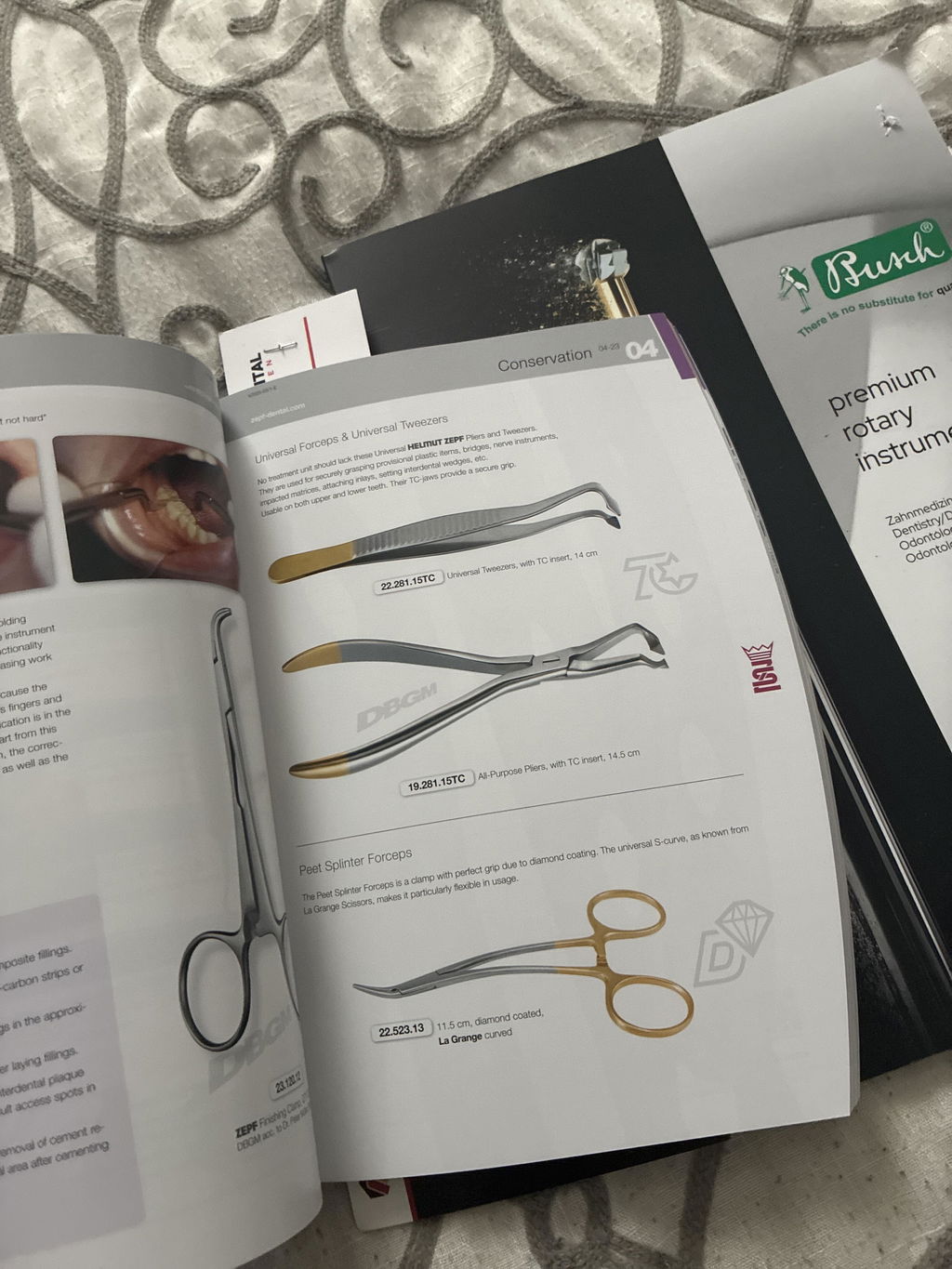
Published by Deutsche Dental Technologien
The specialized instruments used today for periodontal tunneling procedures are the product of more than three decades of clinical refinement. (For a discussion of the state of the art, see our companion guide to the best tunneling instrument sets for 2026.)
What began as an adaptation of existing periosteal elevators and curettes has evolved into a distinct category of precision microsurgical tools designed specifically for minimally invasive soft-tissue management. Understanding this evolution provides valuable context for why modern tunneling sets look and perform the way they do.
Shop Dental Tunneling Instruments
View all-

Helmut Zepf GmbH
Regular price $109.99Unit price -
Helmut Zepf GmbH
Regular price $229.99Unit price -
Helmut Zepf GmbH
Regular price $149.99Unit price


Early Roots: From Conventional Flaps to Minimally Invasive Concepts
For much of the 20th century, root coverage and soft-tissue grafting relied on traditional flap designs. Coronally advanced flaps, laterally positioned flaps, and free gingival grafts were the dominant approaches. These techniques often required vertical releasing incisions and relatively broad tissue reflection. While effective at gaining root coverage, they carried drawbacks: disruption of blood supply to the interdental papillae, increased postoperative discomfort, visible scarring, and potential aesthetic compromise in the anterior region.
By the 1980s, periodontists began seeking methods that preserved papillary integrity and maintained better vascularization of the recipient site. This shift toward tissue preservation laid the groundwork for what would become the tunneling technique.
Key Clinical Milestones in the Tunneling Technique
The development of tunneling as a formal surgical approach occurred in stages:
1985 – Raetzke’s Envelope Technique — One of the earliest documented steps toward tunneling was the envelope technique described by Raetzke. Designed primarily for isolated recession defects, this method involved creating a partial-thickness envelope without vertical incisions. Although not yet called a “tunnel,” it introduced the core idea of inserting a graft into a closed recipient bed while preserving the papillae.
1994 – Allen’s Supraperiosteal Envelope — A major advance came with Allen’s description of the supraperiosteal envelope technique. This approach expanded the concept to both single and multiple adjacent recession defects. Allen emphasized sharp dissection when tissue thickness allowed, creating a continuous recipient bed that could accommodate a connective tissue graft across several teeth. The technique further reduced the need for vertical releases and improved blood supply to the graft.
1999 – Zabalegui and the Tunnel Subepithelial Connective Tissue Graft — Zabalegui and colleagues formalized the “tunnel” terminology with their description of the tunnel subepithelial connective tissue graft. This work helped establish tunneling as a distinct surgical philosophy rather than a simple modification of earlier envelope methods. The focus on creating a continuous subepithelial or supraperiosteal tunnel that preserved papillary tissue became central to subsequent refinements.
Over the following years, numerous clinicians published variations and improvements. These included modifications for deeper tunnels, combined approaches with coronally advanced flaps (later termed tunneled coronally advanced flaps), and adaptations for implant-related soft-tissue augmentation. The common thread was the desire to minimize surgical trauma while maximizing aesthetic and functional outcomes.
The Instrument Problem
As the tunneling technique gained acceptance, a practical limitation became clear: conventional instruments were poorly suited to the procedure. Standard periosteal elevators were often too wide or too rigid. Ordinary curettes lacked the fine tip geometry and specialized angulations needed for controlled dissection in a closed tunnel. Clinicians frequently found themselves adapting existing tools, which increased the risk of tissue perforation, uneven planes of dissection, or incomplete tunnel extension — especially in posterior regions or thin biotypes.
The growing popularity of the technique created demand for purpose-designed instruments.
Development of Specialized Tunneling Instruments
In response to clinical feedback, instrument manufacturers — particularly those with strong traditions in microsurgical and periodontal tools — began developing dedicated tunneling instruments. Several design principles emerged as essential:
- Fine, sharp working tips capable of clean tissue separation with minimal force
- Specific angulations optimized for upper versus lower jaws and for anterior versus posterior access
- Improved tactile feedback so the surgeon could sense tissue planes
- Handles that reduced hand fatigue during delicate, prolonged dissection
- Durability under repeated sterilization while maintaining edge integrity
German manufacturers, with their long history of precision surgical instrument production, played a significant role in refining these tools. (That tradition itself stretches back over a century — see The History and Evolution of Dental Surgical Instruments.) Helmut Zepf Medizintechnik, for example, developed a structured set of tunneling instruments — including the well-known 46.040 series, available today as the Dental Tunneling Technique Kit (No. 46.040.00) and the expanded Tunneling Technique Set (No. 46.040.30) — that addressed the practical needs identified by clinicians. These sets typically included dedicated instruments for the upper jaw, lower jaw, and combination use, along with fine periodontal knives for initial access and progressive tunnel extension. Later refinements added more pronounced curvatures for better posterior reach and exchangeable-tip systems paired with ergonomic bIONIK handles.
Other manufacturers followed with their own interpretations — some emphasizing flexible tips, others focusing on specific coatings or handle designs. Over time, the market moved from improvised tools to complete, purpose-built tunneling kits.
Design Evolution Over Time
Early specialized instruments were essentially refined periosteal elevators with narrower tips. Subsequent generations introduced:
- Distinct upper- and lower-jaw designs reflecting anatomical differences
- Double-ended instruments for efficiency
- Angled and curved variants specifically for lateral and posterior access
- Finer tip diameters (often in the 1.7–2.5 mm range) for greater precision
- Advanced handle materials and ergonomics that improved power transmission and sensitivity
- Optional surface treatments aimed at reducing friction and extending sharpness
These refinements mirrored the broader trend in periodontal surgery toward microsurgical principles: smaller instruments, better magnification, finer sutures, and greater respect for tissue vascularity — a philosophy reflected across the modern periodontal microsurgery instrument category.
The Modern Landscape
By the 2010s and into the 2020s, tunneling instruments had become a recognized category rather than a niche adaptation. Complete sets are now routinely offered by major surgical instrument companies, and many continuing-education courses on root coverage and soft-tissue grafting include dedicated instrument recommendations.
Contemporary tunneling instruments are expected to support not only classic root-coverage procedures but also implant-related soft-tissue augmentation, papilla reconstruction, and other minimally invasive mucogingival interventions. The best modern sets balance sharpness, access, tactile feedback, and durability — qualities that directly influence surgical predictability and patient outcomes.
Conclusion
The history of tunneling instruments is inseparable from the evolution of the tunneling technique itself. What began in the mid-1980s as an effort to reduce surgical trauma and preserve papillary blood supply gradually demanded better tools. Clinicians identified the shortcomings of conventional elevators and curettes; manufacturers responded with purpose-designed instruments featuring finer tips, optimized angulations, and improved ergonomics.
Today’s specialized tunneling sets represent the cumulative result of more than thirty years of clinical experience and iterative design improvement. They enable the delicate, controlled tissue dissection that modern minimally invasive periodontal surgery requires. Understanding this developmental path helps explain why dedicated tunneling instruments have become essential rather than optional for clinicians committed to high-quality soft-tissue outcomes. To see where this evolution stands today, explore the Helmut Zepf tunneling instrument sets at Deutsche Dental Technologien.
Related resources: Product Library · Helmut Zepf Literature · Busch Catalogs
Manufacturer literature: Tunneling Instruments flyer (PDF) — more in our Surgical Instrument Library.