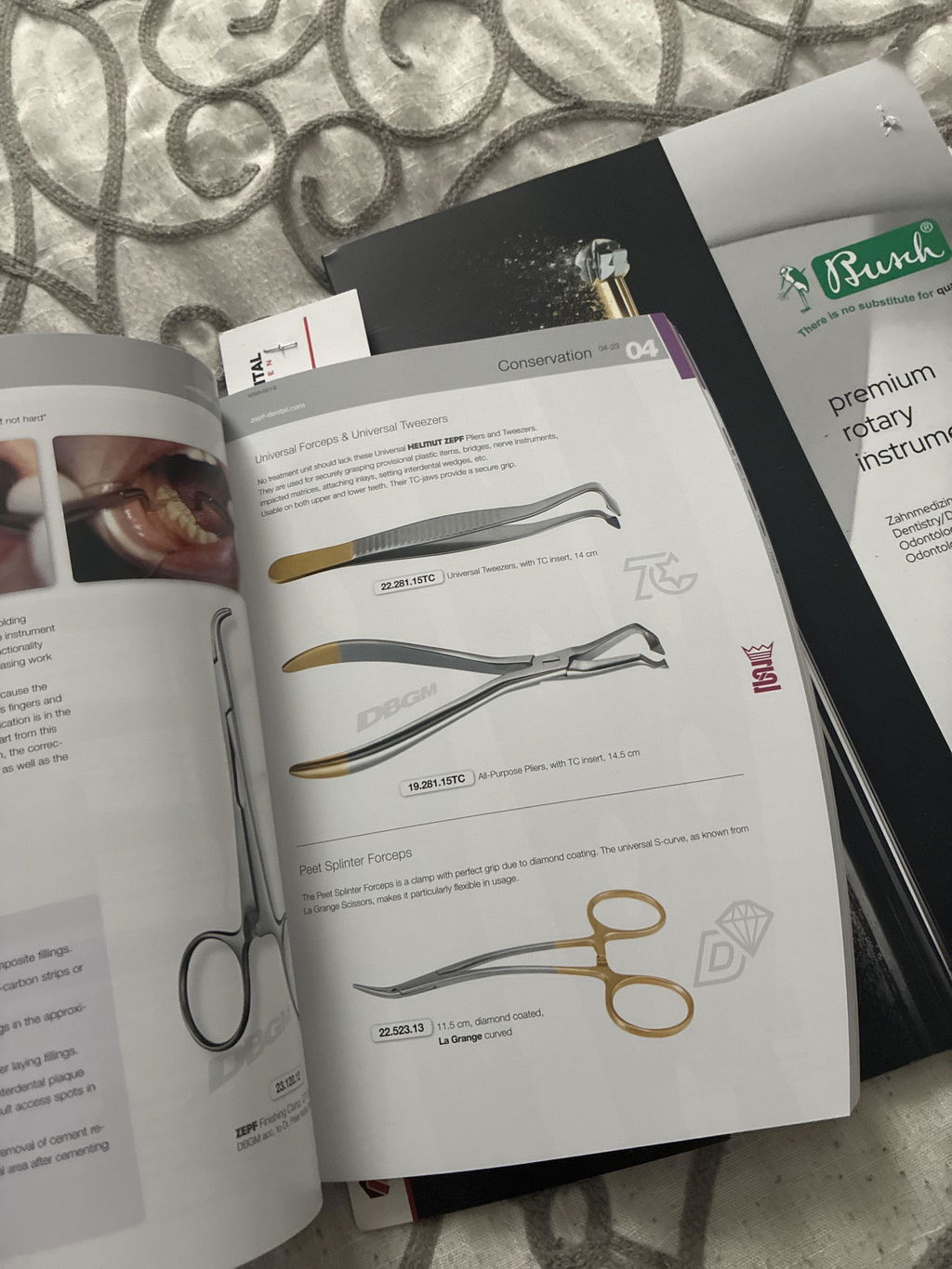
Veterinary Dental Instruments
German-made luxating elevators, root tip picks, periosteals and surgical burs for canine and feline extractions and oral surgery.
Read more +
The instruments on this page are the same Helmut Zepf hand instruments and Busch rotary instruments that human oral surgeons use, chosen for the anatomy veterinary dentists work with every day: three-rooted carnassial teeth that need sectioning, long canine roots that need a surgical approach, and fragile feline roots that fracture under too much force. The page follows the order of a surgical extraction, then splits the key instruments into canine and feline picks by working-tip size. Helmut Zepf has been making the best forceps in the world in Germany since 1921, and every Busch bur is manufactured under ISO 13485 certification.
Shop in extraction order
Flap → section → bone → luxate → elevate → retrieve → smooth → closeCanine and feline picks
Canine
Larger roots and dense bone call for wider tips, surgical-length burs and a full flap on canine teeth.
Feline
Thin, curved roots and tooth resorption call for fine tips, small burs and very little force.
Luxating elevators
Luxating elevators are thinner and sharper than standard elevators. They are pushed apically to sever the periodontal ligament, not levered, which is why they reduce root fractures in small and fragile teeth. The Helmut Zepf X-Tool range comes in straight, curved, left, right and serrated (Lindo Levien) patterns from 2.5 to 4.5 mm, each available with an Onyx coating that holds its edge longer.
Burs for sectioning and alveoloplasty
Busch burs are made in Engelskirchen, Germany. For veterinary extractions the workhorses are crosscut fissure carbides for sectioning multi-rooted teeth, round carbides for removing buccal bone, and coarse diamonds for smoothing the alveolar margin before closure. Surgical-length shanks give the reach long canine roots need.
Why German instruments in a veterinary practice
Care, sterilization and sharpening
Veterinary instruments see the same autoclave cycles as human dental instruments. Follow the reprocessing guides below to protect cutting edges and coatings, and book sharpening when luxators and periosteals stop cutting cleanly.
Frequently asked questions
Are these instruments made for veterinary use?
They are the same Helmut Zepf and Busch instruments used in human oral surgery. Veterinary dentists use them because the procedures are the same: flap surgery, sectioning, luxation and elevation. This page groups them by the tip sizes that suit canine and feline anatomy.
Which luxating elevator size should I start with for cats?
Most clinicians start with a 2.5 mm straight and a 2.5 mm curved luxating elevator (X-Luxa-Tool-1 and X-Luxa-Tool-3) for feline teeth, and add a mini-handle Heidbrink root tip elevator for fractured root tips.
Which burs are used to section a carnassial tooth?
A crosscut fissure carbide in a high-speed handpiece is the usual choice for splitting the upper fourth premolar and lower first molar into single-rooted segments. Surgical-length shanks help on large breeds.
What is the difference between a luxating elevator and a standard elevator?
A luxating elevator has a thinner, sharper blade and is pushed down the periodontal ligament space to cut it. A standard elevator is thicker and is rotated or levered to lift the root. Using luxation first reduces the force needed and the risk of fracturing the root.
Can I have my veterinary instruments sharpened?
Yes. Our sharpening and repair service covers elevators, periosteals, scalers, curettes and other hand instruments. See the service page for current options and pricing.
Do you ship to veterinary practices?
Yes. We ship to veterinary hospitals, specialty practices and universities across the US.