How Are Braces Removed? The Debonding Appointment Step by Step

- Sequencecut ligatures, remove archwires, remove brackets and bands, clear adhesive, polish, then retainer records
- Bracketssqueeze with bracket removal pliers to break the bond at the adhesive interface; never pry or grind them off
- BandsOliver Band Removing Pliers (33.770.21) lift bands with a replaceable plastic insert protecting the tooth
- AdhesiveBusch ROTO-PRO carbides at high speed with light pressure; carbide, not coarse diamond
- Polish9650 030 then 9650 050 at slow speed; unpolished enamel stains and collects plaque
Removing braces, known in the clinic as debonding, takes one appointment and follows the same sequence in almost every case: take out the wires, take off the brackets and bands, remove the leftover adhesive, polish the enamel, and record the teeth for retainers. Each step has its own instrument, and the quality of the last two steps decides how the enamel looks for years afterward.
Quick answer: Braces come off in one debonding appointment: ligatures and archwires are removed, bracket removal pliers squeeze each bracket off, band removing pliers lift molar bands, carbide burs remove leftover adhesive, polishers restore the enamel, and retainer records are taken. DeutscheDT.com carries the pliers from Helmut Zepf, made in Germany since 1921, and debonding burs from Busch & Co., for which DeutscheDT is the official US distributor.
This guide walks through the appointment step by step and names the instrument used at each stage.
The Debonding Appointment at a Glance
| Step | What Happens | Instrument |
|---|---|---|
| 1 | Cut and remove ligatures | Pin and ligature cutter |
| 2 | Remove the archwires | Distal end cutter, Weingart pliers |
| 3 | Remove the brackets | Bracket removal pliers |
| 4 | Remove molar bands | Band removing pliers |
| 5 | Remove residual adhesive | Carbide adhesive-removal burs |
| 6 | Polish the enamel | Slow-speed polishers |
| 7 | Records and retainers | Scan or impressions; bonded or removable retainers |
Step 1: Cut and Remove the Ligatures
Elastic ligatures are lifted off with an explorer or scaler. Steel ligature ties are cut close to the bracket with a pin and ligature cutter, such as the Helmut Zepf Pin and Ligature Cutter, 12 cm (No. 33.760.21), and unwound. Self-ligating brackets are simply opened.
Step 2: Remove the Archwires
If the archwire ends are cinched behind the molar tubes, they are cut or straightened first; a distal end cutter (No. 33.750.02) trims them flush. The wire is then lifted out of the brackets, often with Weingart pliers. Some clinicians leave a sectional wire in place to hold teeth together while brackets come off. Our guide to the types of orthodontic wire cutters explains which cutter suits each wire.
Step 3: Remove the Brackets
Brackets are not pried or twisted off the tooth. Bracket removal pliers grip the bracket and squeeze, which flexes the base and breaks the adhesive bond at the bracket-adhesive interface, leaving most of the adhesive on the tooth instead of pulling enamel with it. Metal brackets release easily this way; ceramic brackets are more brittle and need a pattern and technique suited to them.
Helmut Zepf makes angled (No. 33.770.52) and straight (No. 33.770.40) bracket removal pliers, a short-jaw version with a plastic insert (No. 33.770.25), and a 45° plier with carbide inserts (No. 33.760.23). They are compared in our bracket removal pliers guide.
Step 4: Remove the Molar Bands
Cemented molar bands come off with band removing pliers. One end rests on the biting surface of the tooth, often on a plastic pad to protect it, and the other hooks under the band's gingival edge; squeezing lifts the band off the tooth. The Oliver Band Removing Pliers (No. 33.770.21) use a replaceable plastic insert for this.
Step 5: Remove the Residual Adhesive
After the brackets come off, a layer of adhesive is left on every tooth. It has to be removed completely without taking enamel with it. The safest approach is a carbide bur designed for adhesive removal, used at high speed with light, intermittent pressure, working from the center of the adhesive out to its edges.
The Busch ROTO-PRO 401 016 handles the bulk on most teeth, the 402 009 reaches small areas and the gingival margin, and the 404 016 gives a smoother final pass. Their polygonal carbide heads have no sharp cutting edges, so they break up adhesive while sparing enamel. The full sequence is in our orthodontic debonding burs and polishers guide.
Step 6: Polish the Enamel
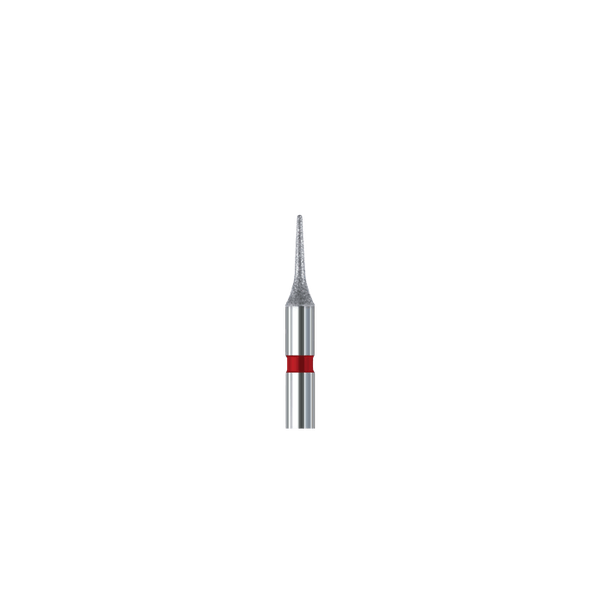
Carbide burs leave fine scratches. Slow-speed polishers on a contra-angle remove them and restore the enamel's gloss: the Busch 9650 030 torpedo polisher for margins and line angles, then the 9650 050 flame polisher for the broad surfaces. The KieferDocs Orthodontic Polishing Bur Set (No. 5433) combines the burs and polishers in one kit. Many clinicians finish with polishing paste and a fluoride application.
Step 7: Records and Retainers
The teeth are scanned or impressions are taken for retainers, and many clinicians bond a fixed lingual retainer at the same visit. Retainers keep the teeth from drifting back while the surrounding bone and fibers settle.
Getting the Enamel Right
- Remove brackets with pliers, not burs. Grinding a bracket off wastes time and risks the enamel.
- Use carbide, not coarse diamonds, for adhesive. Diamonds cut enamel as easily as adhesive.
- Keep the pressure light and the field wet. Heavy pressure grooves enamel; water controls heat.
- Check under magnification. Dry the teeth and look for remaining adhesive before polishing.
- Always polish. Unpolished enamel stains and collects plaque.
Aligner patients go through a similar cleanup when their composite attachments come off; see How to Remove Clear Aligner Attachments.
FAQs
How are braces removed?
The ligatures and archwires come out first, then bracket removal pliers squeeze each bracket off the tooth, band removing pliers lift off molar bands, and the leftover adhesive is removed with carbide burs and polished smooth.
Does getting braces removed hurt?
Most patients feel pressure rather than pain as each bracket is squeezed off. Teeth that are slightly loose or tender can feel more sensitive, and the adhesive cleanup can cause brief vibration or mild sensitivity.
How long does it take to remove braces?
Usually about an hour or less for the full appointment, including adhesive removal, polishing and retainer records. Bracket removal itself takes only a few minutes.
What tool is used to take braces off?
Bracket removal pliers take the brackets off, band removing pliers remove molar bands, and carbide burs and polishers clean off the remaining adhesive.
Can removing braces damage teeth?
The risk is mainly to the enamel during adhesive cleanup. Removing brackets with pliers, using carbide adhesive-removal burs with light pressure, and polishing afterward keep enamel loss to a minimum.
What happens after braces are removed?
The teeth are polished, records are taken, and retainers are fitted or bonded to hold the teeth in their new positions.