
2 Step Polishers for Composite by Busch
2 Step Polishers for Composite by Busch are precision-engineered dental instruments designed to deliver consistent, high-quality surface finishes on composite restorations. Whether you are working on anterior or posterior composites, these polishers provide the sequential refinement needed to achieve smooth, lustrous results efficiently.
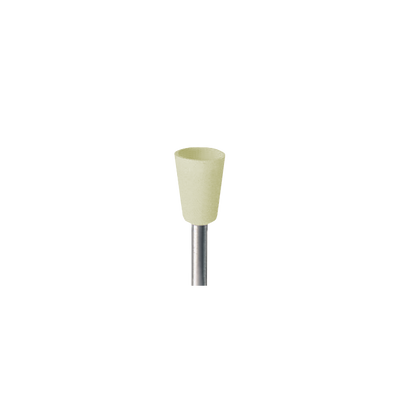


Busch & Co. GmbH
Busch Composite Cup Polisher | Busch No. 9667 070 – Medium Grit – RA | Pack of 6
Regular price $20.99Unit price-
Busch & Co. GmbH
Busch Composite Flame Polisher | Busch No. 9679 050 – Fine Grit – RA | Pack of 6
Regular price $20.99Unit price -
Busch & Co. GmbH
Busch Composite Torpedo Conical Polisher | Busch No. 9678 030 – Fine Grit – RA | Pack of 6
Regular price $20.99Unit price -
Busch & Co. GmbH
Busch Composite Cup Polisher | Busch No. 9677 070 – Fine Grit – RA | Pack of 6
Regular price $20.99Unit price -
Busch & Co. GmbH
Busch Composite Flame Polisher | Busch No. 9669 050 – Medium Grit – RA | Pack of 6
Regular price $20.99Unit price -
Busch & Co. GmbH
Busch Composite Torpedo Conical Polisher | Busch No. 9668 030 – Medium Grit – RA | Pack of 6
Regular price $20.99Unit price


Reference pages already linked from this collection, in one place.
Which 2 Step Composite Polisher Do You Need?
Use the medium-grit pre-polisher (Busch figure 966x) first and the fine-grit polisher (967x) second, in the cup, torpedo or flame shape that fits the surface; every active product in the collection is linked once below.
Step 1: pre-polishing, medium grit (RA)3 items
Step 2: high-gloss polishing, fine grit (RA)3 items
Why Choose a Two-Step System?
A two-step approach to composite polishing simplifies the finishing workflow without compromising clinical outcomes. The first step removes surface irregularities and initial roughness, while the second step refines the surface to a high gloss. Using 2 Step Polishers for Composite reduces chair time and ensures a reproducible finish across a wide range of composite materials.
Key Features
- Sequential abrasive design: Each step is calibrated to a specific grit level, enabling progressive surface refinement.
- Composite-compatible formulation: The polishing medium and instrument geometry are optimized for composite resins, minimizing heat generation and material removal.
- Consistent performance: Busch manufacturing standards ensure uniform abrasive distribution for predictable clinical results.
- Efficient workflow: The two-step protocol streamlines finishing and polishing into a straightforward sequence.
Clinical Use
These instruments are suitable for direct composite restorations, including Class I through Class V preparations, as well as composite veneers and repairs. A well-polished composite surface is smoother and easier to keep clean. The polishers run on an RA shank in the low-speed contra-angle handpiece.
Care and Reconditioning
Clean, disinfect and sterilize the instruments between uses following the manufacturer instructions and the symbols on each package, and replace an instrument once it loses cutting or polishing performance or shows damage. Our Dental Bur Reprocessing & Sterilization Guide covers the workflow for Busch rotary instruments; maximum speeds are in the Dental Bur Speed Chart.
Compare With
Related Busch collections: 2 Step Diamond Interspersed Polishers for Composites, Composite Finishing Burs, Dental Polisher Collection, Soft Disc 4 Step Polishing Disc System, and Dental Polishing Brush for Restorations. Reference pages: Bur Glossary.

FAQ
What types of composite are compatible with these polishers?
These polishers are suitable for most direct composite resins, including microfill, hybrid, and nanofill composites.
Can the polishers be sterilized?
Please refer to the manufacturer's instructions included with each product for sterilization and single-use guidance.
How do I know which step to use first?
Step 1 is the medium-grit pre-polisher (Busch 9667, 9668, 9669) and step 2 the fine-grit polisher (Busch 9677, 9678, 9679); the grit is named in each product title.
Which dental polishing burs are best for finishing composite surfaces and achieving a smooth gloss?
Pair a carbide finishing bur with this two-step polishing system: Step 1 removes surface irregularities left by the finishing bur, and Step 2 brings the composite to a high, enamel-like gloss. See our Composite Finishing, Polishing and Amalgam Removal Burs guide for the full step-by-step sequence.


