Dental Laboratory Diamond Interspersed Fiber Cutting Off Discs by Busch
Dental Laboratory Diamond Interspersed Fiber Cutting Off Discs by Busch are precision rotary instruments engineered for cutting, sectioning, and trimming tasks across professional dental laboratory environments. Manufactured by Busch, a name long associated with quality rotary tools, these discs deliver consistent, reliable performance across a wide range of dental materials.


Busch & Co. GmbH
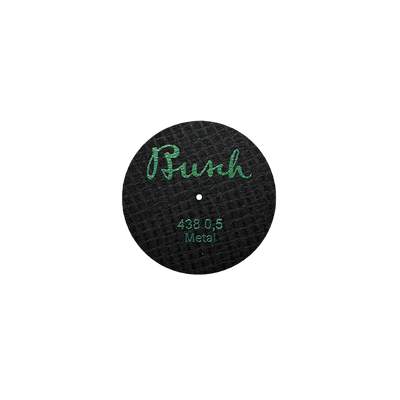
Busch Fiber Cut-Off Disc | Busch No. 438 400 – 0.5 mm | Pack of 6
Regular price $27.99Unit price-
Busch & Co. GmbH
Busch Titanium Fiber Cutting Disc | Busch No. 438T 260 – 0.4 mm | Pack of 6
Regular price $24.99Unit price -
Busch & Co. GmbH
Busch Diamond Fiber Cutting Disc | Busch No. 438D 200 – 0.3 mm | Pack of 6
Regular price $35.99Unit price -
Busch & Co. GmbH
Busch Diamond Fiber Cutting Disc | Busch No. 438D 200 – 0.2 mm | Pack of 6
Regular price $35.99Unit price -
Busch & Co. GmbH
Busch Fiber Cut-Off Disc | Busch No. 438 400 – 1.0 mm | Pack of 6
Regular price $27.99Unit price -
Busch & Co. GmbH
Busch Fiber Cut-Off Disc | Busch No. 438 220 – 0.3 mm | Pack of 6
Regular price $21.99Unit price -
Busch & Co. GmbH
Busch Fiber Cut-Off Disc | Busch No. 438 220 – 0.2 mm | Pack of 6
Regular price $22.99Unit price


Reference pages already linked from this collection, in one place.
Which Fiber Cutting Disc Do You Need?
Choose the disc type first, then the diameter (size code) and thickness; every active product in the collection is linked once below.
Fiber cut-off discs for metal alloys (438)4 items
Titanium fiber cutting disc (438T)1 items
| Busch No. | Pattern or size |
|---|---|
| 438T 260 | size 260 · 0.4 mm thick · pack of 6 |
Diamond fiber cutting discs (438D)2 items
Key Features and Benefits
- Reinforced fiber construction: The fiber-reinforced matrix provides superior strength and resistance to breakage during high-speed cutting operations.
- Diamond interspersed option: The 438D discs add diamond to the fiber-reinforced matrix for aggressive, precise cutting action on demanding laboratory substrates; the 438 and 438T discs are fiber-reinforced abrasive discs.
- Precise cutting performance: Engineered to produce clean, accurate cuts with minimal material waste, reducing finishing time.
- Broad material compatibility: Suitable for use on metals, alloys, acrylics, and other common dental laboratory substrates.
- Consistent disc geometry: Uniform thickness and diameter ensure repeatable results across every application.
- Compatible with standard laboratory handpieces and mandrels: Designed to fit commonly used rotary laboratory equipment without adapters.
Applications
Dental Laboratory Diamond Interspersed Fiber Cutting Off Discs by Busch are well suited for a variety of laboratory procedures including crown and bridge sectioning, model trimming, partial framework adjustment, and prosthetic component separation. Their robust construction makes them a dependable choice for both high-volume production labs and smaller specialist practices.
Why Choose Busch?
Busch has built a strong reputation in dentistry for manufacturing rotary instruments that meet demanding professional standards. When you select Dental Laboratory Diamond Interspersed Fiber Cutting Off Discs from Busch, you are investing in tools engineered for longevity, precision, and safety in daily laboratory use.
Clinical Use
The discs are laboratory instruments for sectioning and separating in crown and bridge technology and the model casting technique: the 438 discs are made for metal alloys, the 438T disc for titanium and acrylic, and the 438D discs are the diamond interspersed version. Thinner discs give a narrower kerf; thicker discs are more rigid.
Care and Reconditioning
Clean, disinfect and sterilize the discs between uses following the manufacturer instructions and the symbols on each package, and replace a disc once it is chipped, cracked or worn. Our Dental Bur Reprocessing & Sterilization Guide covers the workflow for Busch rotary instruments; maximum speeds are in the Dental Bur Speed Chart.
Compare With
Related Busch collections: Dental Lab Diamond Disc & Saw Burs, Dental Mandrel Collection, Wheel & Disc Instruments, Dental Lab Abrasive Discs, Stones & Wheels, and Dental Lab Burs for Metal Alloy Technology. For speeds, see the Dental Bur Speed Chart.

FAQ
What materials can these discs cut?
These discs are generally suited for dental metals, alloys, acrylics, and similar laboratory materials commonly encountered in prosthetic and restorative work.
Are these discs compatible with standard handpieces?
Yes, Dental Laboratory Diamond Interspersed Fiber Cutting Off Discs by Busch are designed for use with standard laboratory handpieces and straight mandrels.
How should the discs be stored?
Store in a cool, dry place away from direct sunlight and moisture to maintain disc integrity and cutting performance.