
Precision Technique Burs – HP-SH Short Shank Burs
Precision technique burs are Busch's short-shank (HP-SH) tungsten carbide cutters for the laboratory milling technique: parallel cutters (Busch No. 410R, 410RFX, 410RH, 410RX), conical cutters with 2°, 4°, or 6° taper (408R, 408RFX, 408RH, 408RX), wax cutters (444FR, 445FR), twist drills (4203S), grooving cutters (21XL), centering burs (figure 1), and the 294 shoulder and 296X Ceka-anchor cutters. Every instrument on this page is a genuine Busch product and ships from our US warehouse.
Read more
These Busch precision technique cutters offer exceptional cutting precision, smooth performance, and minimal vibration in the milling unit — for parallel-walled and conical milling of attachments, telescopic crowns, and bar work where accuracy and surface finish are essential.


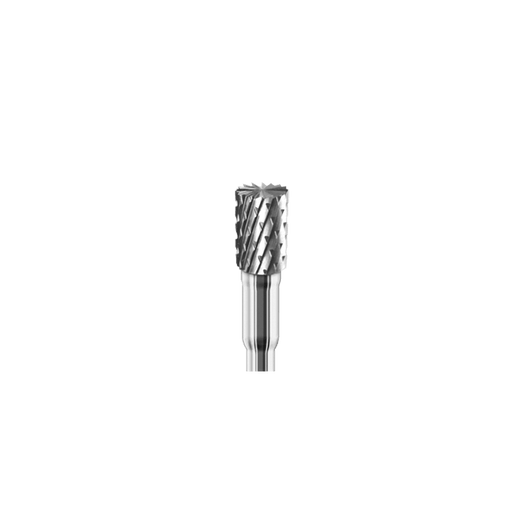

Busch & Co. GmbH
Busch Carbide Grooving Cutter | Busch No. 21XL 012 – HP-SH | Pack of 2
Regular price $32.99Unit price-
Busch & Co. GmbH
Busch Carbide Grooving Cutter | Busch No. 21XL 010 – HP-SH | Pack of 2
Regular price $32.99Unit price -
Busch & Co. GmbH
Busch Carbide Grooving Cutter | Busch No. 21XL 007 – HP-SH | Pack of 2
Regular price $32.99Unit price -
Busch & Co. GmbH
US No. 4 Busch Carbide Centering Bur | Busch No. 1 014 – HP-SH | Pack of 2
Regular price $24.99Unit price -
Busch & Co. GmbH
US No. 3 Busch Carbide Centering Bur | Busch No. 1 012 – HP-SH | Pack of 2
Regular price $24.99Unit price -
Busch & Co. GmbH
US No. 1 1/2 Busch Carbide Centering Bur | Busch No. 1 009 – HP-SH | Pack of 2
Regular price $24.99Unit price


Reference pages already linked from this collection, in one place.
Which Precision Technique Bur Do You Need?
Choose the cutting profile for the stage of work — RX rough-out, RFX pre-shaping, R fine milling, RH super fine milling — and the figure for the geometry you are milling. The number after the figure gives the head diameter in tenths of a millimeter or the taper angle in degrees; GR.HP-SH marks the short handpiece shank on the conical figures.
Parallel and conical milling cutters (410 and 408 figures)8 items
| Busch figure | Pattern | Sizes (HP-SH unless noted) |
|---|---|---|
| 410RX | Parallel cutter — rough-out (coarse) | Ø 1.0 mm · Ø 1.5 mm · Ø 2.3 mm |
| 410RFX | Parallel cutter — pre-shaping | Ø 1.0 mm · Ø 1.5 mm · Ø 2.3 mm |
| 410R | Parallel round cutter — fine milling | Ø 1.0 mm · Ø 1.5 mm · Ø 2.3 mm |
| 410RH | Parallel cutter — super fine milling | Ø 1.0 mm · Ø 1.5 mm · Ø 2.3 mm |
| 408RX | Conical cutter — rough-out (coarse) | 2° · 4° · 6° |
| 408RFX | Conical cutter — pre-shaping | 2° · 4° · 6° |
| 408R | Conical cutter — fine milling | 2° · 4° · 6° |
| 408RH | Conical cutter — super fine milling | 2° · 4° · 6° |
Wax cutters, twist drills, grooving, centering, shoulder and Ceka-anchor cutters7 items
| Busch figure | Pattern | Sizes (HP-SH unless noted) |
|---|---|---|
| 444FR | Wax parallel round cutter | Ø 1.5 mm · Ø 2.3 mm |
| 445FR | Wax taper (cone) round cutter | 2° · 4° · 6° |
| 4203S | Twist drill | Ø 0.7 mm · Ø 1.0 mm · Ø 1.2 mm · Ø 1.5 mm |
| 21XL | Grooving cutter | Ø 0.7 mm · Ø 1.0 mm · Ø 1.2 mm |
| 1 | Centering bur (round) | US 1/2 (Ø 0.9 mm) · US 3 (Ø 1.2 mm) · US 4 (Ø 1.4 mm) |
| 294 | Conical short bur, shoulder | Ø 2.7 mm, 6° |
| 296X | Cylinder flat cutter for Ceka-Anchor (HP shank) | Ø 3.1 mm · Ø 4.0 mm |
Laboratory Use
Milling-technique cutters run in a parallelometer or milling unit on the HP-SH short shank, which keeps the cutter rigid and close to the chuck: parallel cutters produce the parallel walls of telescopic and conical crowns and bars, conical cutters mill the 2°, 4°, or 6° tapers of cone crowns, twist drills and grooving cutters cut the bores and grooves for attachments and friction pins, wax cutters carve the pattern before casting, centering burs start a bore on center, and the 296X cutter fits Ceka anchors.
Work stepwise from rough-out to super fine for a surface that needs little polishing.
Clinical Use
Precision technique cutters are laboratory instruments for the milling unit and are not used chairside. In the practice they matter through the work the laboratory returns: telescopic and conical crowns, bars and attachment-retained restorations whose parallel walls and tapers are milled with these figures.
Care and Reconditioning
Carbide milling cutters are cleaned of wax, resin, and metal chips after each use (an ultrasonic bath with a carbide-safe cleaner), dried, and stored in a bur block; discard a cutter whose edges are chipped, and never use the super-fine figures for rough-out. Our Dental Bur Reprocessing & Sterilization Guide covers the full workflow for Busch rotary instruments.
Compare With
Related Busch laboratory collections: Busch Laboratory Bur Exclusives, Dental Lab Carbide Bur Collection, Cylinder Round Dental Burs, and HP Burs. For figure numbers and terminology, see the Bur Comparison Chart and the Dental Bur Glossary.

FAQ
How do I choose the right item from this collection?
Every product page details the exact specification, reference number, and application; for cross-brand references and terminology, see our Bur Comparison Chart, Speed Chart, and Bur Glossary — and our experts are a call away at (917) 480-2682 ext 101.
How should these instruments be reprocessed?
Follow the manufacturer’s validated reprocessing instructions and the symbols on each product’s packaging; our reprocessing guide covers the general workflow.
Where are these instruments made?
The instruments in this collection are manufactured by Busch & Co. in Engelskirchen, Germany — a specialist in rotary precision instruments since 1905 — and ship fast from our US warehouse.


