Spreader vs Plugger: The Difference Between Endodontic Spreaders and Pluggers

- Key differencea spreader has a pointed tip and pushes gutta-percha sideways; a plugger has a flat tip and pushes apically
- Spreadercold lateral condensation; first insertion should reach within 1–2 mm of working length
- Pluggerwarm vertical compaction; pre-fit so the smallest binds about 4–5 mm short of working length
- Zepf optionsspreaders 0.3, 0.4 and 0.5 mm; Luks pluggers graduated at 5, 10, 15 and 20 mm
- Finger vs handfinger spreaders give more feel and less wedging force in curved canals, lowering fracture risk
An endodontic spreader and an endodontic plugger look almost identical on a tray: long, slender, tapered working ends on a handle. The difference is the tip. A spreader comes to a point and pushes gutta-percha sideways to make room for more cones. A plugger ends in a flat face and pushes gutta-percha down toward the apex. Each belongs to a different obturation technique.
Spreader vs Plugger at a Glance
| Feature | Spreader | Plugger (Condenser) |
|---|---|---|
| Tip | Pointed | Flat, blunt end |
| Direction of force | Lateral, against the canal wall | Vertical, toward the apex |
| Technique | Cold lateral condensation | Warm vertical compaction; also final coronal compaction in lateral technique |
| Purpose | Create space for accessory cones | Compact softened gutta-percha and sealer into the canal system |
| Sizing | Matched to the accessory cones and to reach 1–2 mm short of working length | Pre-fitted to set depths, often within about 4–5 mm of working length for the deepest plugger |
A quick check on the tray: run a fingertip lightly across the tip. A spreader ends in a point, a plugger in a flat circle. Many pluggers also carry depth rings or etched graduations.
How a Spreader Works: Lateral Condensation
In cold lateral condensation, a master gutta-percha cone is fitted to working length with sealer. The spreader is pushed alongside it, wedging the master cone against the canal wall and leaving a tapered space. An accessory cone goes into that space, and the cycle repeats until the spreader can no longer enter beyond the coronal portion of the canal. Excess gutta-percha is then seared off and the coronal mass compacted with a plugger.
The spreader should reach within 1–2 mm of working length in the first insertion, which is how lateral condensation fills the apical third. Spreader size is matched to the accessory cones so each cone fills the space the spreader made.
Best for: lateral condensation in fine to medium canals. Helmut Zepf makes pointed spreaders in 0.3 mm (No. 19.513.03), 0.4 mm (No. 19.513.04) and 0.5 mm (No. 19.513.05); see the Endodontic Root Canal Spreader collection.
How a Plugger Works: Vertical Compaction
In warm vertical compaction, heat softens the gutta-percha inside the canal and a plugger compacts it apically in stages, pushing material and sealer into lateral canals, fins and irregularities. Pluggers are pre-fitted before obturation so each one binds at a known depth without touching the canal walls: the smallest reaches deepest, often within about 4–5 mm of working length, and larger ones work the middle and coronal thirds. Depth graduations make it easy to confirm each plugger is at the planned level.
Best for: vertical compaction from apical to coronal. The Helmut Zepf Luks-pattern pluggers carry graduations at 5, 10, 15 and 20 mm in 0.3 mm, 0.45 mm, 0.6 mm and 0.9 mm; see the Luks Root Canal Plugger collection. Double-ended pluggers with 28 mm tips, such as the Endo Plugger 3/5 (0.3/0.4 mm, No. 19.509.10) and Endo Plugger 7/10 (0.5/0.9 mm, No. 19.509.20), put two sizes on one instrument.
Finger Spreaders and Finger Pluggers vs Hand Instruments
Spreaders and pluggers come in two formats. Finger instruments are short, with a small plastic head held between the fingertips, like a hand file. Hand instruments have a long handle and an angled shank.
- Finger spreaders give more tactile feel and generate less wedging force, which is why many clinicians prefer them in curved or narrow canals where excessive force raises the risk of vertical root fracture. Nickel-titanium finger spreaders add flexibility in curves.
- Hand spreaders and pluggers give better reach and control in posterior teeth, a stable grip for compaction, and, on graduated designs, visible depth markings on the working end.
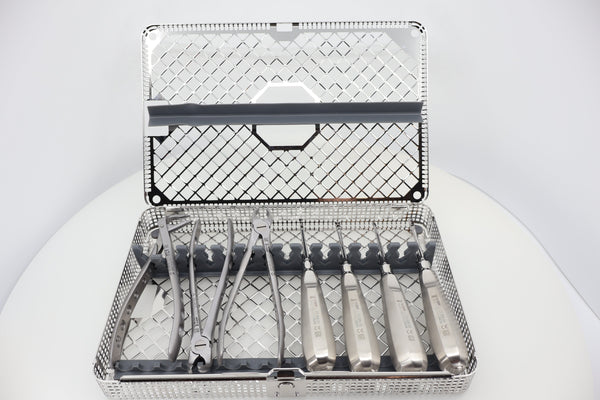
The Helmut Zepf spreaders and pluggers above are handle-mounted instruments. Whichever format you use, let the instrument do the work with light, controlled force rather than driving it to depth.
Combination Instruments
Some instruments pair an explorer with a plugger so you can locate an orifice and compact gutta-percha without changing instruments. The Root Canal Explorer/Plugger DG 16, Double-Ended (No. 19.521.00) is one example. For explorers in more detail, see our endodontic explorer and DG16 guide.
FAQs
What is the difference between a spreader and a plugger?
A spreader has a pointed tip and pushes gutta-percha sideways to make room for accessory cones in lateral condensation. A plugger has a flat tip and pushes gutta-percha toward the apex in vertical compaction.
Is a plugger the same as a condenser?
Yes. "Plugger," "condenser" and "hand condenser" all describe the flat-tipped instrument used to compact gutta-percha vertically.
Can a plugger be used in lateral condensation?
Yes, at the end. After the last accessory cone is placed and the excess is seared off, a plugger compacts the coronal gutta-percha.
How far should a spreader go into the canal?
The first spreader insertion should reach within 1–2 mm of working length so the apical third is filled.
Why are pluggers pre-fitted before obturation?
Pre-fitting confirms each plugger reaches its planned depth without binding on the canal walls, so the compaction force goes into the gutta-percha rather than into the root.
What is a finger spreader?
A finger spreader is a short spreader with a small plastic head held between the fingertips. It gives more tactile control and generates less force than a long-handled hand spreader.