Inside a Rasner Institute Live-Patient Extraction Course

- Rasner Institute courses move from case review and hands-on planning to live patients, with faculty chairside
- Hold steady pressure for 10 seconds, then repeat: let time, not force, do the work
- Listen to the tooth, because its feedback tells you whether to continue, change direction or change instruments
- Controlled movement delivers the tooth; wrenching it the wrong way breaks roots
- Attendees train with Dr. Rasner's Basic Surgical Extraction Kit: four axial luxation root elevators and three Xcision-Line forceps
Most dentists learn extractions from lectures, typodonts and a handful of supervised cases. The Rasner Institute's live-patient surgical courses take a different route: a short run of case review and treatment planning, then real patients, with Dr. Steven Rasner and his faculty chairside. Here is what that looks like from the inside, filmed at a recent extraction course.
Course highlights in 41 seconds. Deutsche Dental Technologien is a Course Partner of the Rasner Institute. Watch on YouTube.
Video chapters & transcript
- 0:00 — Case review and hands-on planning
- 0:10 — Chairside with Dr. Rasner
- 0:28 — The kit and the course
(Music: lecture room, case review and hands-on treatment planning.)
Dr. Steven Rasner, chairside: “I want you to hold it. Hold it for 10 seconds. Then do it again.”
“There’s a slide I use called ‘Listen to the tooth.’ It’ll tell you what to do next.”
“Not this. This breaks roots.”
“It’s a feel thing. It’s a thing from reps. That’s what reps do for you.”
(Dr. Rasner’s Basic Surgical Extraction Kit, the course group, and the end card.)
How the course day runs
The day starts in the lecture room. Dr. Rasner reviews the cases on the schedule, radiograph by radiograph, and talks through what each one is likely to do: root form, bone density, and where the tooth is likely to fight back. Attendees then plan their own cases hands-on before anyone is in a chair.
Then the course moves to live patients. Each attendee treats real patients, with faculty at their shoulder and Dr. Rasner moving between chairs. The coaching is short and practical, and most of it is about patience and feel rather than force.
Four things Dr. Rasner says at the chair
“Hold it for 10 seconds. Then do it again.” Once you feel resistance, hold steady pressure and give the bone and ligament time to respond, then repeat. Letting time do the work, instead of more force, is how a tooth comes out whole.
“Listen to the tooth.” Each tooth gives feedback through the instrument: movement, give, or a hard stop. That feedback tells you whether to keep going, change direction or change instruments.
“Not this. This breaks roots.” Controlled movement in the right direction delivers the tooth. Wrenching it the wrong way is how roots fracture, and then a simple extraction turns into a surgical one.
“It’s a feel thing. It’s a thing from reps.” None of this can be fully learned from slides. The feel comes from repetitions on real patients, which is the point of a live-patient course.
The kit attendees train with

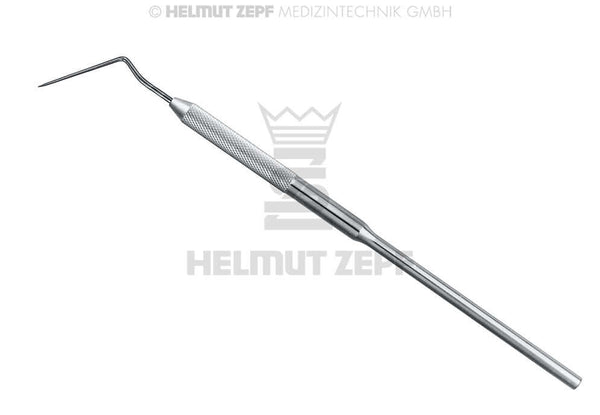
Course attendees work with Dr. Rasner's Basic Surgical Extraction Kit: seven Helmut Zepf instruments that follow the course workflow. The four root elevators for axial luxation are used first, to sever the periodontal attachment and luxate the root with controlled axial force. The three Xcision-Line® forceps then deliver the tooth, gripping low on sound root structure.
| Zepf No. | Instrument |
|---|---|
| 17.006.01 | Root elevator for axial luxation, 3 mm, straight |
| 17.006.02 | Root elevator for axial luxation, 5 mm, straight |
| 17.006.03 | Root elevator for axial luxation, 3 mm, curved |
| 17.006.04 | Root elevator for axial luxation, 5 mm, curved |
| 12.036.00Z | #36 lower incisors, far-reaching beaks, Xcision-Line® |
| 12.021.90Z | #321 lower premolars, far-reaching beaks, Xcision-Line® |
| 12.035.00Z | #35 upper premolars, far-reaching beaks, Xcision-Line® |
Helmut Zepf has been making the best forceps in the world in Germany since 1921, and every extraction forceps carries a Lifetime Warranty. The kit can also be returned within 60 days for any reason, even after use. The washbasket in the photo is sold separately.
Who the course is for
The Rasner Institute meets each dentist at their current skill level, from general dentists who want to take on more of their own extractions to clinicians building toward grafting and implants. Course dates, locations and registration are on the Rasner Institute live-patient surgical courses page.
For more from Dr. Rasner, including his overview video, the instruments he recommends and attendee testimonials, see the Dr. Steven L. Rasner collection.
Deutsche Dental Technologien is a Course Partner of the Rasner Institute. This article is an educational overview for dental professionals and does not replace clinical training or the manufacturer's instructions for use.