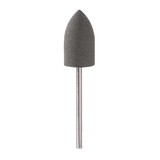
2 Step Dental Laboratory Diamond Interspersed Polishers for Ceramics/Silicates by Busch
2 Step Dental Laboratory Diamond Interspersed Polishers for Ceramics represent a precision-engineered solution for dental technicians and laboratory professionals working with ceramic and silicate-based restorations. Developed by Busch, these polishers deliver a consistent, high-quality surface finish across a range of ceramic materials through a streamlined two-step workflow that reduces technique sensitivity and chair time.


Busch & Co. GmbH
Busch Ceramic Diamond Wheel Polisher | Busch No. 9965 170 – Green, Fine – HP | Pack of 1
Regular price $27.99Unit price-
Busch & Co. GmbH
Busch Ceramic Diamond Wheel Polisher | Busch No. 9955 170 – Red, Medium – HP | Pack of 1
Regular price $27.99Unit price -
Busch & Co. GmbH
Busch Ceramic Diamond Wheel Polisher | Busch No. 9966 170 – Green, Fine | Pack of 1
Regular price $34.99Unit price -
Busch & Co. GmbH
Busch Ceramic Diamond Flame Polisher | Busch No. 9964 040 – Green, Fine – HP | Pack of 2
Regular price $30.99Unit price -
Busch & Co. GmbH
Busch Ceramic Diamond Disc Polisher | Busch No. 9963 260 – Green, Fine – HP | Pack of 1
Regular price $56.99Unit price -
Busch & Co. GmbH
Busch Ceramic Diamond Wheel Polisher | Busch No. 9962 110 – Green, Fine – HP | Pack of 2
Regular price $30.99Unit price -
Busch & Co. GmbH
Busch Ceramic Diamond Wheel Polisher | Busch No. 9956 170 – Red, Medium – HP | Pack of 1
Regular price $34.99Unit price -
Busch & Co. GmbH
Busch Ceramic Diamond Disc Polisher | Busch No. 9953 260 – Red, Medium – HP | Pack of 1
Regular price $56.99Unit price -
Busch & Co. GmbH
Busch Ceramic Diamond Flame Polisher | Busch No. 9954 040 – Red, Medium – HP | Pack of 2
Regular price $30.99Unit price -
Busch & Co. GmbH
Busch Ceramic Diamond Wheel Polisher | Busch No. 9952 110 – Red, Medium – HP | Pack of 2
Regular price $30.99Unit price


Reference pages already linked from this collection, in one place.
Which Ceramic Lab Polisher Do You Need?
Step 1 is the red, medium pre-polisher and step 2 the green, fine high-gloss polisher; pick the same shape (wheel, disc or flame) in both steps. Every active product in the collection is linked once below.
Step 1: red, medium diamond polishers (pre-polishing)5 items
| Busch No. | Pattern or size |
|---|---|
| 9952 110 | ceramic diamond wheel polisher · size 110 · red · medium · HP · pack of 2 |
| 9953 260 | ceramic diamond disc polisher · size 260 · red · medium · HP · pack of 1 |
| 9954 040 | ceramic diamond flame polisher · size 040 · red · medium · HP · pack of 2 |
| 9955 170 | ceramic diamond wheel polisher · size 170 · red · medium · HP · pack of 1 |
| 9956 170 | ceramic diamond wheel polisher · size 170 · red · medium · HP · pack of 1 |
Step 2: green, fine diamond polishers (high-gloss)5 items
| Busch No. | Pattern or size |
|---|---|
| 9962 110 | ceramic diamond wheel polisher · size 110 · green · fine · HP · pack of 2 |
| 9963 260 | ceramic diamond disc polisher · size 260 · green · fine · HP · pack of 1 |
| 9964 040 | ceramic diamond flame polisher · size 040 · green · fine · HP · pack of 2 |
| 9965 170 | ceramic diamond wheel polisher · size 170 · green · fine · HP · pack of 1 |
| 9966 170 | ceramic diamond wheel polisher · size 170 · green · fine · pack of 1 |
What Are Diamond Interspersed Polishers?
Diamond interspersed polishers incorporate fine diamond particles uniformly distributed throughout a silicone or rubber matrix. As the working surface wears, fresh abrasive particles are continuously exposed, maintaining cutting efficiency throughout the full life of the instrument. The 2 Step Dental Laboratory Diamond Interspersed Polishers for Ceramics simplify the polishing protocol, moving from initial contouring to a high-gloss finish with just two instruments, delivering predictable and reproducible outcomes every time.
Key Features
- Two-step efficiency: Streamlined protocol moves from initial contouring to high-gloss polish with just two instruments
- Diamond interspersed matrix: Consistent abrasive exposure for uniform material removal and polishing
- Busch quality: Manufactured to precise dimensional tolerances for reliable performance in the straight (HP) laboratory handpiece
- Ceramic/silicate compatibility: Formulated specifically for the hardness range of dental ceramic and silicate materials
Why Choose Busch for Ceramic Polishing?
Busch has a longstanding reputation in the dental and laboratory instruments sector. The 2 Step Dental Laboratory Diamond Interspersed Polishers for Ceramics are engineered to meet the demands of modern ceramic dentistry, where surface texture and optical properties directly influence the longevity and aesthetics of restorations. Their consistent particle distribution and carefully calibrated grit sequence make them a reliable choice for professionals who require repeatability in their polishing outcomes.
Clinical Use
These diamond-interspersed polishers are used in the dental laboratory to finish ceramic and silicate restorations in two steps: the red, medium instruments smooth the surface after contouring, and the green, fine instruments bring it to a high gloss. Most items are HP (straight handpiece) wheels, discs and flames.
Typical applications
- Polishing feldspathic and leucite-reinforced ceramics
- Finishing lithium disilicate and silicate-based CAD/CAM restorations
- Surface refinement of ceramic veneers, crowns, and inlays
- Adjustment of ceramic occlusal contacts and margins
Care and Reconditioning
Clean, disinfect and sterilize the polishers between uses following the manufacturer instructions, and replace an instrument once it loses cutting or polishing performance or shows damage. Our Dental Bur Reprocessing & Sterilization Guide covers the workflow for Busch rotary instruments; maximum speeds are in the Dental Bur Speed Chart.
Compare With
Related Busch collections: 2 Step Diamond Interspersed Polishers for Ceramics & Silicates, 2 Step Laboratory Polishers for Zirconia, 2 Step Laboratory Polishers for Metal Alloys, Diamond Interspersed Polisher Collection, CERA-PLUS Abrasives for Ceramics, and Dental Lab Burs for Veneer & Ceramic Technology.
Reference resources: Bur Comparison Chart · Speed Chart · Color Coding & ISO Guide · Glossary

FAQ
Are these polishers suitable for zirconia?
These instruments are specifically formulated for ceramics and silicate-based materials. For zirconia, dedicated zirconia polishing systems are recommended.
How many steps are involved in the polishing process?
The system requires just two steps — moving from surface contouring to final high-gloss finish — making it efficient for laboratory use with the straight (HP) handpiece.