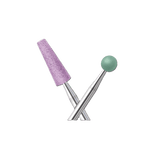
CERA-PLUS Dental Laboratory Abrasives for Ceramics by Busch
CERA-PLUS Dental Laboratory Abrasives for Ceramics by Busch are precision-engineered tools designed to meet the exacting demands of professional dental technicians working with ceramic materials. Whether you are shaping, finishing, or polishing ceramic restorations, these abrasives deliver consistent, controlled results across a wide range of dental laboratory applications.


Busch & Co. GmbH
Busch Cera-Plus Cylinder Flat Abrasive | Busch No. CP732 050 – Fine Grit – HP | Pack of 6
Regular price $22.99Unit price-
Busch & Co. GmbH
Busch Cera-Plus Inverted Cone Abrasive | Busch No. CP728 170 – Fine Grit – HP | Pack of 6
Regular price $26.99Unit price -
Busch & Co. GmbH
Busch Cera-Plus Bud Round Abrasive | Busch No. CP671 050 – Fine Grit – HP | Pack of 6
Regular price $22.99Unit price -
Busch & Co. GmbH
Busch Cera-Plus Taper (Cone) Round Abrasive | Busch No. CP652R 033 – Fine Grit – HP | Pack of 6
Regular price $22.99Unit price -
Busch & Co. GmbH
Busch Cera-Plus Taper (Cone) Round Abrasive | Busch No. CP649R 025 – Fine Grit – HP | Pack of 6
Regular price $22.99Unit price -
Busch & Co. GmbH
Busch Cera-Plus Inverted Cone Abrasive | Busch No. CP613 065 – Fine Grit – HP | Pack of 6
Regular price $22.99Unit price


Reference pages already linked from this collection, in one place.
Which Cera-Plus Abrasive Do You Need?
Choose the shape for the surface you are working on; all six Cera-Plus abrasives in this collection are fine grit on the HP shank, and the last three digits of the Busch number give the head size.
Cera-Plus ceramic abrasives, fine grit (HP)6 items
| Busch No. | Pattern or size |
|---|---|
| CP671 050 | Bud round · ISO size 050 · fine grit · HP · pack of 6 |
| CP732 050 | Cylinder flat · ISO size 050 · fine grit · HP · pack of 6 |
| CP613 065 | Inverted cone · ISO size 065 · fine grit · HP · pack of 6 |
| CP728 170 | Inverted cone · ISO size 170 · fine grit · HP · pack of 6 |
| CP649R 025 | Taper (cone) round · ISO size 025 · fine grit · HP · pack of 6 |
| CP652R 033 | Taper (cone) round · ISO size 033 · fine grit · HP · pack of 6 |
Designed for Ceramic Work
Ceramic materials require abrasives that can cut efficiently without causing micro-fractures or surface damage. CERA-PLUS Dental Laboratory Abrasives for Ceramics are formulated specifically for this purpose, offering optimized grit compositions and durable bonding that maintain performance throughout the working process. Their consistent cutting action helps reduce working time and supports a high-quality surface finish on crowns, bridges, veneers, and other ceramic prosthetics.
Key Features
- Engineered specifically for use on dental ceramics
- Consistent abrasive performance for predictable results
- Available in several shapes (inverted cone, taper round, bud round, cylinder flat) in fine grit for finishing tasks
- Manufactured by Busch, a trusted name in dental laboratory instrumentation
- HP shank for the straight laboratory handpiece
About Busch
Busch is a long-established manufacturer of rotary instruments and abrasives for dental and technical laboratory use. Their commitment to precision manufacturing ensures that every CERA-PLUS Dental Laboratory Abrasives for Ceramics product meets rigorous quality standards (Busch products are manufactured under ISO 13485 certification), giving dental technicians confidence in their tools and their outcomes.
Clinical Use
Cera-Plus abrasives are laboratory instruments for the straight (HP) handpiece: technicians use them to shape, contour and smooth ceramic crowns, bridges and veneers before glazing or polishing. They are not chairside burs; for intraoral adjustment of ceramics use FG or RA instruments.
Care and Reconditioning
Clean the abrasives of ceramic dust after use, keep them dry, and keep them for ceramic work only so they do not load with metal or acrylic; dress or replace an abrasive once it stops cutting evenly. Our Dental Bur Reprocessing & Sterilization Guide covers cleaning and sterilization for Busch rotary instruments.
Compare With
Related Busch collections: Dental Lab Abrasives for Ceramics, Acrylics & Metal Alloys, Dental Lab Burs for Veneer & Ceramic Technology, Dental Lab Abrasive Discs, Stones & Wheels, Prosthesis Polishers, and Fine Diamonds. For figure numbers and terminology, see the Bur Comparison Chart and the Dental Bur Glossary.

FAQ
What materials are these abrasives suitable for?
These abrasives are designed primarily for use on dental ceramics, including feldspathic porcelain, zirconia, and glass-ceramic materials commonly used in dental restorations.
Are they compatible with standard laboratory handpieces?
Yes, CERA-PLUS Dental Laboratory Abrasives for Ceramics are designed for use with standard dental laboratory handpiece systems.
What tasks can these abrasives perform?
They are suitable for shaping, contouring, and finishing ceramic restorations in a professional dental laboratory setting.