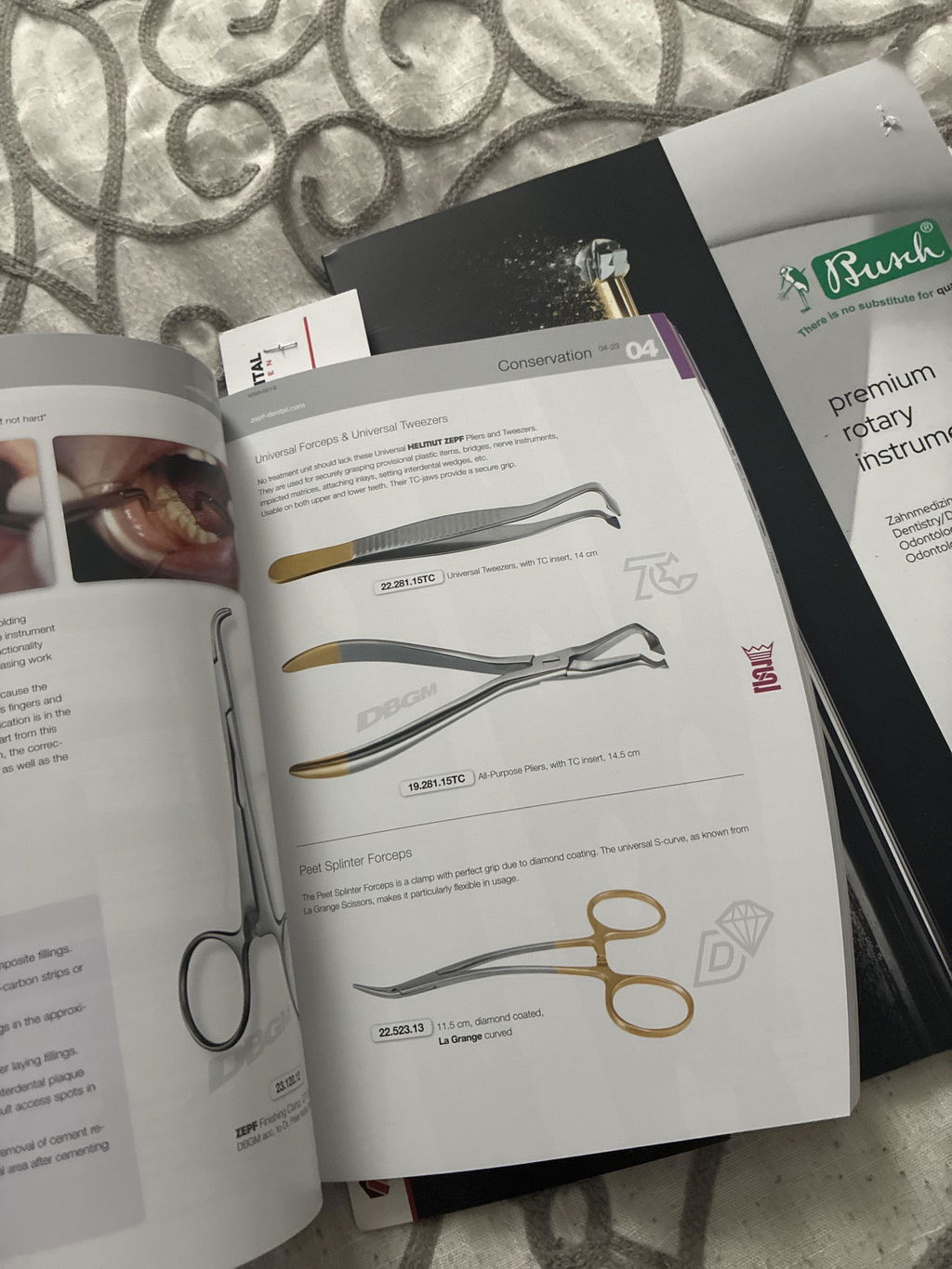
Cowhorn Extraction Forceps: #23 and Ash #73A
Cowhorn forceps are the extraction forceps for lower molars with two pointed beaks that seat into the furcation. This collection holds both patterns made by Helmut Zepf in Germany: the American pattern #23 cowhorn and the Ash (English) pattern #73A, which uses the same cowhorn-style beaks on the vertically hinged Ash design. The pointed beaks let clinicians engage the furcation of mandibular molars securely, providing the mechanical advantage needed to loosen and luxate multi-rooted teeth with controlled, consistent force.


Helmut Zepf GmbH
Cowhorn Extraction Forceps, #23, Lower Molars | Helmut Zepf No. 14.023.50
Regular price $238.99Unit price-
Helmut Zepf GmbH
Cowhorn Extraction Forceps, #23, Lower Molars | Helmut Zepf No. 14.023.00
Regular price $238.99Unit price -
Helmut Zepf GmbH
Regular price $341.99Unit price -
Helmut Zepf GmbH
Regular price $244.99Unit price


Reference pages already linked from this collection, in one place.
Which Cowhorn Forceps Do You Need?
Choose the handle pattern your hands are trained on: American pattern (#23) or Ash/English pattern (#73A). Every cowhorn forceps in this collection is linked below by its Zepf number; the Use column repeats the indication named in each product title.
Cowhorn forceps4 items
| Zepf No. | Pattern or size | Use |
|---|---|---|
| 14.023.00 | Cowhorn #23, American pattern | Lower molars |
| 14.023.50 | Cowhorn #23, American pattern | Lower molars |
| 12.073.01Z | #73A, Ash (English) pattern, Xcision-Line® | Lower molars |
| 12.073.01ZD | #73A, Ash (English) pattern, Xcision-Line®, Diamond Coated | Lower molars |
Lifetime Warranty
Every dental extraction forcep in this collection is backed by a Lifetime Warranty covering defects in materials and workmanship for the life of the instrument. This coverage is exclusive to the Helmut Zepf dental extraction forcep category.
Design and Construction
The cowhorn design features two pointed beaks that are contoured to seat into the bifurcation of lower first and second molars. This anatomical fit minimises slippage during the extraction procedure and reduces the risk of root fracture. The handles are typically finished with a knurled or textured grip pattern to ensure confident handling throughout the procedure, even in a clinical environment where moisture is a factor.
Constructed from high-grade stainless steel, these cowhorn forceps are resistant to corrosion and suitable for repeated autoclave sterilization. The robust metallurgy maintains instrument integrity across a high volume of clinical use, making these forceps a dependable addition to any oral surgery or general dental practice tray setup.
Clinical Use
These forceps are indicated for the elevation and removal of mandibular molars, particularly in cases where roots are well-separated. The cowhorn tips work by being driven apically into the furcation, applying controlled buccal and lingual pressure to mobilise the tooth prior to delivery. Clinicians should combine their use with appropriate luxators or elevators for optimal outcomes.
Care and Reconditioning
Clean, inspect and sterilize the forceps after every use according to your practice infection control protocol, and check the joint and beaks for wear. Our Surgical Instrument Reprocessing & Sterilization Guide covers the general workflow for Helmut Zepf extraction forceps.
Compare With
Related Helmut Zepf collections: Best Forceps for Lower Molar Extraction, Lower Dental Extraction Forceps, American Pattern Extraction Forceps, Ash Pattern Extraction Forceps, English Pattern Extraction Forceps No. 73, English Pattern Extraction Forceps No. 22, and English Pattern Extraction Forceps No. 79. For forceps numbers and terminology, see the Surgical Instrument Comparison Chart, the Extraction Forceps Numbers Guide and the Surgical Instrument Glossary.

FAQ
What teeth are cowhorn forceps used for?
They are primarily used for extracting lower first and second molars with a pronounced furcation.
What is the difference between the #23 and the #73A?
Both have cowhorn beaks for lower molars. The #23 is the American pattern, with curved handles and the hand working in front of the tooth; the #73A is the Ash (English) pattern, with a vertical hinge and the hand working from above the tooth.
Can these forceps be sterilized in an autoclave?
Yes, they are manufactured from stainless steel and are fully compatible with standard autoclave sterilization protocols.
Are these forceps suitable for single-rooted teeth?
No, the cowhorn tip design is specifically intended for multi-rooted mandibular molars where the furcation can be engaged.