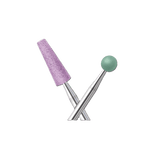
Dental Lab Abrasives for Ceramics, Acrylics & Metal Alloys (Heat Management on Non-Metals) by Busch
Dental Lab Abrasives for Ceramics Acrylics & Metal Alloys represent the essential tools in any professional dental laboratory, providing the controlled material removal and surface refinement that modern restorative workflows demand. Busch has built a strong reputation for manufacturing precision abrasives engineered specifically for the unique challenges of dental lab work, where heat management and material integrity are paramount.



Busch & Co. GmbH
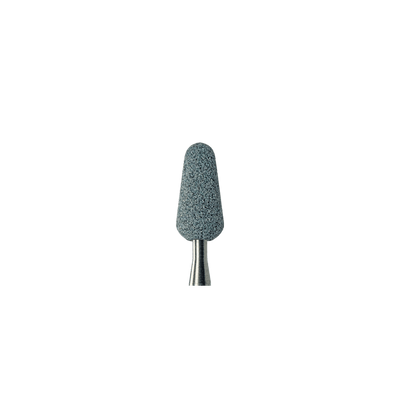
Busch Abrasive | Busch No. 665 065 – Green – HP | Pack of 6
Regular price $22.99Unit price-
Busch & Co. GmbH
Busch Bud Round Abrasive | Busch No. 671 050 – Green – RA | Pack of 6
Regular price $22.99Unit price -
Busch & Co. GmbH
Busch Football (Egg) Abrasive | Busch No. 667 040 – Green – RA | Pack of 6
Regular price $22.99Unit price -
Busch & Co. GmbH
Busch Football (Egg) Abrasive | Busch No. 666 033 – Green – RA | Pack of 6
Regular price $22.99Unit price -
Busch & Co. GmbH
Busch Flame Abrasive | Busch No. 662 035 – Green – HP | Pack of 6
Regular price $22.99Unit price -
Busch & Co. GmbH
Busch Flame Abrasive | Busch No. 661 030 – Green – RA | Pack of 6
Regular price $22.99Unit price -
Busch & Co. GmbH
Busch Flame Abrasive | Busch No. 661 030 – Green – HP | Pack of 6
Regular price $22.99Unit price -
Busch & Co. GmbH
Busch Taper (Cone) Flat Abrasive | Busch No. 649 025 – Green – RA | Pack of 6
Regular price $22.99Unit price -
Busch & Co. GmbH
Busch Taper (Cone) Flat Abrasive | Busch No. 649 025 – Green – HP | Pack of 6
Regular price $22.99Unit price -
Busch & Co. GmbH
Busch Taper (Cone) Flat Abrasive | Busch No. 648 020 – Green – RA | Pack of 6
Regular price $22.99Unit price -
Busch & Co. GmbH
Busch Cylinder Flat Abrasive | Busch No. 637 025 – Green – RA | Pack of 6
Regular price $22.99Unit price -
Busch & Co. GmbH
Busch Lens Abrasive | Busch No. 633 085 – Green – HP | Pack of 6
Regular price $22.99Unit price -
Busch & Co. GmbH
Busch Lens Abrasive | Busch No. 632 065 – Green – HP | Pack of 6
Regular price $22.99Unit price -
Busch & Co. GmbH
Busch Wheel Abrasive | Busch No. 627 060 – Green – RA | Pack of 6
Regular price $22.99Unit price -
Busch & Co. GmbH
Busch Wheel Abrasive | Busch No. 626 050 – Green – RA | Pack of 6
Regular price $22.99Unit price -
Busch & Co. GmbH
Busch Wheel Abrasive | Busch No. 622 060 – Green – RA | Pack of 6
Regular price $22.99Unit price -
Busch & Co. GmbH
Busch Wheel Abrasive | Busch No. 622 060 – Green – HP | Pack of 6
Regular price $22.99Unit price -
Busch & Co. GmbH
Busch Wheel Abrasive | Busch No. 619 050 – Green – RA | Pack of 6
Regular price $22.99Unit price -
Busch & Co. GmbH
Busch Inverted Cone Abrasive | Busch No. 613 065 – Green – HP | Pack of 6
Regular price $22.99Unit price -
Busch & Co. GmbH
Busch Round Abrasive | Busch No. 603 050 – Green – RA | Pack of 6
Regular price $22.99Unit price -
Busch & Co. GmbH
Busch Round Abrasive | Busch No. 602 040 – Green – RA | Pack of 6
Regular price $22.99Unit price -
Busch & Co. GmbH
Busch Round Abrasive | Busch No. 602 040 – Green – HP | Pack of 6
Regular price $22.99Unit price -
Busch & Co. GmbH
Busch Round Abrasive | Busch No. 601 030 – Green – RA | Pack of 6
Regular price $22.99Unit price -
Busch & Co. GmbH
Busch Round Abrasive | Busch No. 601 030 – Green – HP | Pack of 6
Regular price $22.99Unit price -
Busch & Co. GmbH
Busch Flame Abrasive | Busch No. 662 035 – Green – RA | Pack of 6
Regular price $22.99Unit price -
Busch & Co. GmbH
Busch Bud Round Abrasive | Busch No. 671 050 – Green – HP | Pack of 6
Regular price $22.99Unit price -
Busch & Co. GmbH
Busch Flame Abrasive | Busch No. 743 135 – Green, Medium Grit – HP | Pack of 6
Regular price $26.99Unit price -
Busch & Co. GmbH
Busch Abrasive | Busch No. 744 110 – Green, Medium Grit – HP | Pack of 6
Regular price $26.99Unit price -
Busch & Co. GmbH
Busch Cylinder Flat Abrasive | Busch No. 731 065 – Green – HP | Pack of 6
Regular price $18.99Unit price -
Busch & Co. GmbH
Busch Cylinder Flat Abrasive | Busch No. 732 050 – Green – HP | Pack of 6
Regular price $18.99Unit price -
Busch & Co. GmbH
Busch Taper (Cone) Flat Abrasive | Busch No. 733 035 – Green – HP | Pack of 6
Regular price $18.99Unit price -
Busch & Co. GmbH
Busch Abrasive | Busch No. 734 090 – Green – HP | Pack of 6
Regular price $18.99Unit price


Reference pages already linked from this collection, in one place.
Which Lab Abrasive Do You Need?
Pick the shank first (HP for the straight laboratory handpiece, RA for the contra-angle), then the shape; all items are green, medium-grit Busch abrasives and every active product in the collection is linked once below.
Green abrasives, HP shank17 items
| Busch No. | Pattern or size |
|---|---|
| 601 030 | round abrasive · size 030 · green · HP · pack of 6 |
| 602 040 | round abrasive · size 040 · green · HP · pack of 6 |
| 613 065 | inverted cone abrasive · size 065 · green · HP · pack of 6 |
| 622 060 | wheel abrasive · size 060 · green · HP · pack of 6 |
| 632 065 | lens abrasive · size 065 · green · HP · pack of 6 |
| 633 085 | lens abrasive · size 085 · green · HP · pack of 6 |
| 649 025 | taper (cone) flat abrasive · size 025 · green · HP · pack of 6 |
| 661 030 | flame abrasive · size 030 · green · HP · pack of 6 |
| 662 035 | flame abrasive · size 035 · green · HP · pack of 6 |
| 665 065 | abrasive · size 065 · green · HP · pack of 6 |
| 671 050 | bud round abrasive · size 050 · green · HP · pack of 6 |
| 731 065 | cylinder flat abrasive · size 065 · green · HP · pack of 6 |
| 732 050 | cylinder flat abrasive · size 050 · green · HP · pack of 6 |
| 733 035 | taper (cone) flat abrasive · size 035 · green · HP · pack of 6 |
| 734 090 | abrasive · size 090 · green · HP · pack of 6 |
| 743 135 | flame abrasive · size 135 · green · medium grit · HP · pack of 6 |
| 744 110 | abrasive · size 110 · green · medium grit · HP · pack of 6 |
Green abrasives, RA shank15 items
| Busch No. | Pattern or size |
|---|---|
| 601 030 | round abrasive · size 030 · green · RA · pack of 6 |
| 602 040 | round abrasive · size 040 · green · RA · pack of 6 |
| 603 050 | round abrasive · size 050 · green · RA · pack of 6 |
| 619 050 | wheel abrasive · size 050 · green · RA · pack of 6 |
| 622 060 | wheel abrasive · size 060 · green · RA · pack of 6 |
| 626 050 | wheel abrasive · size 050 · green · RA · pack of 6 |
| 627 060 | wheel abrasive · size 060 · green · RA · pack of 6 |
| 637 025 | cylinder flat abrasive · size 025 · green · RA · pack of 6 |
| 648 020 | taper (cone) flat abrasive · size 020 · green · RA · pack of 6 |
| 649 025 | taper (cone) flat abrasive · size 025 · green · RA · pack of 6 |
| 661 030 | flame abrasive · size 030 · green · RA · pack of 6 |
| 662 035 | flame abrasive · size 035 · green · RA · pack of 6 |
| 666 033 | football (egg) abrasive · size 033 · green · RA · pack of 6 |
| 667 040 | football (egg) abrasive · size 040 · green · RA · pack of 6 |
| 671 050 | bud round abrasive · size 050 · green · RA · pack of 6 |
Designed for the Materials You Work With
Working across ceramics, acrylics, and metal alloys requires abrasives that respond differently to each substrate. Ceramics demand sharp, consistent cutting edges to prevent chipping or micro-fracturing. Acrylics require controlled abrasion to avoid heat build-up that can warp, discolor, or structurally compromise the material. Metal alloys call for abrasives that cut efficiently without loading or glazing.
Busch Dental Lab Abrasives for Ceramics Acrylics & Metal Alloys are formulated with these distinctions in mind, offering technicians reliable performance across all three material categories.
Heat Management on Non-Metals
One of the most critical considerations when grinding or finishing non-metallic dental materials is heat generation. Excessive heat during abrasion can alter the physical properties of acrylics, compromise ceramic glazes, and affect the accuracy of a finished restoration. Busch abrasives are engineered to minimize frictional heat through optimized grit geometry, bonding agents, and cutting action — supporting accurate, high-quality outcomes while protecting material integrity throughout the finishing process.
Why Choose Busch Abrasives for Your Dental Lab
- Consistent quality across ceramic, acrylic, and metal alloy applications
- Engineered for effective heat management on non-metallic materials
- Wide range of shapes, grits, and sizes to suit diverse laboratory tasks
- Trusted by dental laboratory professionals for precision and durability
- Compatible with standard dental laboratory handpieces and equipment
Clinical Use
These green Busch abrasives are laboratory instruments for grinding, contouring and smoothing ceramics, acrylics and metal alloys before polishing. The HP versions run in the straight laboratory handpiece; the RA versions fit the contra-angle for finer access. Shapes in the collection include round, bud, football (egg), flame, wheel, lens, inverted cone, cylinder and taper (cone) flat forms.
Care and Reconditioning
Clean, disinfect and sterilize the abrasives between uses following the manufacturer instructions, and replace an instrument once it loses cutting or polishing performance or shows damage. Our Dental Bur Reprocessing & Sterilization Guide covers the workflow for Busch rotary instruments; maximum speeds are in the Dental Bur Speed Chart.
Compare With
Related Busch collections: Dental Lab Abrasives for Medium-Hard Metal Alloys, Dental Lab Abrasives for Hard Metal Alloys, CERA-PLUS Abrasives for Ceramics, Diamond Abrasives for Ceramics & Zirconia, Dental Lab Abrasive Discs, Stones & Wheels, and Clinical Abrasives & Stones. For grit colours and speeds, see the Color Coding & ISO Guide and the Dental Bur Speed Chart.
Reference resources: Bur Comparison Chart · Speed Chart · Color Coding & ISO Guide · Glossary

FAQ
Are these abrasives suitable for both wet and dry use?
Compatibility with wet or dry use depends on the specific abrasive type. Always refer to the individual product specifications for recommended usage conditions.
What makes Busch Dental Lab Abrasives for Ceramics Acrylics & Metal Alloys different from general abrasives?
Busch dental lab abrasives are specifically engineered for the tolerances and material sensitivities of dental restorations, ensuring precision results that general-purpose abrasives may not reliably achieve.
How do I select the right abrasive for my application?
Consider the material type, the stage of finishing required, and the desired surface texture. Busch offers a broad range of options to match each step of the dental laboratory workflow.