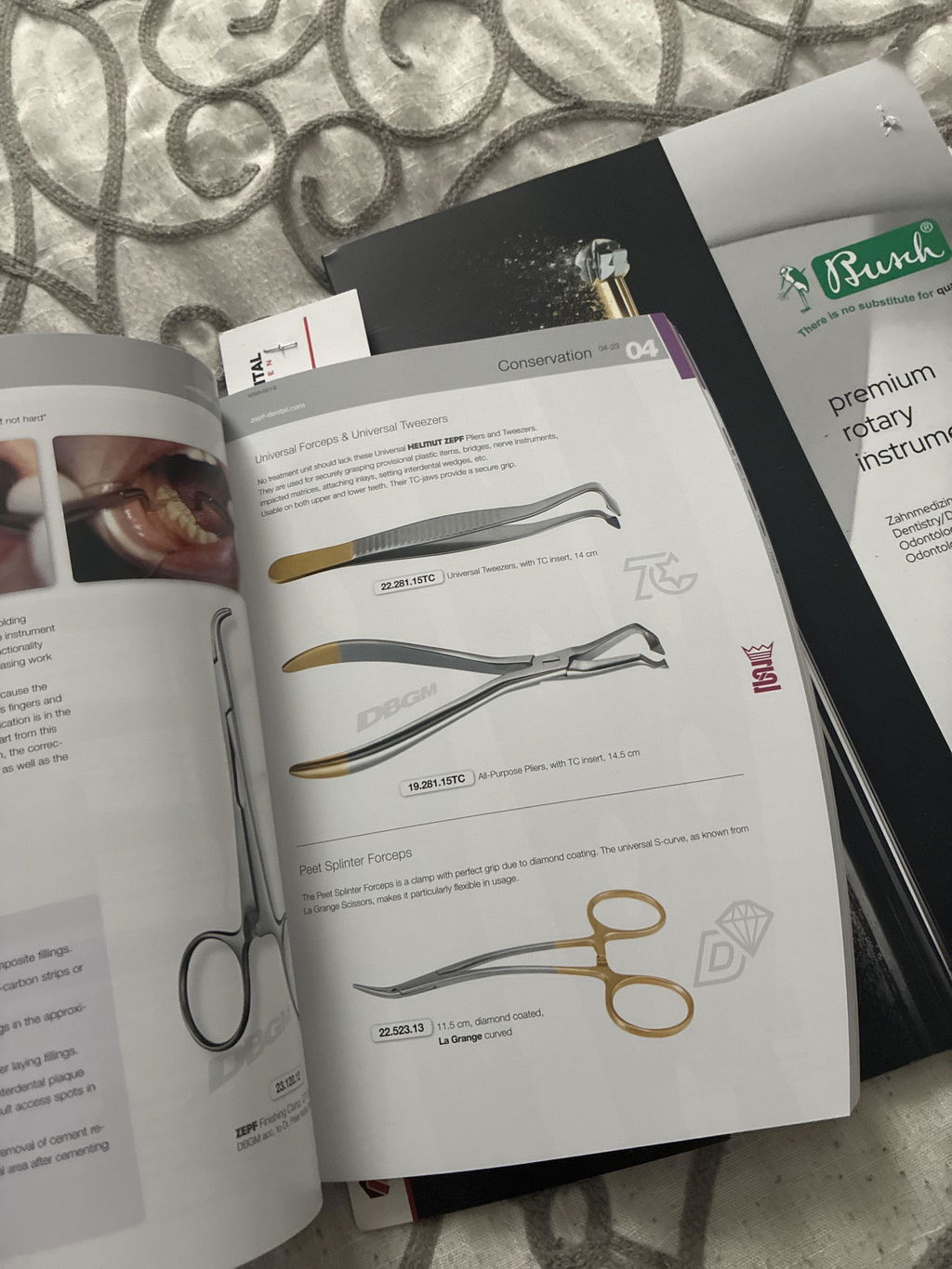
Dental Tunneling Instruments
Dental tunneling instruments are specialized tools designed to support minimally invasive periodontal and soft tissue surgical procedures, enabling clinicians to achieve precise, controlled access beneath tissue flaps without unnecessary trauma. Whether you are performing connective tissue grafts, guided bone regeneration, or root coverage procedures, having the right instruments at hand is essential to clinical success.


Helmut Zepf GmbH
Regular price $248.99Unit price-
Helmut Zepf GmbH
Regular price $119.99Unit price -
Helmut Zepf GmbH
Regular price $119.99Unit price -
Helmut Zepf GmbH
Regular price $119.99Unit price -
Helmut Zepf GmbH
Regular price $123.99Unit price -
Helmut Zepf GmbH
Regular price $248.99Unit price -
Helmut Zepf GmbH
Regular price $119.99Unit price -
Helmut Zepf GmbH
Regular price $168.99Unit price -
Helmut Zepf GmbH
Regular price $168.99Unit price -
Helmut Zepf GmbH
Raspatory Wide / Narrow Combination, Onyx Exchangeable Tips, Z-Shape QuickFix Handle (41.370.03OXZ)
Regular price $147.99Unit price -
Helmut Zepf GmbH
Regular price $119.99Unit price -
Helmut Zepf GmbH
Regular price $124.99Unit price -
Helmut Zepf GmbH
Regular price $119.99Unit price -
Helmut Zepf GmbH
Tunneling Knife Insert, Fig. 2, Angled Tip, 2.5mm, ONYX Coating
Regular price $72.99Unit price -
Helmut Zepf GmbH
Tunneling Knife Insert, Fig. 2, Angled Tip, 1.9mm, ONYX Coating
Regular price $72.99Unit price


Reference pages already linked from this collection, in one place.
Which Tunneling Instrument Do You Need?
Start with a complete set or kit, or pick single instruments by jaw, tip width and angle; replacement knife inserts and the brochure are listed at the end, and every product in the collection is linked once.
Tunneling sets and kits2 items
Tunneling instruments – double-ended, ZEPF-bIONIK QuickFix handle7 items
| Zepf No. | Pattern or size |
|---|---|
| 46.040.01 | #1 upper jaw, 18 cm, Lightred-Magenta handle |
| 46.040.01OX | #1 upper jaw, 18 cm, Onyx coated inserts, Violet handle |
| 46.040.02 | #2 lower jaw, 18 cm, Yellow-Green handle |
| 46.040.02OX | #2 lower jaw, 18 cm, Onyx coated inserts, Violet handle |
| 46.040.03 | #3 1.8 mm, 45° angled, 18 cm, Signal Purple handle |
| 46.040.04 | #4 2.5 mm, 45° angled, 18 cm, Signal Orange handle |
| 46.040.20 | With holes, upper and lower jaw, 2.5 mm, 17.5 cm, Grey handle |
Tunneling instruments with replaceable tips and TOUCHGRIP designs3 items
| Zepf No. | Pattern or size |
|---|---|
| 46.035.20 | Tunneling instrument/curette, straight 1.8 mm / angled 1.7 mm, #3 upper/lower jaw combination, replaceable tips, Cobalt Blue bIONIK QuickFix handle |
| 46.035.30 | Angulated micro periosteal elevator, replaceable tips, Gray bIONIK QuickFix handle |
| 46.035.20HZU | Upper/lower, straight/angled combination by Dr. Hürzeler and Dr. Zuhr, TOUCHGRIP Design |
Papilla elevators and dissection tips3 items
| Zepf No. | Pattern or size |
|---|---|
| 46.035.17HZU | Periodontal curette papilla elevator by Dr. Hürzeler and Dr. Zuhr, double-ended, TOUCHGRIP Design |
| 46.036.11 | Dissection tip/papilla elevator by Dr. Dietmar Weng, Cobalt-Blue bIONIK QuickFix handle |
| 46.036.21 | Dissection tip/papilla elevator by Dr. Dietmar Weng, Lightred-Magenta bIONIK QuickFix handle |
Periodontal knives – double-ended, ZEPF-bIONIK QuickFix handle3 items
Raspatories – Onyx exchangeable tips, Z-shape QuickFix handle2 items
| Zepf No. | Pattern or size |
|---|---|
| 41.370.01OXZ | Buser / Hourigan tunneling raspatory combination, Z-Shape Relax handle |
| 41.370.03OXZ | Raspatory wide / narrow combination |
Tunneling knife inserts (replacement)8 items
| Zepf No. | Pattern or size |
|---|---|
| 24.751.524M | Fig. 1, straight tip, 1.9 mm |
| 24.751.524MOX | Fig. 1, straight tip, 1.9 mm, ONYX coating |
| 24.751.525M | Fig. 1, angled tip, 2.5 mm |
| 24.751.525MOX | Fig. 1, angled tip, 2.5 mm, ONYX coating |
| 24.751.522M | Fig. 2, angled tip, 1.9 mm |
| 24.751.522MOX | Fig. 2, angled tip, 1.9 mm, ONYX coating |
| 24.751.523M | Fig. 2, angled tip, 2.5 mm |
| 24.751.523MOX | Fig. 2, angled tip, 2.5 mm, ONYX coating |
Literature1 items
| Zepf No. | Pattern or size |
|---|---|
| Brochure | Helmut Zepf brochure – Tunneling Instruments |
What Are Dental Tunneling Instruments Used For?
Dental tunneling instruments are primarily used in tunneling techniques — a refined approach to mucogingival surgery that preserves the interdental papillae and minimizes patient morbidity. These instruments allow surgeons to create a subperiosteal or supraperiosteal tunnel through which graft materials can be carefully introduced and positioned. The result is improved aesthetics, faster healing, and reduced postoperative discomfort compared to traditional flap approaches.
Key Features to Look For
- Ergonomic handles: Reduce hand fatigue during extended procedures and improve tactile feedback.
- Precision tips: Allow controlled tissue elevation with minimal trauma to surrounding structures.
- High-grade stainless steel construction: Ensures durability, corrosion resistance, and compatibility with standard sterilization protocols.
- Varied blade and tip profiles: Enable use across a range of anatomical sites and clinical scenarios.
Benefits of Using the Right Instruments
Selecting high-quality dental tunneling instruments directly impacts procedural outcomes. Well-designed instruments reduce the risk of tissue perforation, improve graft stability, and contribute to a more predictable surgical result. Clinicians who invest in purpose-built tools typically report greater confidence and efficiency throughout the procedure.
Clinical Use
Tunneling instruments, papilla elevators and periodontal knives are used in mucogingival surgery to undermine and mobilize the gingiva through small incisions, creating a tunnel for connective tissue grafts or collagen matrices in root coverage procedures while keeping the interdental papillae intact.
Care and Reconditioning
Clean, disinfect and sterilize tunneling instruments after each use according to the Helmut Zepf instructions, and replace worn QuickFix inserts or exchangeable tips rather than the whole instrument. Our Surgical Instrument Reprocessing & Sterilization Guide covers the workflow step by step.
Compare With
Related Helmut Zepf collections: Dental Tunneling Instrument Sets, Papilla Elevator, Periodontal Knife by Helmut Zepf, Periodontal Microsurgery Instruments, Raspatory Surgical Instruments, and TOUCHGRIP Instruments. For instrument names and patterns, see the Surgical Instrument Comparison Chart and the Surgical Instrument Glossary.

FAQ
Who uses dental tunneling instruments?
These instruments are commonly used by periodontists, oral surgeons, and general dentists with advanced training in soft tissue grafting and mucogingival procedures.
How should tunneling instruments be sterilized?
Most instruments made from surgical-grade stainless steel are compatible with standard autoclave sterilization. Always follow the manufacturer's specific guidelines.
Are dental tunneling instruments suitable for all graft types?
They are most commonly used with connective tissue grafts and collagen-based matrices, though specific instrument selection may vary depending on graft material and surgical site.
Manufacturer literature: Tunneling Instruments flyer (PDF) — more in our Surgical Instrument Library.