
IPR Burs & Instruments
IPR burs are slim, needle-shaped diamonds used for interproximal reduction: removing a thin, planned layer of enamel between teeth to create the space an aligner or orthodontic treatment calls for. This collection brings together everything for the IPR step on one page — Busch No. 8392, 858 and 859 needle diamonds in medium, fine and extra fine grit, the Helmut Zepf Strip Grip® strip holders for refining with strips, and the Zepf aligner pliers for the delivery visit.
Read more
Most IPR today is done by general dentists running clear aligner cases and by orthodontists. Every bur here is FG for a high-speed handpiece with water spray, made in Germany by Busch & Co. Shop by step: open the contact · refine · finish with strips · seat the aligners.


Helmut Zepf GmbH
Regular price $149.99Unit price-
Busch & Co. GmbH
Regular price $20.49Unit price -
Helmut Zepf GmbH
OrthoMASTER A-Punch Aligner Pliers - Diameter: 6 mm | Helmut Zepf No. 33.720.42
Regular price $239.99Unit price -
Busch & Co. GmbH
Busch Diamond Taper (Cone) Pointed Bur | Busch No. 858 010 – Medium Grit – FG | Pack of 6
Regular price $50.99Unit price -
Busch & Co. GmbH
Busch Diamond Taper (Cone) Pointed Bur | Busch No. 858 014 – Medium Grit – FG | Pack of 6
Regular price $50.99Unit price -
Busch & Co. GmbH
Regular price $25.99Unit price -
Busch & Co. GmbH
Regular price $25.99Unit price -
Busch & Co. GmbH
Regular price $25.99Unit price -
Busch & Co. GmbH
Busch Diamond Taper (Cone) Pointed Bur | Busch No. 8859 010 – Fine Grit, Red Ring – FG | Pack of 2
Regular price $25.99Unit price -
Busch & Co. GmbH
Busch Diamond Taper (Cone) Pointed Bur | Busch No. 8859 014 – Fine Grit, Red Ring – FG | Pack of 2
Regular price $25.99Unit price -
Busch & Co. GmbH
Busch Diamond Taper (Cone) Pointed Bur | Busch No. 8859 018 – Fine Grit, Red Ring – FG | Pack of 2
Regular price $25.99Unit price -
Busch & Co. GmbH
Busch Diamond Taper (Cone) Pointed Bur | Busch No. 859 010 – Medium Grit – FG | Pack of 6
Regular price $58.99Unit price -
Busch & Co. GmbH
Busch Diamond Taper (Cone) Pointed Bur | Busch No. 859 014 – Medium Grit – FG | Pack of 6
Regular price $58.99Unit price -
Busch & Co. GmbH
Busch Diamond Taper (Cone) Pointed Bur | Busch No. 859 018 – Medium Grit – FG | Pack of 6
Regular price $58.99Unit price -
Busch & Co. GmbH
Regular price $23.99Unit price -
Busch & Co. GmbH
Busch Diamond Taper (Cone) Pointed Bur | Busch No. 859 016 – Medium Grit – FG | Pack of 6
Regular price $58.99Unit price -
Busch & Co. GmbH
Busch Diamond Taper (Cone) Pointed Bur | Busch No. 8858 014 – Fine Grit, Red Ring – FG | Pack of 2
Regular price $23.99Unit price -
Helmut Zepf GmbH
Orthodontic Vertical Aligner Pliers | Helmut Zepf No. 33.720.43
Regular price $239.99Unit price -
Helmut Zepf GmbH
Orthodontic Horizontal Aligner Pliers | Helmut Zepf No. 33.720.44
Regular price $239.99Unit price


Reference pages already linked from this collection, in one place.
The IPR Workflow, Step by Step
A common sequence moves from a medium-grit needle to finer grits, then to strips. The amount of enamel to remove at each contact, and which contacts receive it, comes from the treatment plan set by the orthodontist or aligner company. This page does not set IPR amounts; technique is the clinician's decision.
1. Open the contact — medium-grit needle
A slim medium-grit needle fits into a tight contact and removes enamel efficiently. The 858 has a shorter tapered point; the 859 has a longer working part for taller contacts. Both come in packs of 6 in medium grit.
2. Refine — fine (red ring) and extra fine (yellow ring)
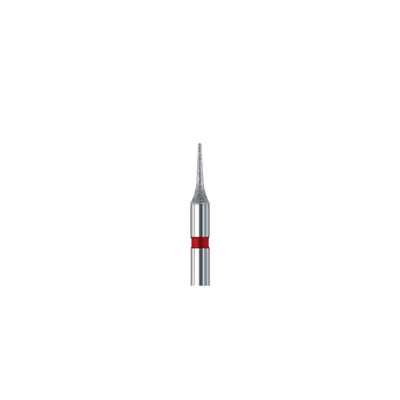
Move to the same shape in fine grit (red ring) to bring the surface toward its final dimension, then extra fine (yellow ring) to smooth it. The 8392 016 is a slender fine-grit needle that many clinicians use for IPR on its own. Fine and extra fine burs come in packs of 2.
3. Finish and polish with strips
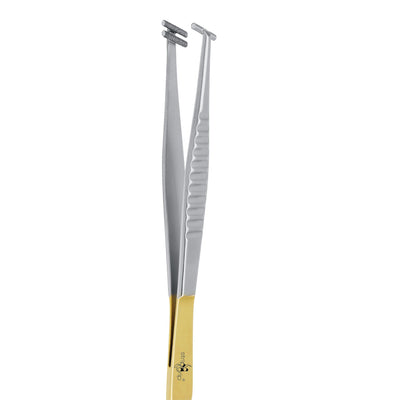
Abrasive strips take off the last tenths, recontour and polish the proximal surface. The Strip Grip® strip holding tweezers (Helmut Zepf No. 22.998.14) clamp each end of a 2.5–3.0 mm strip on diamond-coated tips, so the strip stays flat and under tension in the contact. Measure the space against the plan before moving on.
4. Seat and adjust the aligners
On delivery visits, the Helmut Zepf vertical (33.720.43) and horizontal (33.720.44) aligner pliers adjust trays, and the OrthoMASTER A-Punch (33.720.42) punches a 6 mm opening. See all three in Orthodontic Aligner Pliers by Helmut Zepf. For the full aligner workflow, including attachment removal at the end of treatment, see Clear Aligner Burs & Instruments.
IPR bur chart – shape, head size, grit
| Busch No. | Shape | Head | Grit / pack |
|---|---|---|---|
| 8392 016 | Slender needle | 1.6 mm | Fine, red ring · 2 |
| 858 010 | Needle (858) | 1.0 mm | Medium · 6 |
| 858 014 | Needle (858) | 1.4 mm | Medium · 6 |
| 8858 014 | Needle (858) | 1.4 mm | Fine, red ring · 2 |
| 858EF 014 | Needle (858) | 1.4 mm | Extra fine, yellow ring · 2 |
| 859 010 | Long needle (859) | 1.0 mm | Medium · 6 |
| 859 014 | Long needle (859) | 1.4 mm | Medium · 6 |
| 859 016 | Long needle (859) | 1.6 mm | Medium · 6 |
| 859 018 | Long needle (859) | 1.8 mm | Medium · 6 |
| 8859 010 | Long needle (859) | 1.0 mm | Fine, red ring · 2 |
| 8859 014 | Long needle (859) | 1.4 mm | Fine, red ring · 2 |
| 8859 018 | Long needle (859) | 1.8 mm | Fine, red ring · 2 |
| 859EF 010 | Long needle (859) | 1.0 mm | Extra fine, yellow ring · 2 |
| 859EF 014 | Long needle (859) | 1.4 mm | Extra fine, yellow ring · 2 |
| 859EF 018 | Long needle (859) | 1.8 mm | Extra fine, yellow ring · 2 |
Clinical Use
IPR relieves mild to moderate crowding without extraction or expansion, corrects tooth-size discrepancies between arches, and reshapes triangular contacts. Work with water spray in light, intermittent strokes, keep the bur moving so it does not dwell on one point, protect the adjacent tooth and gingiva, and stop short of the planned amount before refining. Run the burs at the recommended speed — see our Dental Bur Speed Chart. For the full technique outline, read our IPR guide.
Care and Reconditioning
Busch burs and Zepf instruments are reusable: clean, disinfect and sterilize them between patients according to the manufacturer’s instructions. Our Dental Bur Reprocessing & Sterilization Guide covers the bur workflow. Replace a bur that has lost cutting efficiency rather than pressing harder.
Compare With
Clear Aligner Burs & Instruments · Orthodontic Burs (debonding) · Fine Diamonds | Red Ring · Dental Diamond Burs · Aligner Pliers · Bur Comparison Chart · Bur Color Coding & ISO Guide

FAQ
What is the best bur for IPR?
It depends on the contact and the clinician. Slim needle diamonds are the common choice because they fit into tight contacts: a medium-grit 858 or 859 to open, then fine and extra fine to refine. The 8392 016 is a slender fine-grit needle many clinicians use on its own.
What is the difference between the 858 and 859?
Both are tapered, pointed needle diamonds. The 859 has the longer working part, for taller contacts; the 858 is shorter.
What do the ring colors mean?
No ring is medium grit, red is fine and yellow is extra fine. Finer grits remove less and leave a smoother surface.
How much enamel can be removed with IPR?
The amount is set per contact by the treatment plan from the orthodontist or aligner company. This page does not set limits; follow the protocol for the case.
Do I need strips as well as burs?
Most clinicians use both: a bur opens the contact quickly, and strips refine, contour and polish. The Strip Grip® holds a strip under tension at both ends.
Where are these made?
The burs by Busch & Co. in Engelskirchen, Germany, since 1905; the strip holders and pliers by Helmut Zepf in Germany. DeutscheDT.com is the official US distributor for Busch. Questions? Call our experts at (917) 480-2682 ext 101.


