Nail Debridement: Instruments and Technique for Thickened and Mycotic Nails

Nail debridement is the controlled reduction of the length and thickness of a dystrophic nail, most often a thickened or mycotic toenail, using hand instruments and a rotary bur. Done well, it relieves pressure on the nail bed, makes the nail easier to manage and lowers the risk of subungual ulceration in high-risk feet.
Quick answer: Nail debridement reduces the length and thickness of a dystrophic nail in two stages: nippers take the length down, then a coarse carbide or KERA ceramic bur thins the plate in layers, a medium cut contours it and a fine cut or fine diamond smooths the surface. DeutscheDT.com carries SGX, GX, X and FX podiatry cutters from Busch & Co., for which DeutscheDT is the official US distributor.
The work is usually done in two stages: nippers take the length down, then a coarse carbide or ceramic bur reduces the thickness in layers and a fine cut leaves a smooth surface.
This guide covers which instruments to use for debridement of nails, how to choose the bur cut for each stage, and the technique points that keep the procedure comfortable and safe.
What is nail debridement?
In podiatric practice, nail debridement means removing diseased or excess nail plate by mechanical means. It is distinct from nail avulsion (removal of the whole plate) and from cosmetic filing. Typical indications include onychomycosis, onychauxis (uniform thickening), onychogryphosis (thickened, curved "ram's horn" nails) and nails thickened by repeated trauma.
For many patients the nail is painful in shoes, cannot be cut at home, or presses on the nail bed hard enough to cause subungual hemorrhage or ulceration. Debridement does not cure an underlying fungal infection, but it reduces the fungal load in the plate, relieves symptoms and can improve the penetration of topical treatment.
This is general clinical practice; scope of practice, documentation and coverage rules vary by state and payer, so follow your own training and local requirements.
Which instruments are used for toenail debridement?
A typical toenail debridement tray combines hand instruments and rotary instruments:
- Nail nippers (straight or curved jaws) to reduce length and take off bulk at the free edge before any bur is used.
- A nail file or Black's file and a curette to clear the sulci and lift debris from under the free edge.
- A podiatry motor with a straight handpiece. Podiatry burs are mostly HP shank (2.35 mm straight handpiece). FG burs are for podiatry turbine units with cooling water.
- A dust control system, either a vacuum (suction) drill or a spray (wet) unit, plus a respirator mask and eye protection for the operator.
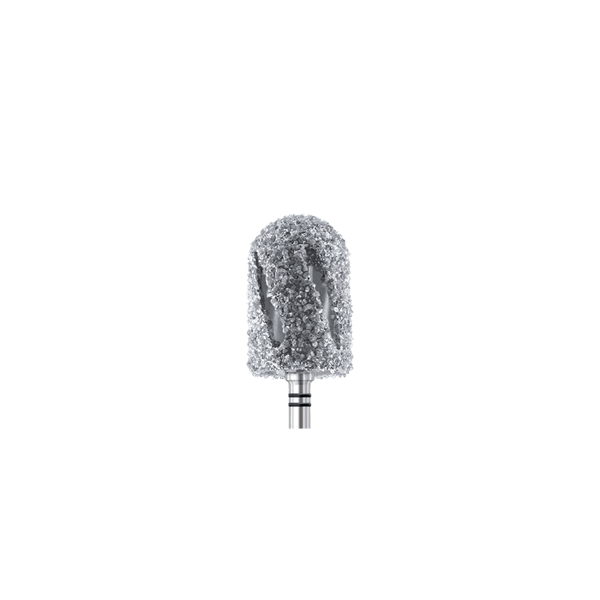
- A graded set of burs: a very coarse or coarse cutter for bulk reduction, a medium cutter for contouring, and a fine cutter or fine diamond for finishing.
The bur choice matters most, because it decides how quickly and how smoothly the plate comes down. Our pillar guide, Nail Drill Bits Guide for Podiatry, explains bit families in depth; this article is about applying them to debridement.
Choosing the cut: from bulk reduction to finishing
Busch describes its carbide podiatry cuts by application. The very coarse double cut (SGX) is for strong removal of massively thickened nails. The coarse double cut (GX) is for coarse shaping of thickened nails. The coarse straight cut with cross cut (GQSR) is for strong grinding of hyperkeratosis and thick, gryphotic nails.
The medium double cut (X) is for targeted contouring of deformed nails, and the fine double cut (FX) is for fine work on nails that have already been reduced. The table below turns that into a debridement sequence.
| Stage | Cut (Busch code) | Example instrument | Head diameter |
|---|---|---|---|
| Bulk reduction, very thick or gryphotic nails | Very coarse double cut (SGX) | 429SGX 060 taper (cone) round, 424SGX 060 bud round | 6.0 mm |
| Bulk reduction, thick nails | Coarse double cut (GX) | 429GX 045 taper (cone) round | 4.5 mm |
| Gryphotic nails, very high removal | Coarse straight cut with cross cut (GQSR) | 424GQSR 060 bud round, KERA K424GQSR 060 | 6.0 mm |
| Contouring the reduced plate | Medium double cut (X) or medium cut with cross cut (MQS) | 429X 040 taper (cone) round, 425MQS 060 flame | 4.0 to 6.0 mm |
| Finishing and edges | Fine double cut (FX) or fine diamond (red ring) | 429FX 031, 433FX 023, 8850 016 diamond | 1.6 to 3.1 mm |
| Sulcus, nail fold and small mycotic areas | SXM power cut | 1SXM 014 round | 1.4 mm |
ISO sizes convert to millimeters by dividing by ten, so 060 is a 6.0 mm head and 023 is 2.3 mm. You can browse the whole range by task in the thickened and mycotic nails collection.
Carbide or KERA ceramic for thickened nails?
Both work. Carbide cutters are the standard choice and come in the widest range of cuts and sizes.
Busch KERA cutters are made from a white high-performance ceramic that Busch says is 25% to 60% lighter than a comparable metal instrument, which allows smoother cutting that both patient and operator can notice on diseased natural nails. Busch also points to better biocompatibility for patients with a strong metal allergy.
In the KERA line, the GQSR cut is recommended for thick gryphotic nails, and the medium double cut, such as the K429X 040, for contouring. The KERA ceramic collection lists every pattern we carry.
Nail debridement technique: a general sequence
The steps below describe widely taught general practice, not a manufacturer instruction. Adapt them to the patient and to your training.
- Assess first. Check vascular status, sensation, anticoagulant use and diabetes status, and look for signs of infection or an underlying lesion. A pigmented band, a bleeding nail bed or a nail that looks unlike the others may need further investigation before routine debridement.
- Reduce length with nippers. Take the free edge back in small bites, following the shape of the toe, so that the bur only has to deal with thickness.
- Reduce thickness in layers. With a coarse cutter, work across the nail plate in light, sweeping strokes, keeping the bur moving. Let the cut do the work; heavy pressure produces heat and vibration rather than faster removal.
- Watch the depth. Stop well short of the nail bed. The color and texture of the plate change as you approach healthy nail, and the patient's feedback helps, although sensation may be reduced in neuropathic feet.
- Contour and finish. Change to a medium cut to shape the plate, then a fine cutter or fine diamond to smooth the surface and round the free edge so it does not catch on hosiery.
- Clean up. Clear the sulci of debris with a small round bur or hand instrument and remove dust from the nail surface, for example with a goat hair brush (9738 220).
Heat, speed and dust control
Friction heat is the most common source of discomfort during debridement of nails. Busch advises lower speeds when working dry, to reduce heat buildup, and never exceeding the maximum speed printed on each package. Larger heads need lower speeds, because centrifugal forces rise with head diameter.
Our bur speed chart lists maximum and recommended speeds by head size. Nail dust is also an occupational hazard: it can contain fungal elements and is fine enough to inhale, so use dust extraction or a spray unit, wear a respirator mask and eye protection, and clean surfaces after each patient.
Our guide on how to clean nail drill bits covers bur reprocessing and dust control in more detail.
Caring for debridement burs
Burs used for nail debridement are reusable medical devices when the packaging allows it. Clean, disinfect and sterilize them between patients according to the Busch reprocessing instructions, inspect them under magnification, and discard any bur with damaged cutting edges or a bent shank. The Bur Reprocessing & Sterilization Guide summarizes the workflow. A dull bur cuts slowly, builds heat and vibrates, which is uncomfortable for the patient, so replace it rather than pressing harder.
Frequently asked questions
What is the best bur for nail debridement? For bulk reduction of a very thick nail, a very coarse double cut (SGX) or coarse straight cut with cross cut (GQSR) carbide, such as the 429SGX 060 or 424GQSR 060. For contouring, a medium double cut (X), and for finishing, a fine double cut (FX) or a fine red-ring diamond.
Should I cut the nail before using the bur? Generally yes. Reducing length with nippers first means the bur only removes thickness, which is quicker and produces less dust and heat.
Does toenail debridement treat fungal nails? Debridement removes diseased nail and relieves symptoms, but it does not cure onychomycosis on its own. It is often combined with topical or systemic treatment chosen by the clinician.
Is KERA ceramic better than carbide for thick nails? Neither is universally better. KERA cutters are lighter, which Busch says makes cutting smoother, and they suit patients with metal allergies. Carbide offers the widest choice of cuts and sizes.
How do I reduce heat during nail debridement? Keep the bur moving, use light pressure, stay within the recommended speed for the head size, use lower speeds when working dry, and replace dull burs.
Instruments for thickened and mycotic nails
Busch has made rotary instruments in Engelskirchen, Germany since 1905, under an ISO 13485 quality management system. Browse the thickened and mycotic nails collection for debridement cutters, the carbide collection for every cut, or start at the podiatry burs hub. If you already use another brand, the Podiatry Bur Comparison Chart cross-references common numbers to Busch.
This article is intended as an educational reference for foot care professionals and does not replace clinical judgment or manufacturer instructions for use.