Onychauxis: Why Toenails Thicken and How Podiatrists Reduce Them

Onychauxis is a thickening of the nail plate, most often of the hallux nail, usually caused by repeated trauma, aging, fungal infection or a systemic condition. The thickened toenail is typically discolored, hard to cut and painful under shoe pressure.
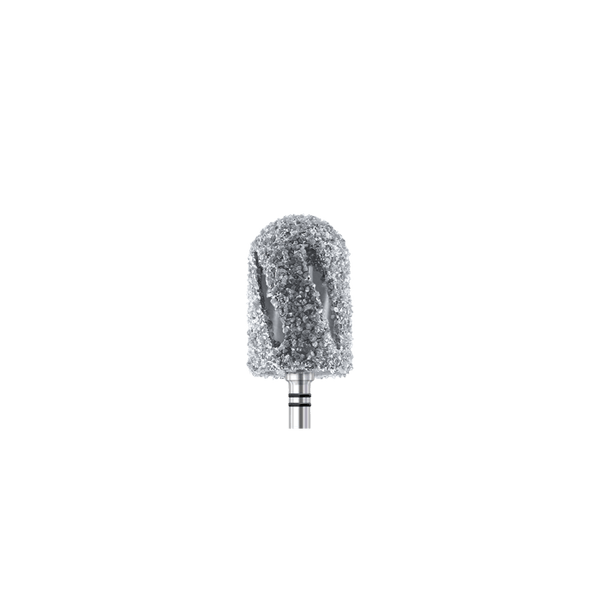
Quick answer: Onychauxis is a thickening of the nail plate, most often the big toenail, usually caused by repeated trauma, aging, fungal infection or systemic disease. Because the matrix keeps producing thick nail, care centers on periodic reduction, moving from coarse SGX or GX carbide cutters through X and FX cutters to a polisher. DeutscheDT.com carries these nail drill bits from Busch & Co., for which DeutscheDT is the official US distributor.
Because the nail-forming tissue has usually been changed, the nail grows back thick, so care in practice centers on regular mechanical reduction with nail drill bits, combined with management of whatever is driving the thickening.
This article covers what causes thick toenails, how onychauxis differs from look-alike conditions, and the bur sequence many practices use to reduce a thickened nail safely.
What is onychauxis?
Onychauxis (also written onychauxia or called nail hypertrophy) describes a nail plate that is abnormally thick but keeps a broadly normal shape. The nail is often yellow or brown, opaque and lifted by subungual hyperkeratosis. When thickening is joined by marked curvature and overgrowth, the nail becomes the ram's-horn nail of onychogryphosis, which is usually treated as a more advanced or distinct condition. Both show up daily in podiatry, and both are managed with the same tools.
What causes thick toenails?
Toenail thickening rarely has a single cause. The factors most often described in the clinical literature are:
- Repetitive microtrauma. Tight or short footwear, running and court sports, and a hallux pressing into the toe box all damage the nail matrix over time. A single crush injury can do the same.
- Aging. Nail growth slows with age, and older nails tend to thicken and become brittle.
- Onychomycosis. Fungal infection is a common cause of thickened toenails and often coexists with traumatic onychauxis. The two look alike, so laboratory confirmation (such as microscopy, culture, histology or PCR) is the usual basis for diagnosis.
- Dermatological disease. Nail psoriasis and other skin conditions can thicken the plate and cause subungual debris.
- Circulation and systemic disease. Peripheral arterial disease and diabetes are associated with nail changes, and they change how carefully a nail must be reduced.
- Foot structure. Hallux valgus, hallux limitus and lesser toe deformities shift pressure onto the nail.
- Rare inherited conditions. Pachyonychia congenita is one example, usually from childhood.
Patients usually ask about the cause first. A good history covering footwear, activity, injuries, diabetes and circulation, and prior antifungal treatment usually answers it.
Onychauxis vs onychogryphosis vs onychomycosis
| Condition | Main feature | Typical drivers | Reduction approach |
|---|---|---|---|
| Onychauxis | Thick nail, broadly normal shape | Trauma, aging, footwear | Periodic reduction with coarse then fine cutters |
| Onychogryphosis | Thick nail with curvature and overgrowth (ram's horn) | Long-standing neglect, trauma, aging | Shorten first, then bulk reduction; avulsion may be considered |
| Onychomycosis | Thick, crumbly, discolored nail with subungual debris | Fungal infection | Reduction plus medical management after confirmation |
How do podiatrists reduce thickened toenails?
Most practices reduce a thickened nail in layers, moving from aggressive to fine instruments. The general approach, which is accepted practice and not a manufacturer instruction, looks like this:
- Assess. Check circulation, sensation and skin integrity, and judge how much of the plate can safely be removed. In a high-risk foot, err toward leaving more nail.
- Shorten. Trim the free edge with nippers so the bur does not catch on overhanging nail.
- Bulk reduction. Use a coarse carbide or KERA cutter with light pressure and sweeping strokes across the plate. Keep the bur moving so heat does not build in one spot.
- Contour. Switch to a medium double cut to shape the nail and bring the thickness close to target.
- Smooth. Finish with a fine double cut, a medium diamond or a polisher so the nail does not snag on hosiery.
Stop to check thickness often. The aim is a comfortable, thinner nail with a protective layer intact over the nail bed. Thinning too far risks bleeding, pain and an entry point for infection. Reduction typically needs repeating every several weeks because the matrix keeps producing thick nail.
Which nail drill bits reduce thickened toenails?
Busch codes each carbide cutter by how aggressive its cut is, which makes the sequence easy to build. Our Nail Drill Bits Guide explains every code; the picks for onychauxis are:
| Stage | Cut or grit | Examples | Head |
|---|---|---|---|
| Massive thickening | SGX very coarse double cut | 429SGX 060 taper (cone) round, 424SGX 060 bud round | 6.0 mm |
| Bulk reduction | GX coarse double cut | 429GX 045 taper (cone) round | 4.5 mm |
| Gryphotic nails, lighter instrument | KERA GQSR | K429GQSR 040 | 4.0 mm |
| Contouring, fungal nails | X medium double cut | 425X 040 flame, K424X 060 ceramic | 4.0 to 6.0 mm |
| Near the nail folds | X medium, small head | 426X 023 cylinder round, M433X 016 Midis | 1.6 to 2.3 mm |
| Finishing | FX fine double cut | 426FX 023 | 2.3 mm |
| Smoothing | Medium diamond or polisher | 850 016 diamond, 9626 100 disc polisher | 1.6 to 10.0 mm |
Busch lists SGX for strong removal of massively thickened nails, GX for coarse shaping of thickened nails, X for targeted contouring of misshapen and fungal nails, and FX for fine work on prepared nails before polishing. For KERA, Busch lists the GQSR cut for thick gryphotic nails with very high removal.
The 1SXM 012 round is another option Busch describes for gentle work on fungal and gryphotic nails and periungual callus, with a slender neck that improves the view. A green-ring 6862 018 diamond handles coarse nail work where a practitioner prefers grinding to cutting. The full selection is in the thickened nail collection.
Carbide or ceramic for thick nails?
Both use the same cut codes. Carbide is the traditional choice for heavy reduction. KERA ceramic cutters are 25% to 60% lighter according to Busch, which can make cutting feel smoother for patient and practitioner, and they suit patients with a strong metal allergy. The carbide vs diamond vs ceramic comparison sets out the trade-offs.
Safety: heat, dust and the high-risk foot
- Heat. Use light pressure, keep the bur moving and run larger heads slower. Busch advises lower speeds in dry technique to limit heat and prints the maximum permitted speed on each pack.
- Nail dust. Dust from thickened and mycotic nails is a recognized occupational exposure. Practices commonly use dust extraction or a water-spray unit together with a mask and eye protection.
- Diabetes and poor circulation. Reduce conservatively, avoid any break in the skin and review the patient at an interval suited to their risk.
- Reprocessing. Carbide and KERA cutters are disinfectable and sterilizable; follow the steps in our bur reprocessing guide.
When is reduction not enough?
For a painful, recurrent thick nail, partial or total nail avulsion, with or without matrixectomy, is a recognized option, and suspected mycotic nails are typically confirmed and managed medically. Footwear advice and offloading address the trauma that caused the thickening in the first place. These decisions belong to the treating clinician.
Frequently asked questions
What causes thick toenails? Most often repeated trauma from footwear or activity, aging, fungal infection, psoriasis, or circulation problems, and frequently more than one at once.
Is onychauxis the same as toenail fungus? No. Onychauxis is thickening of the nail plate from any cause. Fungal infection is one cause and often coexists, so testing is the usual way to tell them apart.
Can thickened toenails return to normal? Usually not fully, because the matrix has changed. Regular reduction keeps the nail comfortable, and treating the underlying cause can slow thickening.
What is the best bur for toenail thickening? A coarse SGX or GX carbide taper (cone) round for bulk reduction, then X and FX cutters to contour and finish. A KERA GQSR cutter is a lighter option.
How often should thickened toenails be reduced? It depends on growth rate and symptoms; many patients are seen every several weeks. Interval decisions belong to the treating clinician.
Instruments for thickened nails
Busch has made rotary instruments in Engelskirchen, Germany, since 1905 under ISO 13485, and DeutscheDT.com carries the full podiatry range in the US. Browse the thickened nail collection and the carbide range, compare cutters in the Podiatry Bur Comparison Chart, or start at the Podiatry Burs hub.
This article is intended as an educational reference for foot-care professionals and does not replace clinical judgment or manufacturer instructions for use.