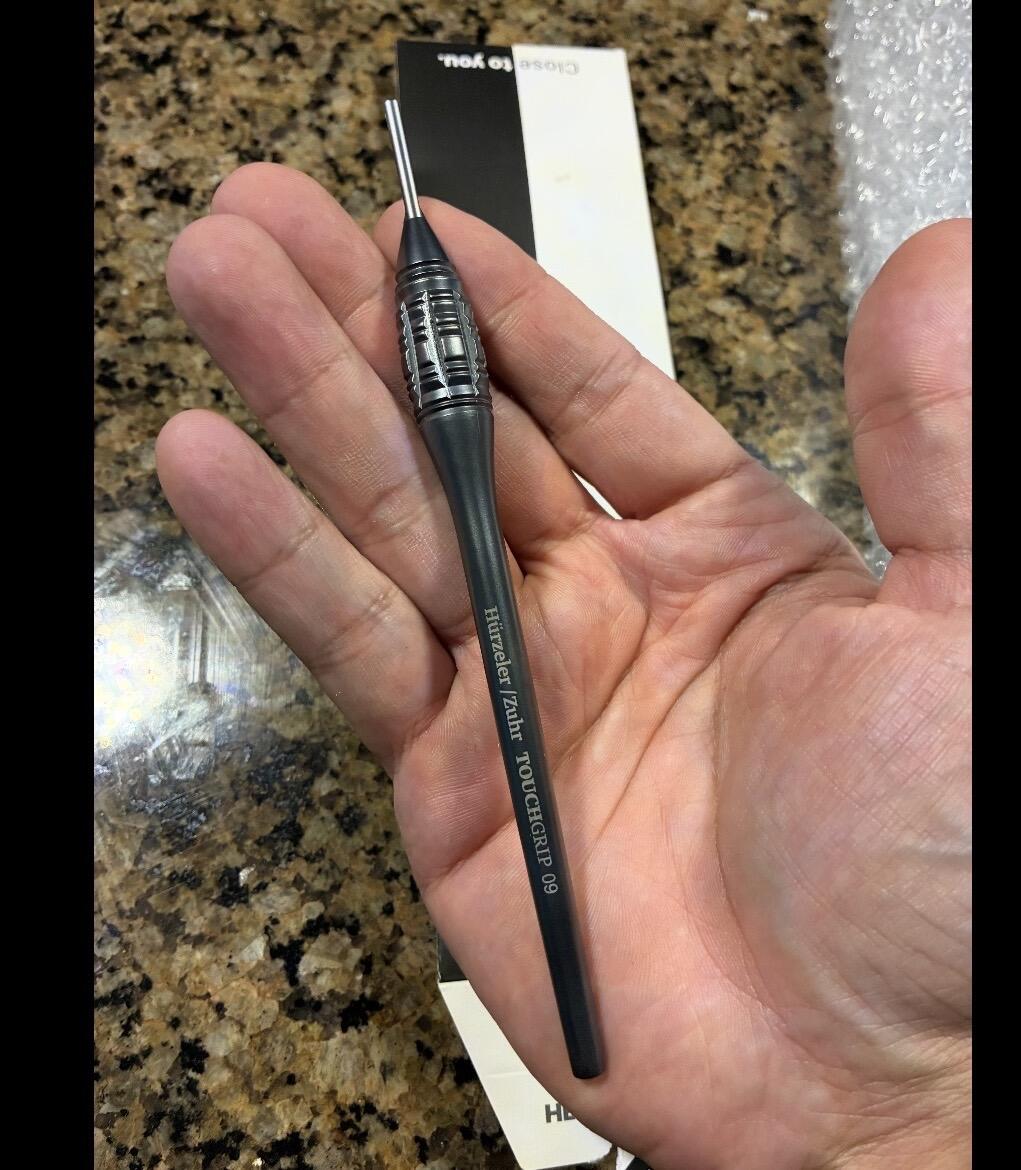
Bein Root Elevator
The Bein root elevator is the classic straight elevator of European oral surgery: a round Bein handle that fills the palm, a slender straight shank, and a concave working tip sized by its width. It is the instrument that loosens a tooth or root before the forceps are picked up, and often the instrument that delivers a root fragment without them. Helmut Zepf makes the pattern in nine versions — the standard round series in 2, 3, 4 and 5 mm, two heavier Gärtner versions, and three angled-flat Special elevators — all in Germany, and every one on this page ships from our US warehouse.
Which Bein Elevator Do You Need?
| Version | Zepf No. | Working tip | Best for |
|---|---|---|---|
| Bein #0, straight | 17.001.00 | 2 mm, round handle | Fine roots, narrow sockets, anterior teeth |
| Bein #1, straight | 17.001.01 | 3 mm, round handle | The everyday size: premolars, single roots, most extractions |
| Bein #2, straight | 17.001.02 | 4 mm, round handle | Molars and broader roots |
| Bein #3, straight | 17.001.03 | 5 mm, round handle | Wide molar roots and heavy luxation |
| Gärtner #01 | 17.013.01 | Ø 3.5 mm × 125 mm, Bein handle | A heavier working end with more length for posterior access |
| Gärtner #02 | 17.013.02 | Ø 4.5 mm × 125 mm, Bein handle | The stout version for molar roots |
| Special #60, slightly angled | 17.101.60 | 2 mm, flat | Fine roots where a straight shank cannot line up with the socket |
| Special #61, angled | 17.101.61 | 3 mm, flat | Posterior roots approached around the arch |
| Special #62, angled | 17.101.62 | 4 mm, flat | Molar roots approached around the arch |
Clinical Use of the Bein Elevator
- Luxation before forceps: the tip is seated in the periodontal ligament space between root and alveolar bone, and a slow rotating motion expands the socket and breaks down the ligament, so the forceps do less work and the root is less likely to fracture.
- Root and fragment delivery: with the socket expanded, the concave face engages the root and lifts it along its path of withdrawal; a fractured root tip is worked free the same way, with the finer #0 or #60.
- Technique: a firm finger rest on the adjacent bone, the tip on bone rather than on the neighbouring tooth, and controlled rotation rather than prying. Adjacent teeth are never used as a fulcrum.
- Choosing the size: match the tip width to the root — 2 mm for fine anterior and premolar roots, 3 mm for most single-rooted teeth, 4 to 5 mm for molars. Use the angled Special series when the straight shank cannot line up with the socket in the posterior region.
Straight, Gärtner and Angled Versions
The straight Bein series (#0 to #3) is the reference pattern: round handle, straight shank, concave tip, sized 2 to 5 mm. The Gärtner versions put a heavier, longer working end on the same handle for posterior roots that need more purchase. The Special series (#60 to #62) carries a flat, angled working end so the tip can reach around the arch to a socket the straight shank cannot enter square. All nine share the Bein handle, so the feel in the hand does not change from one to the next.
Sharpening and Care
A blunt elevator slips; a sharp one seats. Zepf elevators are resharpened in the practice on a flat stone, or returned to our sharpening and reconditioning service. Clean, disinfect and sterilize between patients like any surgical hand instrument.
Warranty and Our Guarantee
Every Zepf elevator carries a one-year Helmut Zepf Warranty against defects in materials and workmanship (Zepf extraction forceps carry a lifetime warranty). And because an elevator can only be judged in the hand, you have 60 days to return it for any reason — even after you have used it. Try it on real extractions; if it is not the instrument for you, send it back.
Made in Germany by Helmut Zepf
Helmut Zepf has manufactured dental and surgical instruments in Germany for over 100 years. Every elevator on this page is forged, ground and finished by Zepf and carries its part number for traceability.

FAQ
What is a Bein elevator used for? Luxating teeth and roots before extraction and delivering roots and root fragments. It is inserted into the periodontal ligament space and rotated to expand the socket and lift the root.
Which size should I start with? The 3 mm #1 covers most extractions; add the 2 mm #0 for fine roots and fragments and the 4 mm #2 for molars. The 5 mm #3 and the Gärtner versions are for broad molar roots.
What is the difference between the Bein and a Coupland elevator? Both are straight elevators. The Bein has a round handle and a slender concave tip sized in millimetres; the Coupland has a gouge-shaped working end sized 1 to 3 and is used with a more wedging action. Many clinicians keep one of each.
Is the Bein handle the same on every version? Yes. The nine elevators on this page differ in working end — width, length and angle — not in handle, so switching between them mid-case does not change your grip.
Is there a warranty? One year under the Helmut Zepf Warranty, and 60 days to return it for any reason, even after use.
Related resources: Dental Elevator Types Guide · Surgical Instrument Comparison Chart · All Dental Elevators · X-Tool Root Tip Elevators · Extraction Forceps & Tools

Helmut Zepf GmbH
Root Elevator, Bein Handle, Round, 2 mm, #0 | Helmut Zepf No. 17.001.00
Regular price $89.99Unit price-
Helmut Zepf GmbH
Root Elevator, Bein Handle, Round, 3 mm, #1 | Helmut Zepf No. 17.001.01
Regular price $89.99Unit price -
Helmut Zepf GmbH
Root Elevator, Bein Handle, Round, 4 mm, #2 | Helmut Zepf No. 17.001.02
Regular price $89.99Unit price -
Helmut Zepf GmbH
Root Elevator, Bein Handle, Round, 5 mm, #3 | Helmut Zepf No. 17.001.03
Regular price $89.99Unit price -
Helmut Zepf GmbH
Root Elevator, Gärtner, Ø 3.5 X 125 mm, Bein Handle, #01 | Helmut Zepf No. 17.013.01
Regular price $89.99Unit price -
Helmut Zepf GmbH
Root Elevator, Gärtner, Ø 4.5 X 125 mm, Bein Handle, #02 | Helmut Zepf No. 17.013.02
Regular price $89.99Unit price -
Helmut Zepf GmbH
Regular price $99.99Unit price -
Helmut Zepf GmbH
Root Elevator, Special, Bein Handle, #61, 3 mm, Angled Flat | Helmut Zepf No. 17.101.61
Regular price $99.99Unit price -
Helmut Zepf GmbH
Root Elevator, Special, #62, 4 mm, Angled, Flat, with Bein Handle | Helmut Zepf No. 17.101.62
Regular price $99.99Unit price