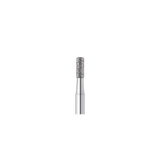
Busch Diamond Cylinder Flat Bur | Busch No. 835 016 – Medium Grit – HP | Pack of 2
The diamond cylinder flat medium grit dental bur from Busch is a precision rotary instrument engineered for demanding crown and bridge procedures. Featuring a cylinder flat diamond head with medium grit, this bur delivers controlled, consistent cutting performance across a range of restorative applications.
Product Specifications
- Shape: Cylinder Flat
- Grit: Medium
- ISO Classification: 806 104 107 524 016
- Pack Contents: 2 burs per pack
- Shank Type: HP (Handpiece)
Applications
This diamond cylinder flat medium grit dental bur is specifically suited for Crown and Bridge Technology, where precision, consistent geometry, and reliable cutting are essential. The medium grit formulation provides an ideal balance between rapid material removal and surface quality, making it appropriate for preparation and finishing tasks in restorative dentistry.
The diamond cylinder flat medium grit dental bur is well-suited for the following dental laboratory applications:
 |
Crown and Bridge Technology — Shaping, trimming and finishing of crown and bridge frameworks in the laboratory. |
German Engineering
Manufactured to exacting standards, this diamond cylinder flat medium grit dental bur is proudly made in Germany by Busch & Co. GmbH. German-engineered precision ensures dimensional consistency, longevity, and dependable clinical outcomes.
Podiatry Use
The 835 016 steps the cylinder flat up to 1.6 mm. In Busch's podiatry catalogue it sits in the medium-grit group for callus and nail smoothing, and its flat end and straight side give a defined edge on the nail plate. Two HP burs per pack. See podiatry burs for callus and corn removal and diamond podiatry burs.
Instrument Dimensions
| Head Ø | 1.6 mm (ISO size 016) |
|---|---|
| Shank | HP (Straight Handpiece) — 2.35 mm Ø, 44.5 mm overall length (ISO 104) |
Per ISO 6360, the size number is the maximum head diameter in tenths of a millimeter. See our Busch Bur Size Chart for the full size conversion table, shank codes, and color ring guide.
Busch Warranty & 60-Day Returns
This Busch instrument is guaranteed against manufacturing and workmanship defects — we'll repair or replace it under normal professional use. Unused, unopened product in its original packaging can also be returned or exchanged within 60 days of delivery. Full terms are on our Warranty page and Returns page.
FAQ
What is the ISO classification for this bur?
The ISO classification is 806 104 107 524 016, which identifies the instrument type, shape, grit, and dimensions.
How many burs are included per pack?
Each pack contains 2 burs.
Is this a diamond cylinder flat medium grit dental bur compatible with standard HP handpieces? Yes, this instrument is designed for use with HP (straight handpiece) connections.
Does Busch list the 835 016 for podiatry use?
Yes. Busch lists the 835 016 in its podiatry range for smoothing callus and nails with medium grit. It fits podiatry handpieces through the standard 2.35 mm HP shank.
Compare With
| Manufacturer | Reference |
|---|---|
| Komet (Gebr. Brasseler) | 835.104.016 |
| NTI (Kerr Rotary) | M835-016 |
| Edenta | 835.104.016 |
| NTI (podiatry) | 835-016M-HP |
Podiatry numbers: see the Podiatry Bur Comparison Chart.